Monday, August 07, 2006

Interview at TheSandTrap.com

This is a fairly long interview, but the questions were quite good. From running a business to architecture, to equipment, to the USGA to the Masters committee, it covers a lot of ground.

Use this link to go straight to the interview:

<http://thesandtrap.com/archives/throwing_darts/

Tuesday, August 01, 2006

The Best in Canadian Golf - Part 1

Best Golf Course in Canada: St. George’s Golf & Country Club

It is the best routing of the Canadian course with its brilliant use of the bisecting valleys. It is one of the finest examples of Stanly Thompson’s architecture and has some of his best bunkering. Out of all his work, this is the one that could comfortably hold the best players in the game at bay, and still provide a pleasant round for its membership.

Runner up: Highland Golf Links

Best Par Three


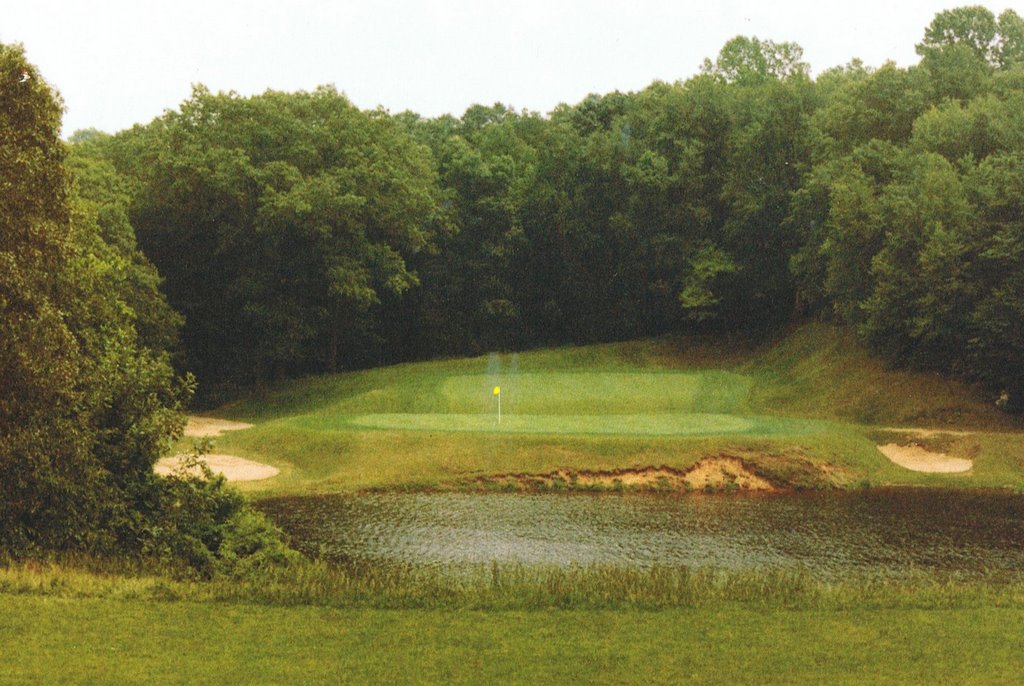
This is a landslide win for the Devil’s Cauldron at Banff Springs. It would also be my pick for the finest hole in Canada too. The hole plays over a small glacier fed lake to a beautiful green site set in a natural amphitheater on a plateau above the lake. Thompson further framed in the green with a beautiful array of bunkers providing some additional drama to the setting. The backdrop of the green is small sliver of dark spruce which helps emphasize the beautiful natural setting for the green, but the most unforgettable part of the hole is how the shear mountain face seems to loom right over the hole. You feel a thrill just standing on the tee looking at everything around you and Thompson delivers an exceptional one shotter that lives up to the setting.

Runner up: The Bad Baby at Jasper Park (best short three)

Best Long Par Four


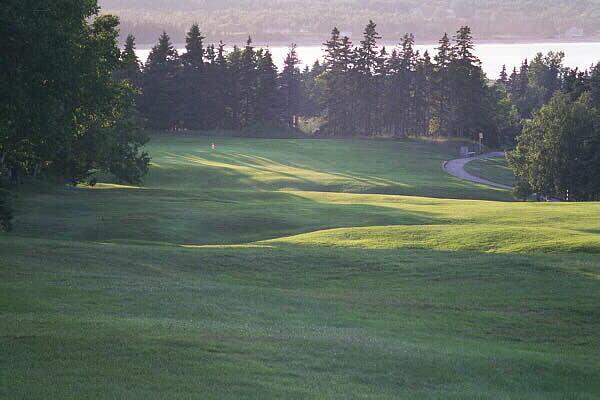
My favorite is the 2nd hole at Highland Golf Links

My favorite long four has no bunkers and no water, so how can it be great? What makes the hole so much fun to play is the terrain of the land and the contour of the green. The hole is a dogleg to the right with the landing area tumbling down like a gentle mogul run to the green site. The player can choose to carry the corner of the trees and valley to shorten the hole or to play straight out leaving a very long approach. The shot in is downhill but the lie can be anything due to the wildness of the fairway. The green sits just beyond a deep swale in front. With no bunkers, so you can run it on or fly it in. The green is a stunner with the deep swale dissecting the centre of the green making putting, chipping and the approach shots fascinating.

Runner up: 2nd hole at St. George’s

Best Short Par Four


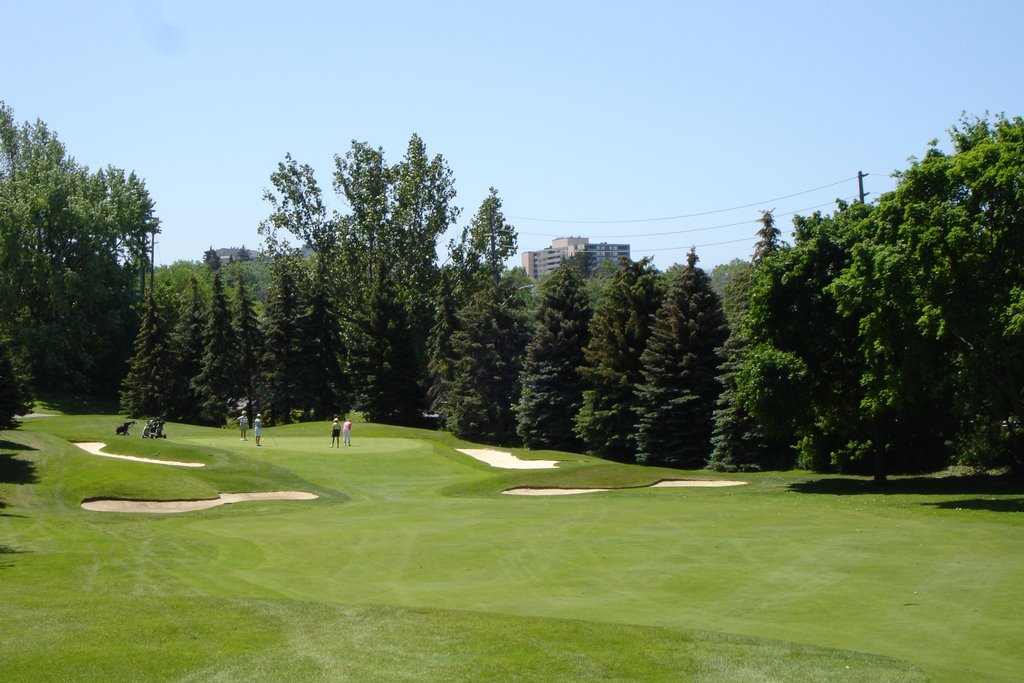
My favorite is the very drivable short 7th hole at Scarboro Golf & Country Club. From the tee the green is very inviting and reachable for a very long hitter. The fairway has no bunkering until really close to the green where two fairway bunkers pinch the approach. The green is also open in front with two deep bunkers flanking the right and left of the green. The key to the hole is the small and narrow green that also has a very steep bank of fairway in front of the green. This makes the pitch extremely delicate pitch. Finding yourself in the left or right fairway bunkers is the toughest bunker shot you can face. Finding yourself right, left or long all leads for a tough recovery shot considering the shape and pitch of the green, even short is no bargain because how much higher the green is than the fairway. A great short four test your judgment and nerve with obvious risks and rewards. The best ones lull you into playing aggressive when you shouldn’t – this describes the 7th well.

Runner up: The 4th at Highland Links (from the old tee)

Best Par Five


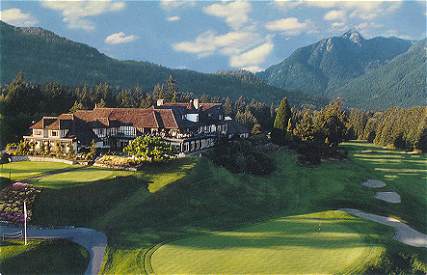
The 18th at Capilano offers the best finishing hole in Canada and my favourite par five. The tee shot is uphill between a series of Thompson bunkers where placement is at a premium. The second shot is a classic risk and reward scenario where you either take your shot aggressively to the upper right fairway leaving an easy short approach between the bunkers; or you play to the lower fairway leaving a tough semi-blind shot over very deep bunkers to the green. The green has plenty of slope and provides the final touch on this terrific three shot par five. Finally the setting is one of the greatest in Canada, the hole plays by the spectacular clubhouse, the mountains are infull view when you look back down the hole and the city of Vancouver can be seen in the distance from the green.

Runner up: The 14th at Summit Golf & Country Club

Monday, July 31, 2006

If I Founded a Private Golf Club


My course would have great contours and minimal emmenities


If I had the money, I would love to build a golf club. First off if I were to build a course it would be public, but I’m going to offer up my version of how I would set up a my own club through all my experiences with private clubs.

The golf course has to take priority over every facet of the club, since it’s the reason people join. It must be a great golf course that is enjoyable to play each and every day. My model would be the National Golf Links of America which is full of limitless options, playability and enough challenge even for the better player. The National is a course where you would be as happy at 20 as you would at 70.

There should be no tee times. This eliminates certain groups controlling key times and promotes a more social atmosphere of waiting and “finding” a game. The course will have no cart paths although carts will be available to those with a doctor’s note. Ideally a real honest youth caddy program would be established. They will be juniors who will be offered access to all facilities, have lessons offered twice a week by the professional staff, and once a month receive a short lecture from “a member” to help them gain important life skills for their future (like understanding compound interest). I’ve seen this work extremely well in other areas and wonder why this hasn’t come into golf. The membership will be encouraged to interact with the staff and visa versa. My favourite club to work at actively encourages this policy and it makes for a wonderful place to be. They have almost no staff or membership turnover – not hard to figure out why.

The clubhouse should be small and understated. There should be a pro shop, a place to get a burger and a beer and nice locker facilities – that’s it. The showers must have the Merion style waterfall heads, if you’ve experienced them you’ll understand why. There should be no dining room, since they can’t compete with restaurants, and lose money for the club. The food should be good, but I’ve never seen the value in a chef and a menu. There should be no outside events on the course or in the clubhouse. There should be no workout facilities, curling rink, tennis counts or pool - you belong to play golf. By doing this the clubhouse will make money or the prices can be kept very reasonable.

The club will have full practice facilities including a short game facility and a wildly rolling green like the putting course at St. Andrews. There will be no shuttling of players, golf bags or anything else back and forth; you will have to carry your own bag if you want to go somewhere.

Finally the structure of the club is important too. There will be a board and they will only make decisions on financial and clubhouse issues. There will only be one committee, the green’s committee, which will deal only on issues related to the course. In my version of things the superintendent will have the final say on everything but budget. His job is up for review after each contract so he has enough pressure already without facing micromanagement.

While I would keep the rules to a readable two page document with simple rules of decorum, I would insist upon two items. One that allows the board to pay a member back at any point if he has become a detriment to the club, and the second being no changes can be made without the input of the architect.

Friday, July 28, 2006

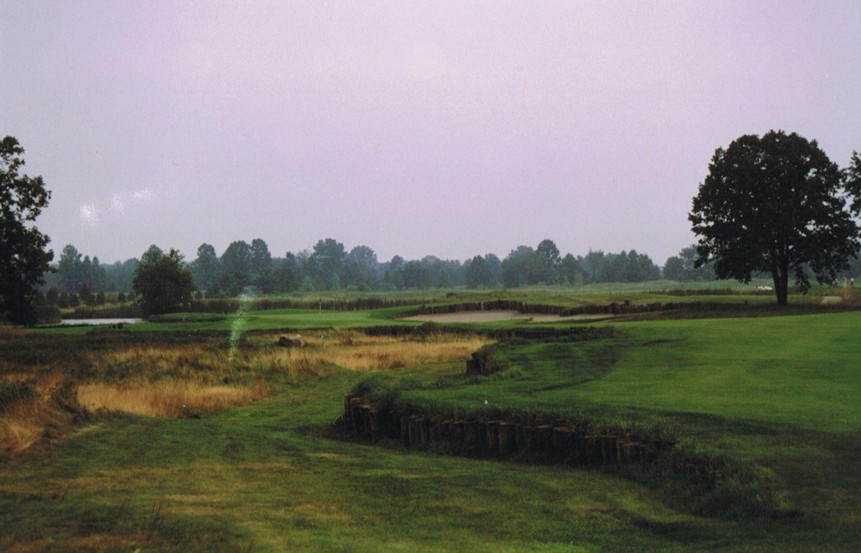
More Great Holes - the 13th at The Golf Club


The low timber wall and marsh very much in play from the tee at The Golf Club.


In modern times there is no greater influence on the latest crop of designers than Pete Dye. Not only has he helped personally shape the thinking of the two top designers in the game right now, he has also had at least some influence on all the designers of his generation. His attempt to change golf architecture worked, initially ushering in style that dominated the 80’s and 90’s, and later on ushering in the new school of “minimalism” as more people caught on to The Golf Club and Crooked Stick.

There is no question in my mind that Pete Dye’s work in the 1960’s and 1970’s was far more revolutionary and important than the work he is better known for. I have talked at length about The Golf Club being one of my influences and an inspiration to many of the current architects leading a new trend. I also think it showcases much of his architectural thinking and his strong use of strategy to make a great golf course.

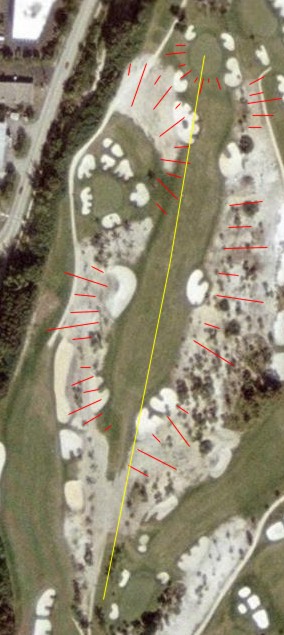
The Golf Club initially blew me away with its look and feel, it took longer to recognize the underlying strategies of holes like 6 and 7. The fact that it was done right in the middle of everything Trent Jones is really fun historically. The hole that caught my attention the most was the 13th. At 370 yards, it was relatively short, but what an interesting hole to play. Pete Dye took uninspiring section of land and created first a marshland and then a pond to influence play. This also impacted the look and feel of the hole too. Dye says he was influenced by Prestwick when he created this course, but truth be told it is 100% Pete Dye. The marsh is a wonderful natural looking feature that gives the hole a soft edge; he then accentuated this with a hard defined edge using a low timber wall to define the carry line. The blue line on the plan locates the low wall, the red line shows the effective carry angle, the yellow the logical lines in to the green. The player stands upon the tee and has the opportunity to play short, but because of the obvious carry line is drawn into risking a carry over the corner of the marsh to shorten the hole. If successful, the next shot in is a beauty with the pond on the left, the fantastically clever timber edged waste on the right and the pond in behind the green. Of course the front is wide open, since the flanking hazards are the ones that the best players have the most trouble with and the weaker players are left with a safe route in. This is a classic set of strategies within a very natural setting - which was 100% created by Pete!

Wednesday, July 26, 2006

More great holes – Bigwin’s 9th


Everything is clear from the tee, now can you make the carry?


I had a lot of fun going through my favorite Doug Carrick holes to come up with this one. It brought back some wonderful memories of Osprey valley and other projects I worked on. I think his most famous would be “Cliffhanger” at Greywolf at Panororama in BC. My favorite course of his remains Eagle’s Nest, but I couldn’t find one hole one hole that I considered his best work. In the end the hole that I enjoying playing the most was the 9th at Bigwin Island.

The interesting thing about this hole is this one evolved a lot in the field because the site of the hole was the only good source of sand on the project. They continued to mine it in order to take as much sand as possible trying to limit the amount of barging of sand across to the site. The interesting thing is the cut that sourced all the sand ended up being the feature that made the hole.

The drive is from a high tee looking out over the hole. You are faced with a long carry up the left side of around 240 yards to make the upper fairway. Since the bank is bluegrass, and the green is directly on that line, you almost always have a go at the short upper route. The other option is to play to a nice wide lower fairway on the right where you have lots of room. Either side, you must avoid the pair of deep menacing bunkers that splits the two sides of the landing. From the upper fairway the green is flanked right and left by bunkers, but is clearly open in front and can be attacked since you will hit a short iron. From below, you must carry the right front bunker and hit into a narrow angle of the green with either a mid or long iron. This is a much more difficult shot.

Into the wind the tee shot is very daunting and sometimes you have no choice but to go right. With the wind you automatically have to have a go the shorter route because of the advantage. The most common wind blows across the hole towards the trees on the left of the upper fairway, so you usually have to start the ball over the bunkers. Either way this is a fun hole to play and one you look forward to.

Tuesday, July 25, 2006

More great holes – French Creek’s 15th


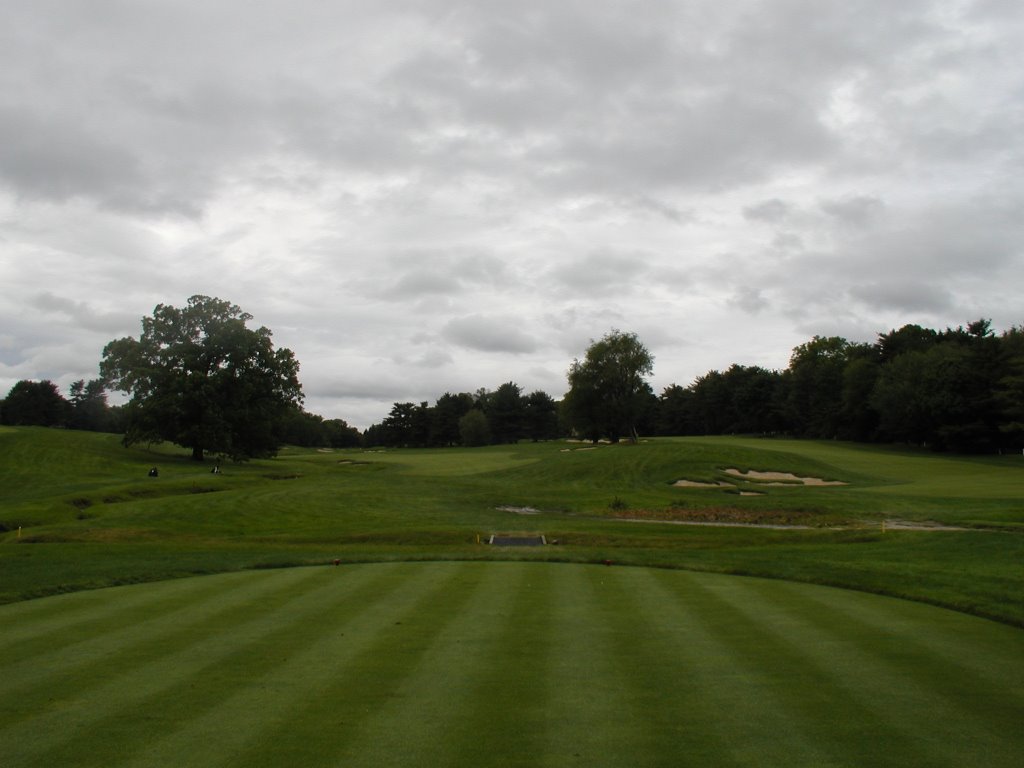
The 15th hole from the tee


I thought I would spend this week describing “other great holes” that really inspired me. I’ll try to mix up the architects and concentrate on the ones I have not mentioned in my first 18 holes in 18 days series.

Every once in a while you find yourself out touring a courses where you run into a “true” original hole. They are the rarest of all gems, since most holes can be traced back to the holes that inspired them or the habits of the architect. These great holes almost always occur with the influence of the natural land leading the way, but every once in a while someone has the skill to create one. I think this is why most of us admire Mike Stranz so much, there may be other architects that I admire more, but he is one of the few who could possibly build a great hole from scratch. For the non-architects reading, this is much harder than you can possibly know.


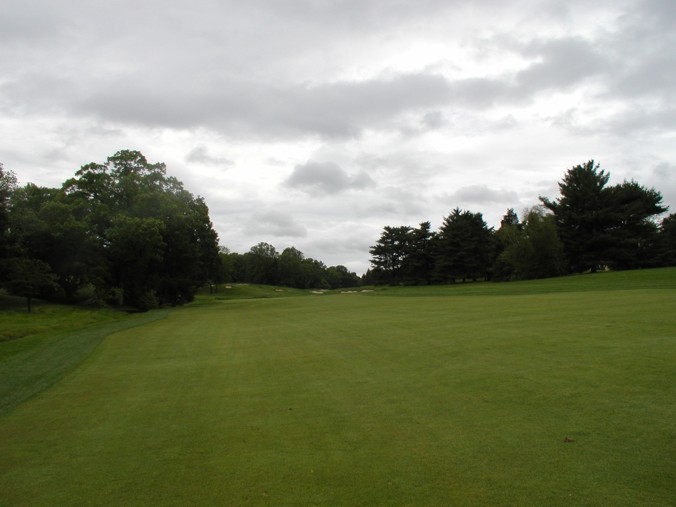
Looking back from the green


The 15th hole at French Creek is one that recently caught my attention. First off there is nothing as much fun as a 290 yard par four that is easily drivable from all the tees. Gil Hanse created a hole where the green is attainable with only the most precise shot, yet the distance and visibility instantly draws out your driver; exactly like a good short four should. Hanse also provided an upper fairway that leads into the green in cas you can’t hit it far enough to drive the green The upper plateau and bowl collects tee shots and long lay-ups as long as you carry the fairway bunkers and keep the shot out of the long grass on the right. A tee shot finding the upper fairway is rewarded with a clear shot into the green flanked by bunkers on either side. The last option is play to the unguarded lower fairway which can be accessed with a short iron. The problem with this alternative is that the approach is hit up hill to a green that you can’t see. The green is perpendicular to this angle and is protected both long and short with penal bunkers.

I love this hole since each alternative works well; you simply pick the route that suits your style of play best. Gil does a nice job of creating a short four where the risks are worth the gamble and the opportunity to play aggressive is hard to ignore. This is what a short four is supposed to be about.

Monday, July 24, 2006

More great holes - Highland Golf Links 13th


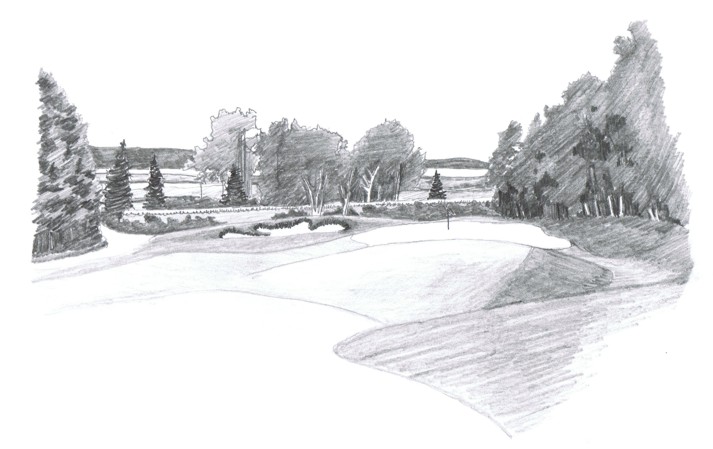
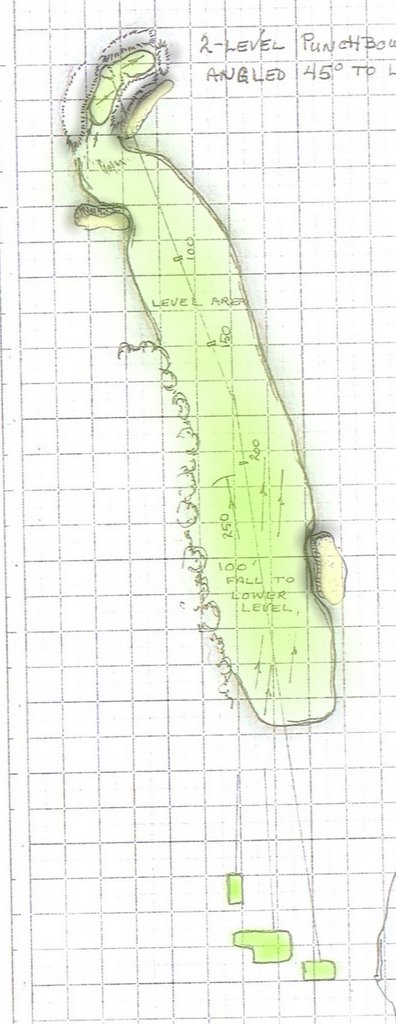
A sketch of the knol in front of the 13th green


I have always had a soft heart for any hole that presents the option of playing a running shot into a green. It is most often encouraged by a downhill approach or by a green that falls away from play. Sometimes weather gets involved and the holes become best approached along the ground. But the rarest and finest version of this type of hole is the one where the landform dictates the running approach. Last week I pointed out the ridges that front the greens at Thousand Islands Club that are certainly best approached by playing short and bouncing the ball on. The hole that pushes this idea out the furthest is the 13th at Highland Golf Links.

435 yards away from the green Thompson places you on a high tee with all the elements of the hole clearly in view. The fairway slopes very hard from right to left with a series of wonderful undulations throughout. The player will likely cut the ball of the tee to hold the slope of the fairway and be left to face a draw lie on the approach, although any stance is possible because of the wild undulations in the fairway.


The prominent feature of the hole is the large roll right in front of the green. The player is simply left with the decision of how are you going to play over, around or along the prominent mound to get to the green. You can fly the mound, but the green has no slope, so a ball just short or long will easily skid over the back. You can not play right, since the ball will bound into the right swale for a very awkward up and down. A ball hitting the left of the mound will likely be run into the only bunker on the hole. The player is left to try to bounce the ball off the mound to find the green or they can even play the long running approach over the mound and onto the green. How often do we face that as a legitimate option?

This offers a window into an older view of architecture that is built around chance as much as shot-making. Modern architecture likes to control each view and each type of shot throughout the design, but often removes the elements of luck and fun by removing unusual landforms. Golden age architects, like Thompson, left the natural and unusual contours for players to contend with by using the landform instead of a formal hazard to define and defend a green site. The landform on thirteen offers multiple options and the player is left to use their creativity to play the hole. Stanley’s use of the natural roll in front of the green makes for one of the most entertaining approaches anywhere in the world of golf.

Friday, July 21, 2006

Where Maintenance Meets Architecture

Recently I went out to play a course I had designed. I had built the course with the intent of borrowing the concepts and ideas of Pinehurst #2. I was building a public golf course in a senior’s development and felt that playability was paramount to the success and enjoyment of the course. I made the course very wide off the tee and not overly long at 6,800 yards. Even the hazards were kept down with limited use of water and a liberal use of bunkering. Even the set up of the bunkering allowed for conservative play around the hazards. Most greens were set up defending one side and providing chipping areas on the other side to create a bail side to each green. I wanted players to have the ability to play within themselves and still make some pars along the way. The only place where I set up to make more difficult was the greens. The greens were intended to be the defense of the course and the defining feature.

I set out to make the greens dramatically contoured with lots of difficulty. I also borrowed from the Pinehurst concept and set all of the greens up in the air to place a further premium on the accuracy of the approach. I also used short grass intentionally around all of the greens to create short game opportunities and to even to further repel the ball away in some cases. My intention was to create a second shot golf course that was fun. All the soils were sandy loam which created a great opportunity to keeping the short grass fairly tight and fast. Originally the turf around the greens was kept tight enough that players could hit a flop shot, a chip shot, or most importantly could putt when they felt that was the best option. I wanted the best player to make choices and possibly make mistakes in judgment. I wanted the weaker player to always play to their strength so that they could enjoy the challenge around the greens. The key to what I had designed was the use of short grass around the greens

When I played that round I found myself in one of the green side chipping areas right away. I looked forward to the fun of creating a shot that used the slopes to find its way to the hole. I love to bump and run my way around those shots since I have a fairly good ground game. I also love to watch opponents (in a match) try the flop shot because it’s the most dangerous of all the shots. I hit my chip at the bank to use the slope to direct the ball up and at the hole and my ball hit the slope and literally stayed where it hit. What did I do wrong was my first thought? When I had a closer look at the bank and the turf in the chipping areas I found it was very thick which had eliminated the opportunity to use the ground. You now had to hit a flop shot everywhere and that was not what I intended. The playing conditions had compromised the most important feature of what I designed.

I got together with superintendent and we talked about it, to his credit he made immediate improvements to the chipping areas which brought back the options. It shows how important it is to communicate with the superintendent about what you are trying to do with your course to make sure you both understand what you are looking for as a designer. It can also confirm that your expectations are reasonable. I was grateful that he could and would make such an immediate change in the playing conditions to return the intent of the design. Architects are very dependent on superintendents to keep our vision intact, and often the best and the brightest ones make us look good with their ability and skill.

Monday, July 17, 2006

A.W. Tillinghast


Last week I was one of the three finalists to interview for the work at Scarboro Golf & Country Club. In preparation for my interview, and as part of the booklet I presented the club, I ended up writing a small overview about Tillinghast for the club. For those of you who aren’t familiar with Tillinghast this may offer some enjoyable reading.

A. W. Tillinghast was born in Philadelphia in 1874, the only child of a prosperous family. He became captivated by the game of golf in the 1890s, and made annual pilgrimages to Scotland where he took lessons from Old Tom Morris – one of golf’s greatest icons. Tillinghast was a good enough player to compete, playing in early US Amateurs and Opens. His golf architecture career began when he was asked to lay out a course for friends on their farm at Shawnee-on-the-Delaware. It was an instant success and he immediately went into the golf design business.

For nearly 20 years he ran a very successful and busy design business, until the bottom fell out of golf after the market crash of 1929. He designed approximately 60 courses and remodeled or expanded an equal number during this time. Because of his skills and social connections, he acquired more than his share of great projects and left behind a handful of courses that are considered among the finest in golf. Some of his best include 36 holes at Winged Foot, both Baltusrol layouts, the San Francisco Golf Club, the East Course of the Baltimore Country Club, Somerset Hills in New Jersey, 27 holes of Ridgewood (also in New Jersey), and the Black Course at Bethpage on Long Island. He had a great run of courses and success until the Great Depression ruined his business. He eventually had to work for the PGA of America to keep his head above water, but eventually became totally disenchanted with golf when he lost his house. He and his wife moved to California to set up an antiques shop, selling his collected possesions. With limited success, he attempted to re-establish himself with Billy Bell, but never achieved the same excellence. He died in 1942 in Toledo Ohio.


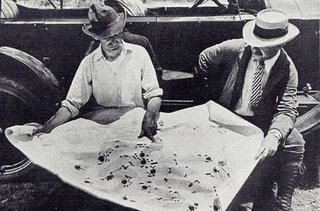
The enduring image of Tillinghast is that of the impeccably dressed architect poring over the plans for a golf course. He enjoyed being out “in the dirt” relying on inspiration to fine tune the details of each hole as it emerged from the landscape. There are great stories of Tillinghast sitting under the shade of a tree, bottle in hand, calling out directions to his workmen. He was undoubtedly was as colorful as he was talented, but there was more to him than the great stories. Tillinghast was the first designer who consciously set out to create golf holes that were visually attractive. He helped transform golf course architecture from its roots in nature to a greater art form. He drew on the principles of landscape design, engineering and art to transform a property into a spectacular playing field. To Tillinghast’s credit he also consistently changed style from one project to the next. The bunker and green complexes at Winged Foot and Baltusrol are not even remotely alike, yet both courses are a joy to look at and play despite their obvious differences. Variety was his greatest strength, all you need to do is look at his most famous works and marvel in how different each one looked.

In recent years the extent of his legacy to golf has become better appreciated as Winged Foot and Baltusrol have once again hosted major championships. His work has easily stood the test of time and he is easily included with the likes of Colt and Mackenzie in any conversations about the best architects in history.

Wednesday, July 12, 2006

Bunkers


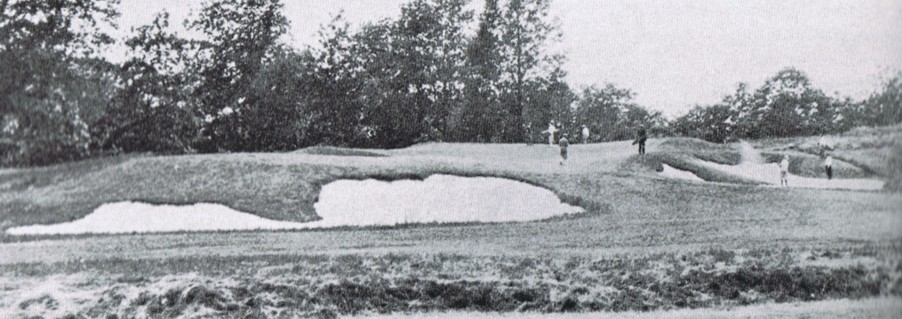
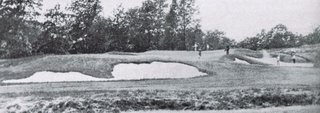
The bunker at St. George's


I first fell in love with the bunkers at Pebble Beach - the shots from the sky would leave me gasping at how beautiful they were. Those were the bunkers I first drew as a young teenager. When I was in my 20’s on a golf trip to North Carolina I discovered the more subtle style of Ross and realized that bunkers could be quite simple and elegant, and that placement mattered over aesthetics. This is my point of view starting out working for Doug.

I made a trip to Scotland and England and fell in love with Scottish pot bunkers and the English heather faced bunkers. Sunningdale in particular caught my eye and I first started to imagine the movement and flow in the bunker lines. I still liked the idea of the simple “Americanized” pot style bunkering (Angus Glen South) but curiosity had taken hold. My world was turned upside down with my first visit to California. All those fingers and faces were more beautiful than anything I had ever seen. From the mid 90’s through to recent times I was certain influenced by Mackenzie, Thompson and Thomas more than any other architects. I never fell for Pete Dye or any of the modern looks, I wanted to build high flashed bunkers with noses and capes. I will tell you right now that until I did St. George’s I still hadn’t realized how to build a great bunker. Some of my shapes and lines were nice, but I hadn’t understood enough about the detailing yet to really make them great. I think this is the area that 75% of the architects don’t get – it’s certainly more important than I figured when I first started.

Where I figured it all out was a two step process. The first was I begun to look at the details on bunkers more than I looked at the bunker shapes. Once I noticed how great edges were formed, or how many straight lines there were, I was on the right path. I began to figure out the effect of sand splash so I could emulate it. I looked at squares, corners and boxy features to realize that roundness of any sort was a problem. I also sucked it up and admitted to myself that I was playing it too safe. I had to be more aggressive with scale and had to show less fear by building more controversial bunkering. It was the leap I had to make.


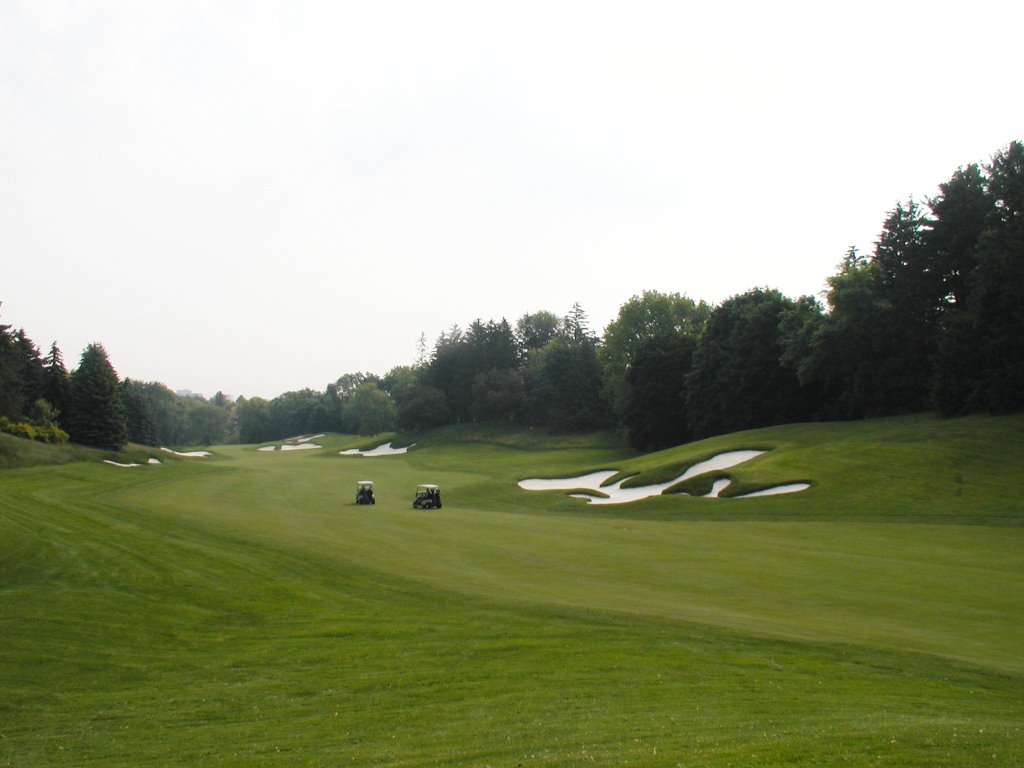
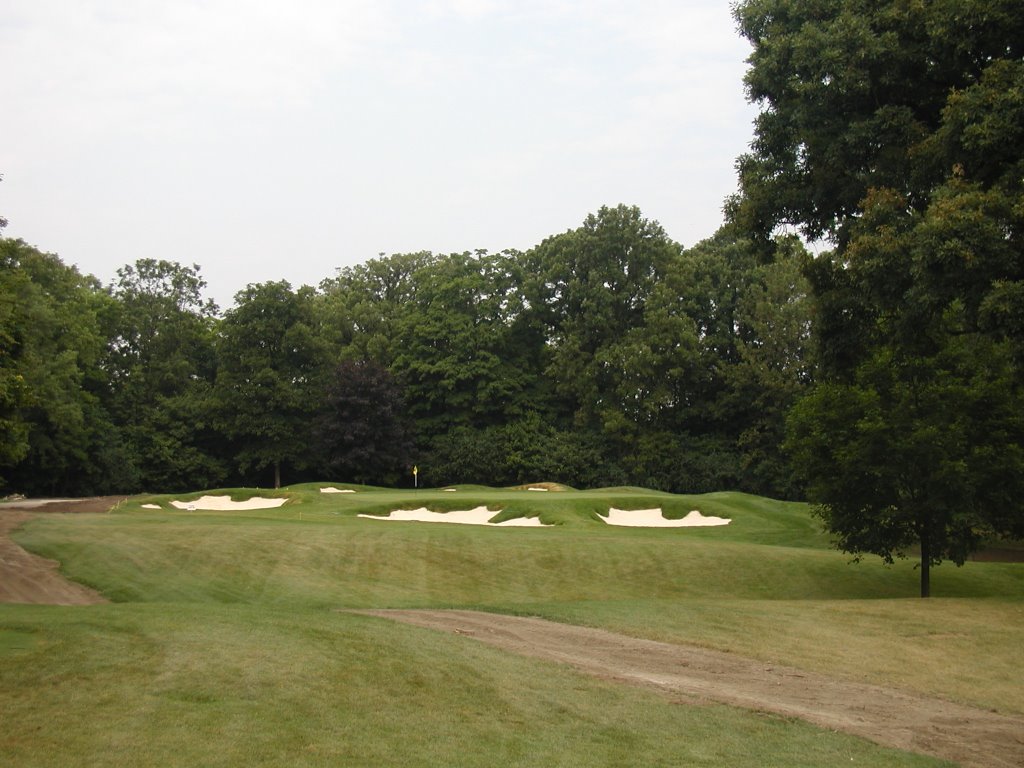
The bunkering at weston


The second stage began with St. George’s and finished with Weston. I ended my efforts of working with bulldozers and began insisting on much more agile machinery. I also went from the observer role to getting in the bunker with the crew. I tried to go from the point and direct guy to getting in the middle of the mud. I also experimented and eventually worked with topsoil bags to create a lip that wouldn’t erode or dry out at St. George’s. We had decided on establishing a dramatic bull nose to create amazing shadows, a bunker that didn’t need edging and a bunker that created a historic look. It certainly worked wonderfully.
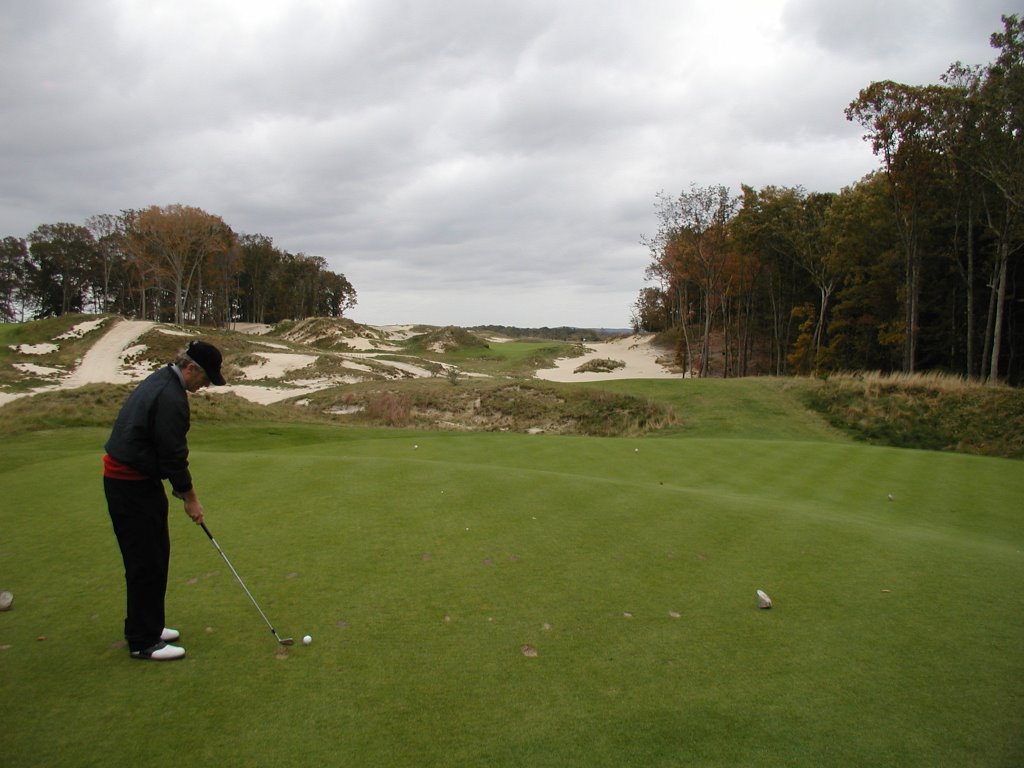
Where I finally hit full stride was when I got into hand edging all the bunker lines myself at Weston so that I had more control over the look. I loved the opportunity to shape, reflect, adjust, look and touch up until I had a bunker lines that I felt was alive. I think Doug thought I was mad, but the results are some of my best. I even went as far as to get each new visitor to paint out lines so that I could avoid that dreaded repetition – I simple fine tuned to make them work. I think that Weston certainly captured the wild movement of the original Hirono (Charles Alison) bunkers and it remains some of my best work.
I’ve recently spent a lot of time figuring out Doak’s and Coore’s bunkering so that I’m capable of that look too. It certainly is another spectacular technique that offers some interesting advantages on the right site. It was definitely what I wanted to do at Muskoka Bay, but that was not in the cards.

I honestly think there isn’t a bunker that I can’t build. The tough part will be the selection of which type. I know one thing my first new course will have amazing bunkers.

Thursday, June 29, 2006

The Biarritz Green


THe Biarritz at Yale, argueably the best of the bunch.


The original Biarritz was the famous chasm hole at the Biarritz Golf Club in France. The hole was known for its incredible carry over a stunning 50 foot deep and 100 foot wide cut in the cliffs to a peninsula below. The hole was designed by Willie Dunn and featured a tee eighty feet above the ocean playing 220 yards away to a green sitting 50 feet above the ocean hard up against the cliffs. The lighthouse in the background and sweeping ocean view made this one of the most famous holes in its day. This was also one of the holes that influenced the thinking of Charles Blair MacDonald when he went on his trip of Europe to find and document the best holes in golf in preparation for his work at The National Golf Links of America (NLGA).

At NLGA his original plan was to make the 15th hole a “Biarritz” of around 225 yards, but that got changed as the design for the NLGA evolved. He did not use the Biarritz concept at NLGA, although he went on to use the idea (or at least Raynor did on his behalf) at a number of the courses he and Raynor designed. These include; Yale, Piping Rock, Chicago and the Creek Club. There are thought to be 30 Biarritz’s in existence today.

So what is the Biarritz concept? The original hole featured a 100 yard carry over a chasm, but that is not what caught MacDonald’s eye. What caught his interest were two concepts. First, the fairway and green on the other side were flanked by two strip bunkers making accuracy paramount from the tee. This did allow players to be short as long as they were straight. Second, the green was cited on a natural plateau a few feet above the fairway that keeping all but the best shots off the green. If you can imagine this was a daunting shot from 225 yards away, so much so that the hole was shortened a series of times before its final disappearance (to become housing).

MacDonald took the concept of the natural plateau, the strip bunkers and the role of the slope in the difficulty of the hole. He brought all three together and then modified the idea into what he thought was a superior hole. MacDonald not only had the plateau “green”, he used the defense idea of the front slope in a different but equally effective way by creating a broad swale. The swale still needed to be in carried or “run through” to get to the green (I have never seen any reference to the original having the swale). Then where the Biarritz found its current form, MacDonald made the front a “plateau” like the back. The hole at Yale with its higher back plateau has more roots to the original than others, but either way they all are equally as interesting to play.

Where evolution took this one step further was the front seems to be intended to be fairway, but at some clubs (Chicago and Yale originally) the front was cut to green height creating a most fascinating version of the double plateau green. It is not known whether this was the idea of Raynor, MacDonald, Banks or a green chairman but never the less it made MacDonald’s creation even more fun to play. The result was many clubs now have greens with high plateau fronts, a massive deep swale running across the centre, and a high back plateau. That green is now commonly referred to as the Biarritz green. When MacDonald built his first one at Piping Rock it was quickly referred to as MacDonald’s folly (the hole at Piping rock had the approach and swale as fairway and the green as the back plateau). Now each and everyone of them is cherished and protected by the club.

Wednesday, June 28, 2006

My Comments on RCGA Canadian Golf Study


Kids playing on the Eden coiurse at St. Andrew's


First off I needed a break from architecture, because the hole series took a lot out of me. So I thought I would look at the most current news, although I’m admittedly a few days late on this item.

The RCGA released a study about golf a few days ago and I feel like commenting on some of the key numbers. Golf participation in Canada is 21.5 per cent. I must admit I’m surprised that participation equates to one in five, but we have always been known for one of the highest participation rates anywhere in the world. But when I looked into why it became obvious. Playing one round or company scramble counted as participation – this leads to 20% participation rate according to the survey. To me this number has no meaning.

The number that matters is the number of core golfers which is defined as people who play eight or more rounds a year. This group grew supposedly by 47.5 per cent since 2001. Does that seem like an unreasonable amount to you? It sure does to me. Through my own anecdotal evidence I have watched friends come into the game in the last 10 years only to leave in large numbers in the last five. Why? “The game costs too much and takes to long to play” is there standard reasoning. I find it hard to believe we have this much growth in a time when the largest region is in a sharp decline.

Now I get the ideas that this is not an issue in Saskatchewan and other smaller population centers where green fees did not take off recently. I get that Toronto is actually only a part of Canadian golf, but tell me how does the area that comprises almost as many players as the next three largest playing provinces combined - not show up in the numbers. Again when you look deeper in the polling it was proportional and this would make a huge impact on the numbers. It was made with an equal representation from provinces and right down the regions – this methodology makes Toronto and Montreal largely disappear despite representing close to half of all Canadian golfers. How can this be an accurate assessment of the game in Canada? I believe the survey was done intentionally this way to “help” the numbers along. This is not to suggest a conspiracy, but to point out consultants often find a way to deliver what people want to here.

Where this all gets confusing is the contrasting information with other major bodies in golf. We started the new millennium with 3 consecutive drops of 10% each - for the participation rate in golf - according to the National Golf Foundation. While I will concede that they are American based, but I still find it very hard to believe that Canada is running in complete opposite direction of the US. All I want is an accurate sense of where we are and where we are headed and I don’t believe this survey is releable.

Finally the survey confirms what has worried me all along – that junior participation is dropping. I think the Tiger Factor that everyone got a free ride from does not draw in new players anymore. The awe we and our kids once had for him wonder has largely run its course and kids are on to new heroes and new sports. We are back to cost being the single most important determination of participation in golf. As a parent with a child who plays, I know the cost is tough to deal with because many courses do not offer junior discounts near as much as they did when I was a young.

Affordability is the top barrier to increasing participation in the game of golf. The smaller centers are still healthy, but the large centers are not. I don’t see how this survey could not possibly pick that up when the rest of us see it so clearly.

Tuesday, June 27, 2006

18 Holes – Day #18 - 10th at San Francisco


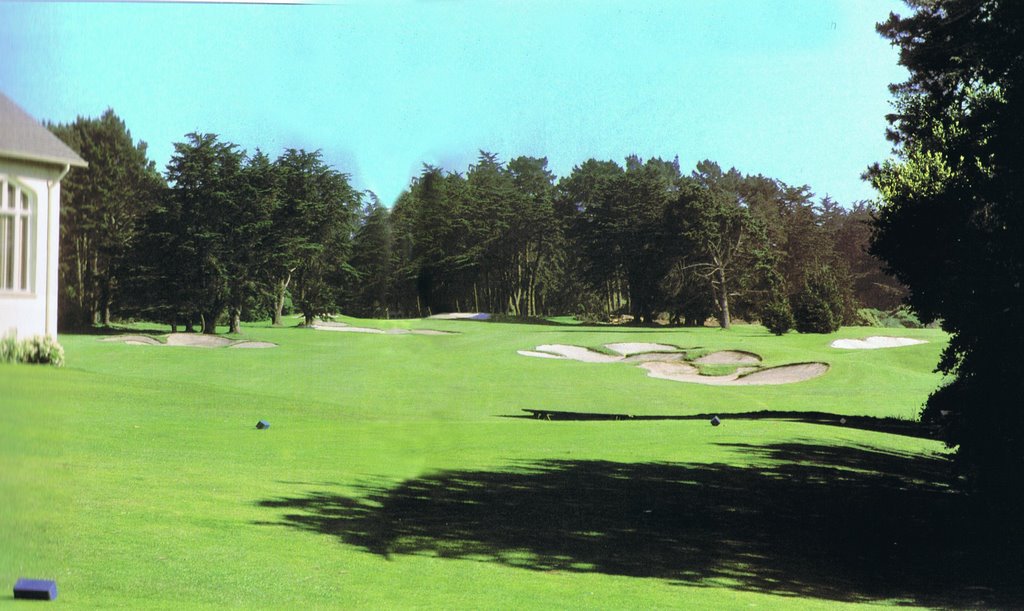
The incredible 10th tee shot. The trees on the right are now long gone and the view is opened back up.


Well this is the last hole and another unconventional choice. The 10th at San Francisco is the finest example of correct use of scale that I know, this is a hard technique to explain and an even more difficult technique to use. I wanted to talk about scale during this list but I must admit this quality is the most elusive and requires an intuitive feel for space. I would honestly say that there are no more than a handful of architects that can work at a large scale. I have even seen a few good ones try to go to a large scale to disastrous results. I will spend this entire piece trying to explain how Tillinghast did it, and this may be to mixed results too, for this is a hard principle to get.

The aerial is crucial to understanding this hole, so I recommend you look at it often as reference. From tree line to tree line the clearing for the 9th and 10th fairway is 300 yards wide! What it does is create one of the grandest views from any clubhouse in golf. The hard part for Tillinghast was to find a way to make the 9th 10th and 18th holes not get lost in that much space. It would be overly simple to say that Tillinghast increased the bunkers to enormous sizes to help fill the space, but it is more than that. What Tillinghast did was take everything to epic proportions so that nothing would get dwarfed by the space. The bunkers are obviously large, but the mounding and fairway widths are much larger than convention too. Tillinghast was also smart enough to intentional blend the bunkering on the 9th and 10th so that they appear from both side to be an extension of the bunkering for each hole. This essentially helps create enough size and expanse within the bunkering to create definition, but more important balance with the landscape.

So why the 10th? The beauty of the 10th is you feel like you could hit that tee shot anywhere, but the Cypress trees closer to the green are unusually tight for San Francisco, and your real target for the tee shot is the smallest on the course. You must be right edge of the fairway, just beyond the carry bunker, to have the right line to cut the ball into the green. A fade is the only play to hold this green with a long iron, since the green angles sharply to the right behind an awaiting bunker.

So what can we learn from this hole? Understanding the beauty of scale and space can lead to breathtaking architecture, but not understanding it leads to the biggest misses in golf (just look at Doral after Ray Floyd for a great example). To work on this scale means to spend extra time getting the sweep and drama into the bunkering in particular. You must be painstaking in your details, since everything gets magnified by the open space. Only a confident creative hand that is capable of the broadest strokes can succeed on this level.

18 Holes – The List

10th at Riviera – George Thomas - 4
14th at Royal Dornoch – John Sutherland - 4
13th at Pine Valley – George Crump - 4
4th at National Golf Links of America – Charles Blair MacDonald - 3
14th at Royal County Down – Old Tom Morris - 4
9th at Cypress Point – Alister MacKenzie - 4
13th at Tobacco Road – Mike Strantz - 5
4th at St. George’s (NLE) – Stanley Thompson - 4
8th at Royal Troon - William Fernie – 3

14th at St. Andrew’s (Old) – Alan Robertson – 5
13th at Gleneagles (Kings) – James Braid – 4
4th at Royal Portrush – Harry Colt - 4
10th at Friar’s Head – Bill Coore - 3
5th at Merion – Hugh Wilson – 4
15th at Portmarnock – G. Ross & Pinkeman
6th at The Creek Club – Raynor
4th at Seminole – Ross
10th at San Francisco - Tillinghast

Monday, June 26, 2006

18 Holes – Day #17 - 4th at Seminole


When it came to the 4th at Seminole, I always knew it would be on this list. I’ve always been fond of the slightly unconventional routing that leads to the superior hole. Ross’s routing uses the two large parallel dunes on either end of the property on almost every hole. It is a magnificent method to create the feel of elevation when the reality is there was very little on the site. Without a doubt in my mind the best part of the routing is the holes (4-5-6) that run along the far dune. The 4th is a hole that runs right on top of the far dune and the hole is that it runs in contrast to all the others. Most holes play down from the dune creating a great tee shot and view, or up into the dune to creating great green sites. Seminole should be studied for the routing alone.

The 4th plays like a hogs back, with the land falling sharply away on both sides of the dune, but Ross was smart enough to create a reasonably landing to play for on your tee shot. He cut the top off the dune and then used bunkers and natural sandy areas on either side to define the right and left of the hole so that play must be accurate. The green is where this hole comes together for me. He has tucked it slightly behind the huge natural bowl on the left so that the fairway banks around the sandy bowl and then swings back as it gets to the green.

Ross’s genius was to not place the green right on the bowl, but to set it 20 yards back allowing a bounce in approach. Where this became essential was when he raised the green up a couple of feet creating a slightly crowned plateau. The bunkers right and long tell you that the smart play is to bounce in the approach or to play short and left for an easy up and down.

What have I learned? What I love about the hole is that if you want to get aggressive, the hole will punish you for being too cocky, since the crowned green is very hard to hold. If you recognize the room and the safer option on the left, you find Ross has given you a very fair route into this long testing par four and an easy way to make four. It is a great combination of difficulty and playability in one hole. Finally, this is another fine example of making sure every hole doesn’t have a raised tee, elevated green, plays through a valley, or goes with the grades; ridgeback holes (and other less conventional holes) are just as important to routing a great golf course.

Next Hole: http://thecaddyshack.blogspot.com/2006/06/18-holes-day-18-10th-at-san-francisco.html

Saturday, June 24, 2006

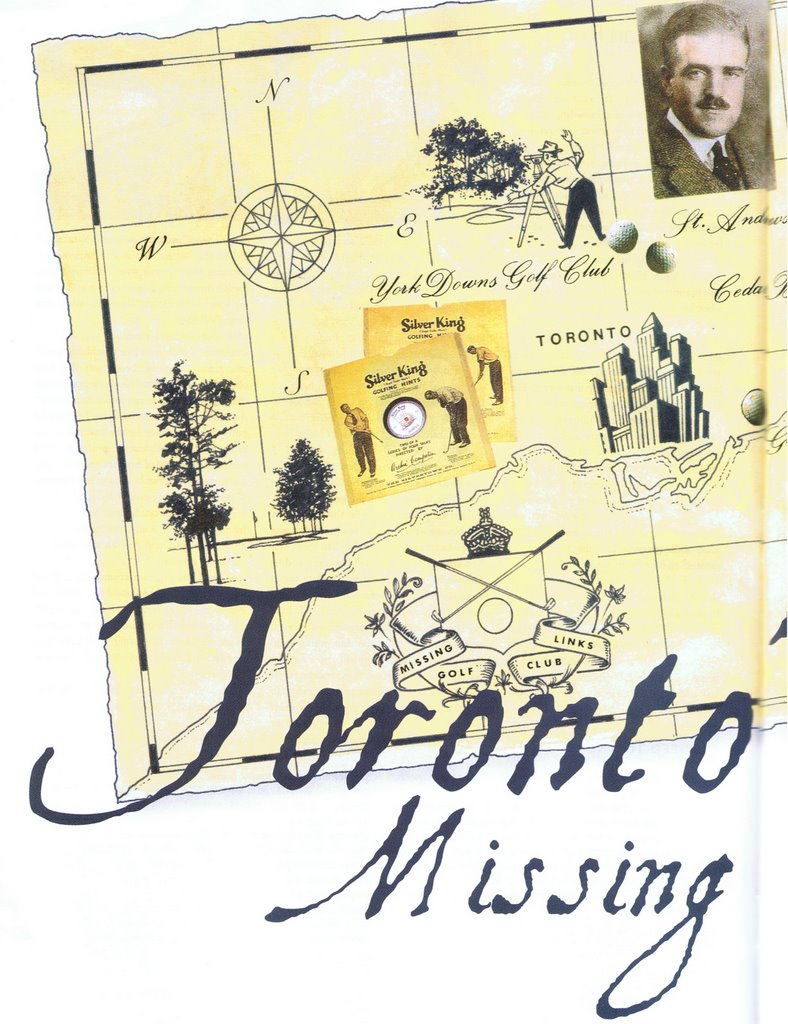
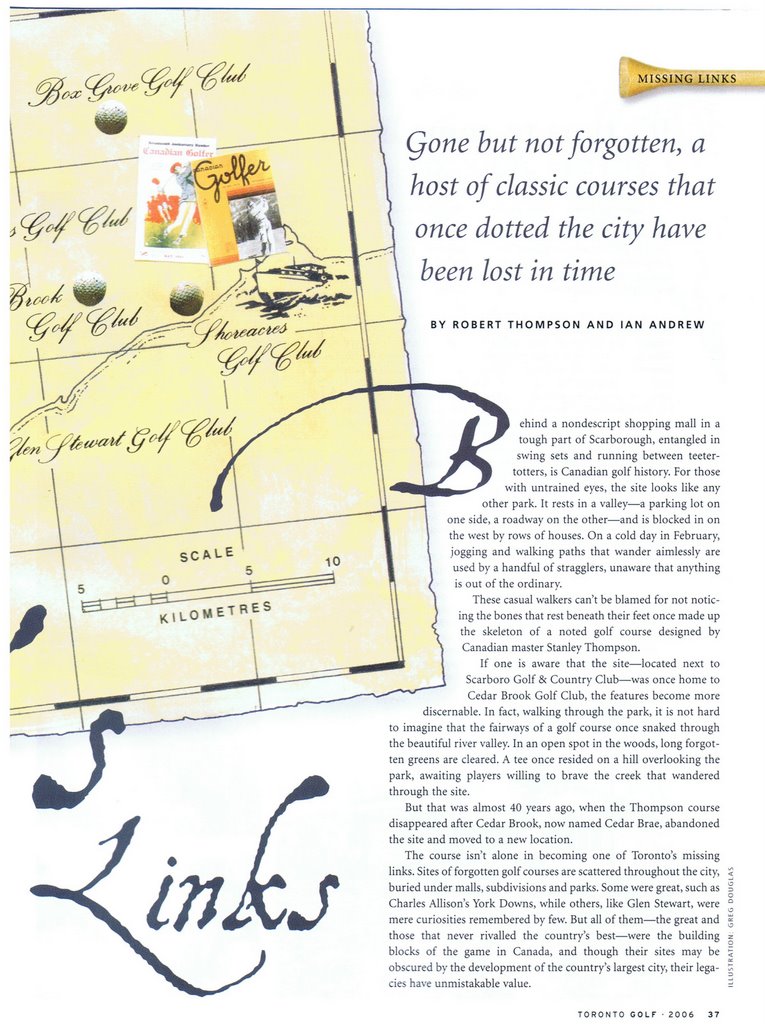
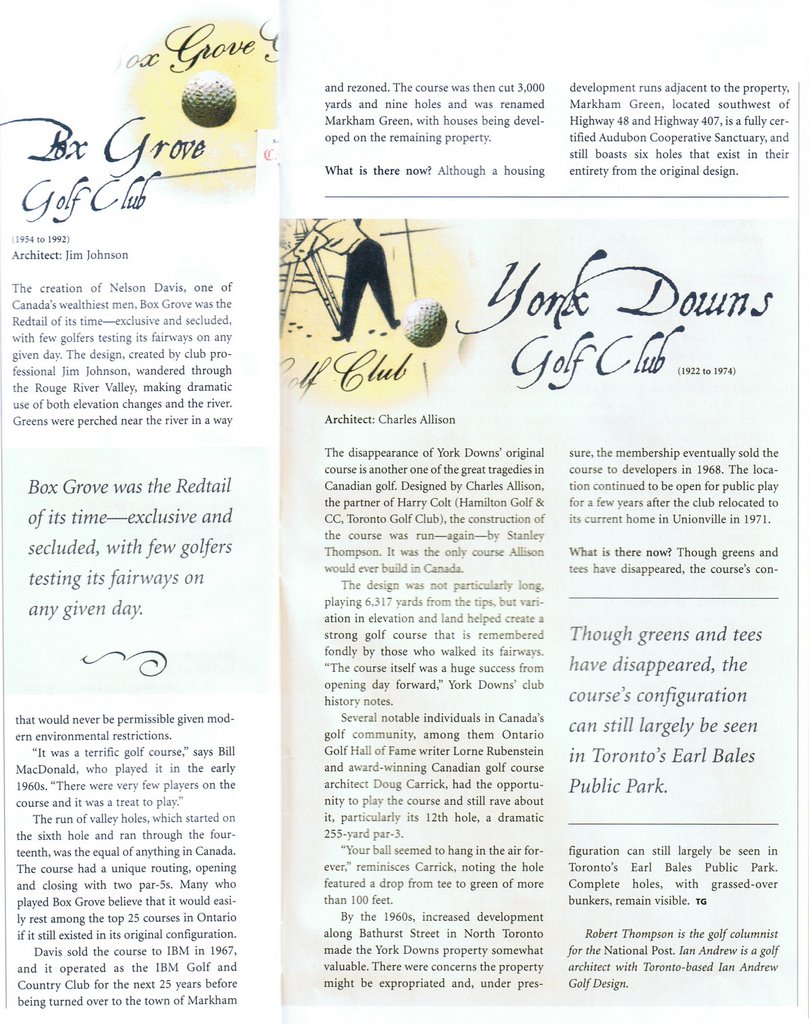
Latest Article in Toronto Golf

The following article was written by Robert Thompson and myself. It is a walk through some of the prominant courses that disappeared around Toronto. I used to play Box Grove (then IBM Country Club) as a kid. It would have been easily in my top 50 in the country.

Friday, June 23, 2006

18 Holes – Day #16 - 6th at The Creek


This may be my favourite par four in golf - unusual, quirky, solid strategies, beautiful view, terrific green - it has it all


Sometimes presentation can make a hole even more dramatic. Raynor was smart enough to take you across the flattest section of the property with the first five holes before placing you on the 6th tee. The 6th tee has a beautiful high panoramic view of the ocean and the holes below. There are few views in golf as pretty as this one. What makes the 6th is there are few holes as good.

The tee shot appears fairly simple because there is tons of room out on the right and the bunker barely comes into play. The problem with that play is from that angle you’re pretty much dead. You really need to be on the left to have a reasonable chance at approaching the green. The forest on the left of the hole defends the ideal line and a shot into the forest is a lost shot. Therefore you must hit a light draw around the tree line to gain position on the flatter plateau for the approach.

The approach is a stunner. The green is a reverse redan (falling hard to the back and right) and Raynor has lifted the surrounds to create a punchbowl setting for the green too. This is the most unique and wonderful green complex I know. The shot is a fade into the throat in front of the green to access the front pin, or a play to the front of the green to access the back pin position. The ball will release and run a long way from both spots. The joy of the hole is that it uses the rambling hillside to define the locations of the landing area and then a perfect natural ridge to find the green site. Since the hole goes with the grade the whole way everything blends in magnificently.

What I learned? The ideal line only has to be protected by one hazard and that there is no need to defend the other side if the green can do that. That a bold idea can make a hole so unique and so memorable that people will not forget it. I have realized that “template” ideas can be combined to create far better holes than using only one of the ideas. The redan makes a great green site on fours and fives. The ground game can still be part of modern golf, it just takes some old fashioned ideas to bring it back.

Next Hole: http://thecaddyshack.blogspot.com/2006/06/18-holes-day-17-4th-at-seminole.html

Thursday, June 22, 2006

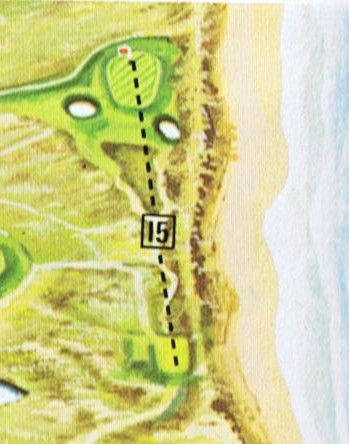
18 Holes – Day #15 - 15th at Portmarnock


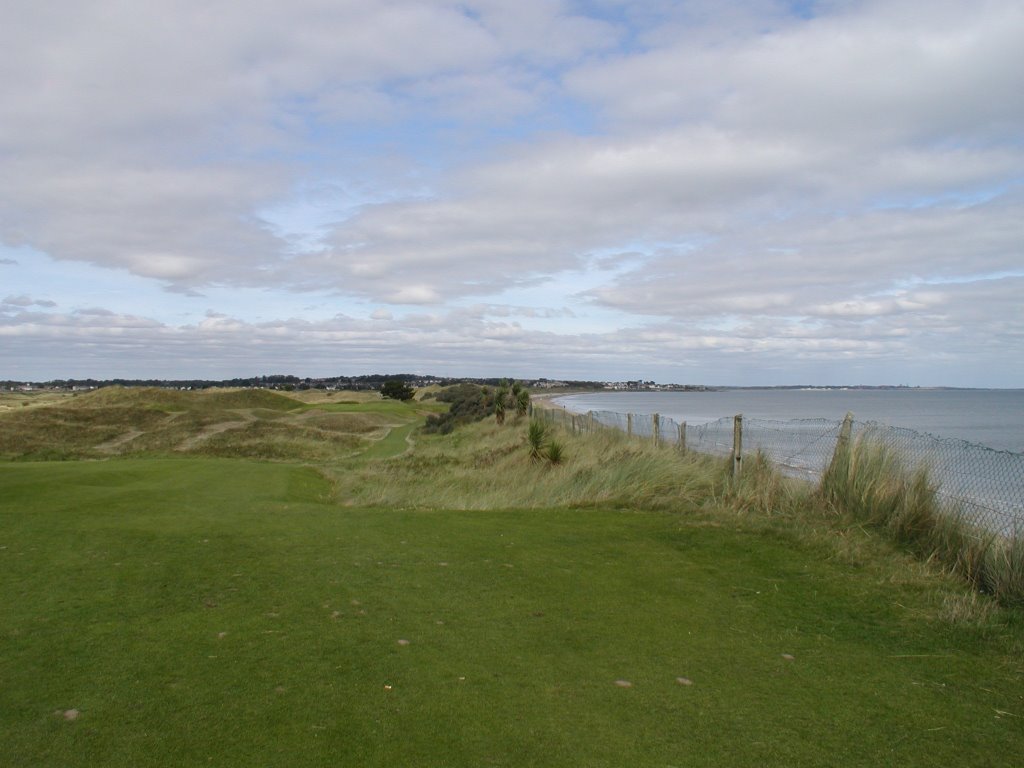
The 15th hole, one of my favourites


At 195 yards, the next hole is as beautiful and diabolical as it is simple. There is nothing fancy at the 15th at Portmarnock, the hole is pure in its design and clear in every facet of its challenge. There is nothing to figure out, just a shot to hit.

What makes the hole is position over everything else. The hole sits hard up against the ridge of sea side dunes that separates the beach from the course. The green is placed on a naturally occurring plateau that is very close to the dunes on the right. The shot is further complicated since the dunes are also covered in think vegetation and there is an out of bounds fence running along them too. What makes this hole great is the effect of the out of bounds combined with the prevailing winds. If the wind is coming off of the ocean, the only way to find the green is to hit at the out of bounds and bring the ball back in. If the wind is in the opposite direction the player must guard against over cutting the tee shot out of bounds.

There is some room to bail left but the up and down is quite complicated. The left is much lower than the green and is a mixture of rumples covered in short and long grass. There is no guarantee that bailing left will bring a favorable lie, and a bunker cut deeply on the front does swallow any shots in that area. You may be forced to play around that bunker costing you more shots. There is also a deep front right bunker but that one is more of a catch to overly daring approaches than anything else.

What I learned from this hole. Out of bounds was an incredibly well used an effective hazard in the origins of golf. It is used much less now because of liability issues with adjacent properties; but if the right situation could be found, placing green hard up against a boundary has a huge psychological impact on the way the player will tackle the hole. The other issue is providing a bail that will leave very mixed results and a lot up to chance. That left bunker can make the bail the worst possible choice. All this strategy is further emphasized by the green being up on a plateau.

A fine par three indeed.

Next Hole: http://thecaddyshack.blogspot.com/2006/06/18-holes-day-16-6th-at-creek.html

Wednesday, June 21, 2006

18 Holes – Day #14 - 5th at Merion


The tee shot into the banking fairway


I have been slowly building a list of holes that have captured my imagination, but very few listed match the next one. Merion’s 5th is more than a clever routing of a good long par four; it is also a unique concept that is brilliant yet underutilized in golf architecture. It represents the simplest way to create both difficulty and option all within a single hole, a concept so fine that bunkers are completely irrelevant.


The second still contending with the same bank


As Tom Doak has described in his writings this is one of the more natural holes to find. The creek on the left defines the left edge of the entire hole, first as a diagonal carry from the tee and then as a hazard against the left edge of the green. The tee shot is hit into a natural bank rising from the creek which makes the fairway very receptive, but the second shot is most likely from a lie well above your feet. A prefect tee shot with a draw can find the small flat area by the creek for a flat stance and a good look at the green, but most shots are played safely away from the hazard up on the side slope.

The green rather than being flat or pitched back into play slopes the exact same way as the fairway. This is the genius of the hole. Wilson left ample room above the green to bounce a ball in from the right, but it is very hard to judge the right line to get it on the green. Leave it above and you will not get up and down, pull the approach and you will hit it through the green and into the creek. Most try to play a mild draw and bounce it in, it seems to be the safest play; but a few with great skill try to hit a fade from a draw lie. This is the shot only the most skilled player can make, but the green will reward this shot.
This is a hole where you remember your fours and accept your fives.

What I learned was a long list. Having the green and fairway all fall in the same direction requires that the approach be shaped to hold both the fairway and green for position. Keeping the approach right of the green also as fairway means that a player can hit both the draw and fade to find the green. Having the creek as a diagonal and a fairway with large cross-slope means a player can shape the ball to hold the fairway or the other way to feed the ball around the corner to the flats. Throw in the clever diagonal of the creek; the flanking hazard at the green, the fact that the hole uses natural slopes, the uphill nature of the hole making the hole play longer, and the list goes on and on. I hope to design a hole that good in my life time.

Next Hole: http://thecaddyshack.blogspot.com/2006/06/18-holes-day-15-15th-at-portmarnock.html

Tuesday, June 20, 2006

18 Holes – Day #13 - 10th at Friar’s Head


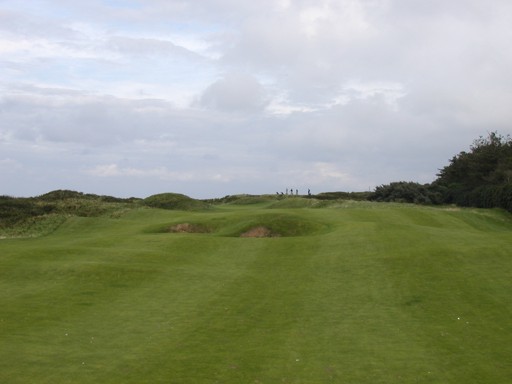
The tee shot at the 10th with the green peaking out behind the dune


Sometimes something unconventional will bring the finest result.

The routing at Friar’s Head is one of the best that I have seen in modern time. The key is how Bill Coore weaved the holes through the tree covered dunes without destroying the nature of the site. One of the keys to the project was the brilliant transition from the dune area into the old potato farm, and the two par fives playing from on top down into the fields were the key. Getting to the 11th tee required what a short hole from the clubhouse to the top of the dune – rather than a connector - it turned out to be the most memorable hole on the course.

The story of the hole is quite interesting, Bill took all the staff over to look at the hole for their opinion about the huge dune that fronted the natural green site and kept putting off the decision on what to do with it. Originally Coore wanted to incorporate the feature in the design, but once cleared it, he kept thinking it was too much. Finally it was Ben Crenshaw who said he should leave the feature exactly how it is, and this decision made the hole. The mound is reminiscent of the features found at famous short holes in Scotland and Ireland where playing over them creates a sense of adventure.

What did I learn? There is no question in my mind that leaving natural features makes the most memorable holes. While half the green is blind, Coore made sure the other half is not, and this makes the hole enjoyable rather than intimidating. You have a feel to where the green is and how far you need to be. While the dune makes some of the pin positions blind, the green is enormous so it becomes an accessible target once you’ve carried the dune. The key to the hole was the choice to keep the quirky, but interesting, feature dune.

Next Hole: http://thecaddyshack.blogspot.com/2006/06/18-holes-day-14-5th-at-merion.html

Monday, June 19, 2006

18 Holes – Day #12 - 4th at Royal Portrush


The view of the approach to the green


Royal Portrush is as good a golf course as any I have ever played, while there are many fantastic views, the course is not what I would call beautiful. There are so many more spectacular looking courses like Royal County Down or The Island Club, but it is undeniably a design that has few rivals. No course puts pressure on your driving quite like Royal Portrush. No hole does it better than the 4th.

The tee shot on the 4th may be to the widest fairway on the golf course. The tee shot is downhill with out of bounds hard up against the right edge of the fairway, but what causes so much more problem is the incredibly deep pot bunker 20 yards inside the edge of the fairway on the right. Colt has placed a bunker right where you want to play. You can not afford to be short because you won’t get home in two and you certainly can’t carry the bunker, so to hit this fairway you face a choice of flirting with the bunker or the out of bounds. It’s your choice.

Once you have finally got on the roller coaster fairway, you face a daunting approach to a green set in between the dunes. The back half of the green is hidden by an enormous dune on the left. It takes courage to try carry the fescue covered dune to get to the back left pin, particularly because the carry is longer the further left you go. The right is open but you must thread the needle between the fronting dunes to find the green. All in all, a great challenge when you have a long iron in your hands.

What did I learn from this hole? At a certain point in every course a player must be asked to reach down and find their best. If an architect never asks this from a player, then they have not created enough challenge to hold the player’s interest over the long term. These are the holes that we measure our ability against. It is important for a player to know they can make two great shots under pressure, or for a weaker player to make the par of their life against an insurmountable foe.

Next Hole: http://thecaddyshack.blogspot.com/2006/06/18-holes-day-13-4th-at-friars-head.html