Saturday, June 24, 2006

Latest Article in Toronto Golf

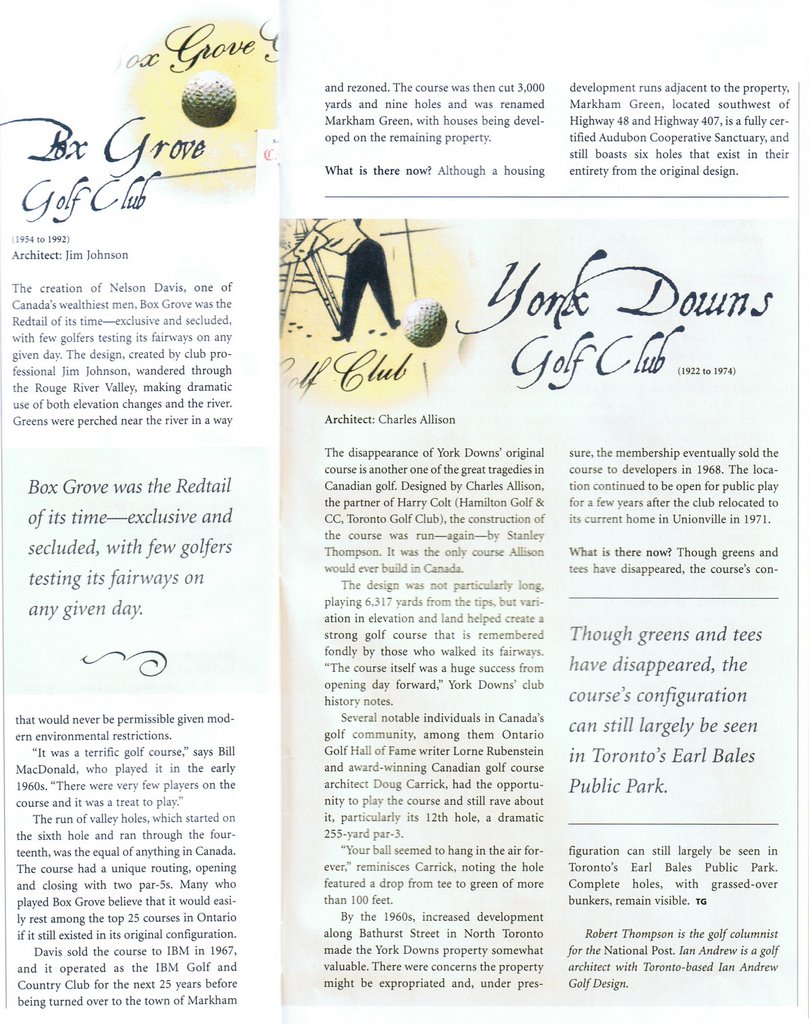
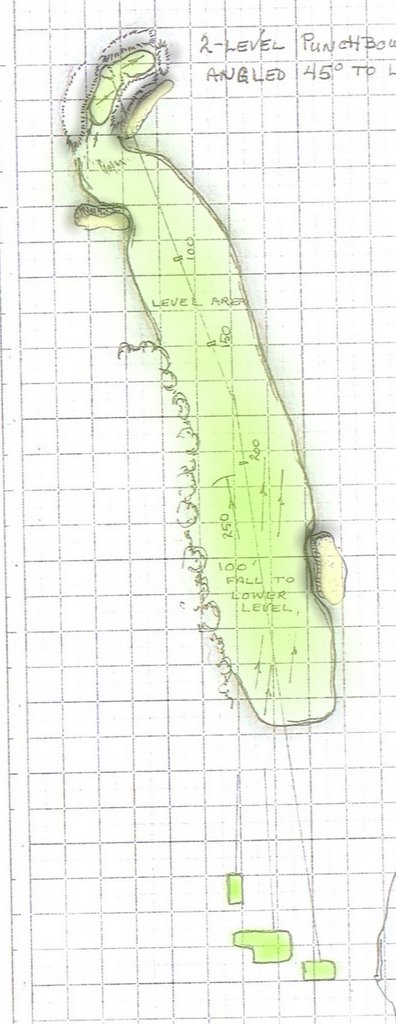
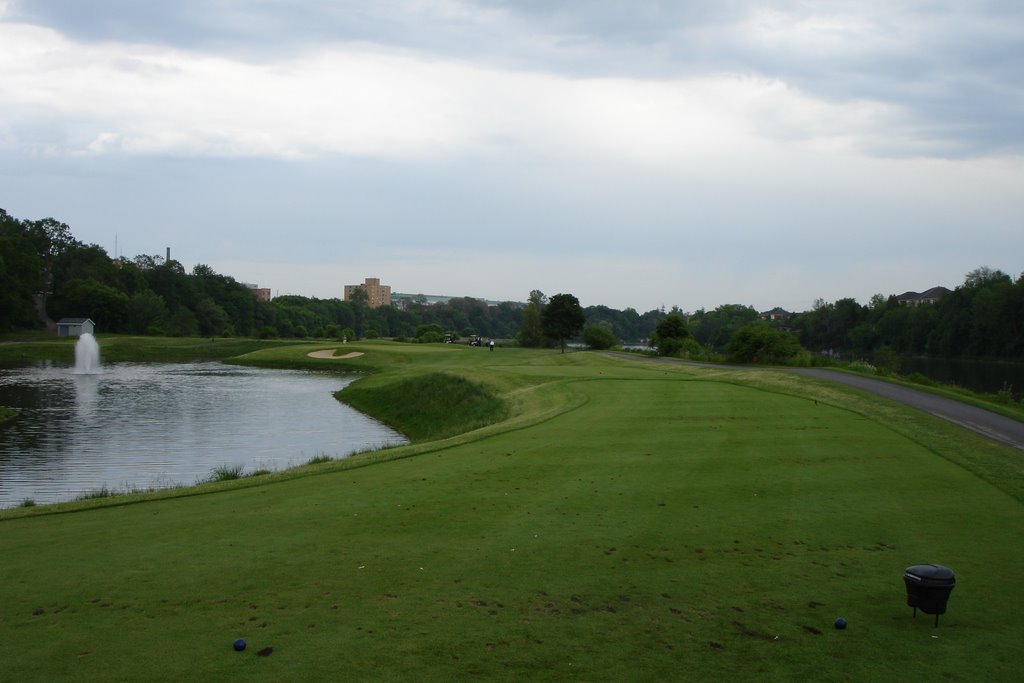
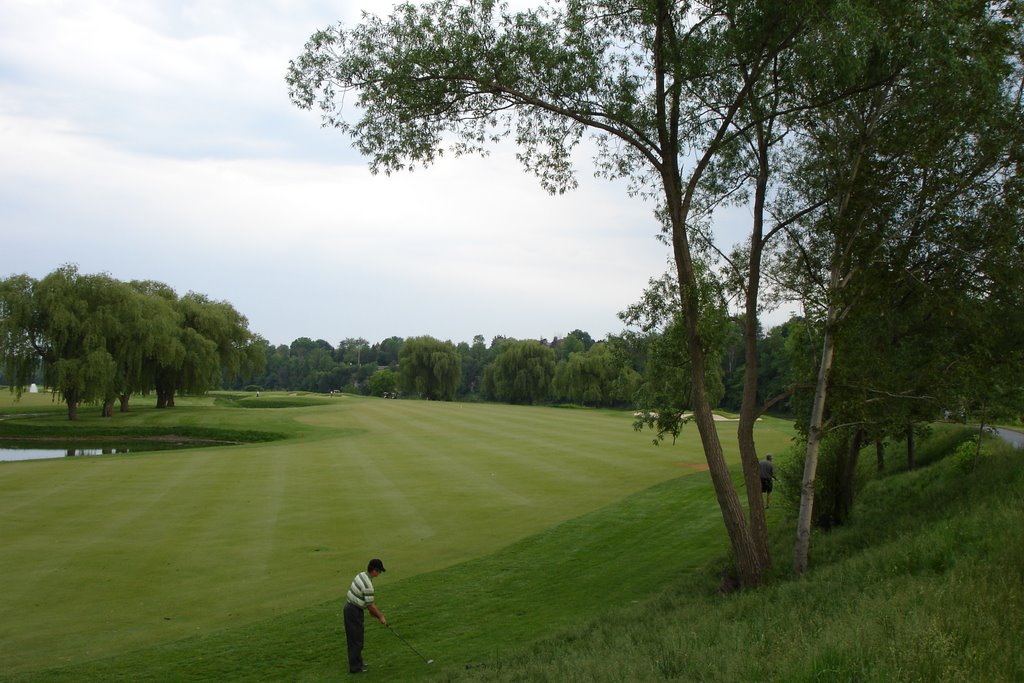
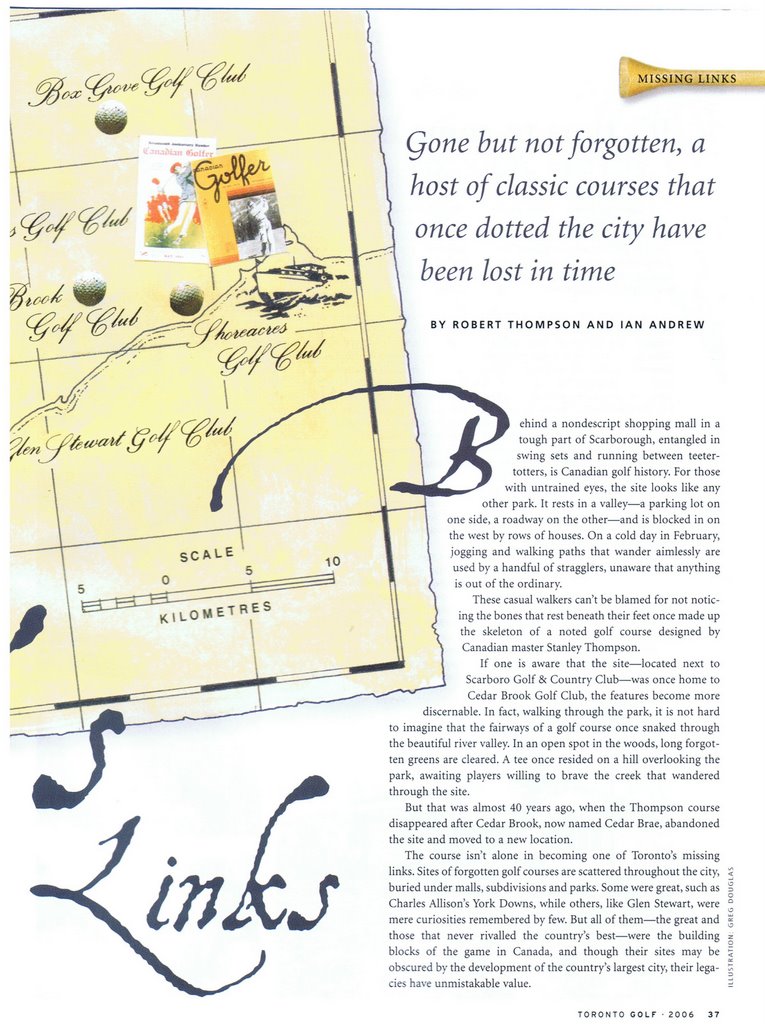
The following article was written by Robert Thompson and myself. It is a walk through some of the prominant courses that disappeared around Toronto. I used to play Box Grove (then IBM Country Club) as a kid. It would have been easily in my top 50 in the country.

Friday, June 23, 2006

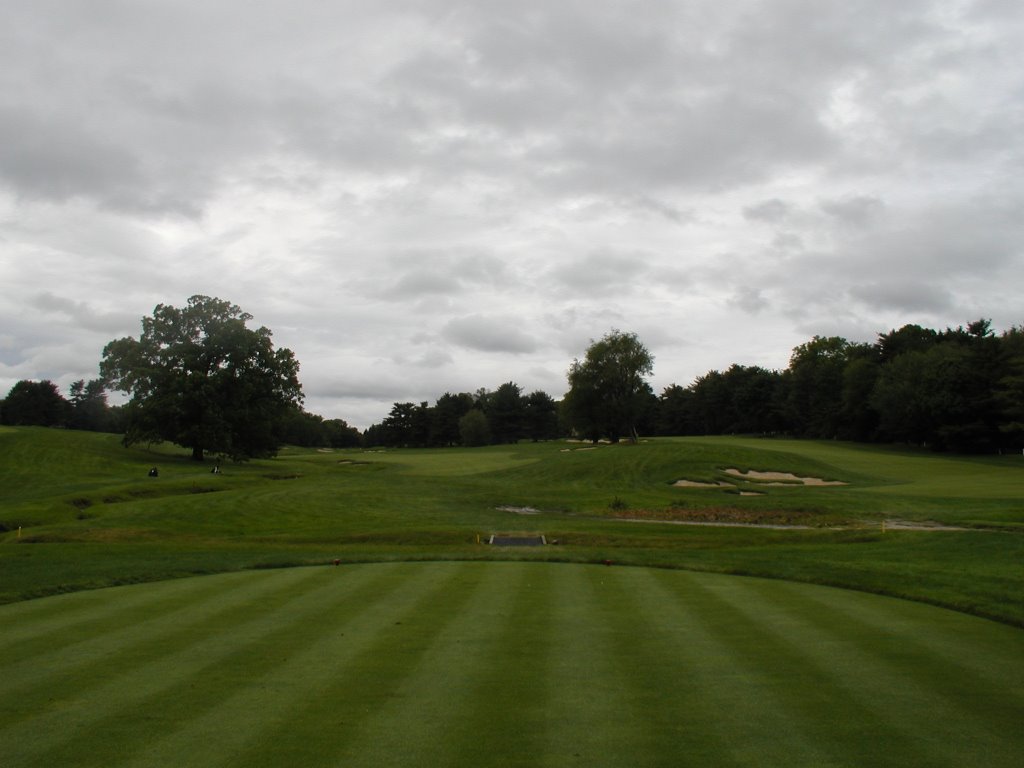
18 Holes – Day #16 - 6th at The Creek


This may be my favourite par four in golf - unusual, quirky, solid strategies, beautiful view, terrific green - it has it all


Sometimes presentation can make a hole even more dramatic. Raynor was smart enough to take you across the flattest section of the property with the first five holes before placing you on the 6th tee. The 6th tee has a beautiful high panoramic view of the ocean and the holes below. There are few views in golf as pretty as this one. What makes the 6th is there are few holes as good.

The tee shot appears fairly simple because there is tons of room out on the right and the bunker barely comes into play. The problem with that play is from that angle you’re pretty much dead. You really need to be on the left to have a reasonable chance at approaching the green. The forest on the left of the hole defends the ideal line and a shot into the forest is a lost shot. Therefore you must hit a light draw around the tree line to gain position on the flatter plateau for the approach.

The approach is a stunner. The green is a reverse redan (falling hard to the back and right) and Raynor has lifted the surrounds to create a punchbowl setting for the green too. This is the most unique and wonderful green complex I know. The shot is a fade into the throat in front of the green to access the front pin, or a play to the front of the green to access the back pin position. The ball will release and run a long way from both spots. The joy of the hole is that it uses the rambling hillside to define the locations of the landing area and then a perfect natural ridge to find the green site. Since the hole goes with the grade the whole way everything blends in magnificently.

What I learned? The ideal line only has to be protected by one hazard and that there is no need to defend the other side if the green can do that. That a bold idea can make a hole so unique and so memorable that people will not forget it. I have realized that “template” ideas can be combined to create far better holes than using only one of the ideas. The redan makes a great green site on fours and fives. The ground game can still be part of modern golf, it just takes some old fashioned ideas to bring it back.

Next Hole: http://thecaddyshack.blogspot.com/2006/06/18-holes-day-17-4th-at-seminole.html

Thursday, June 22, 2006

18 Holes – Day #15 - 15th at Portmarnock


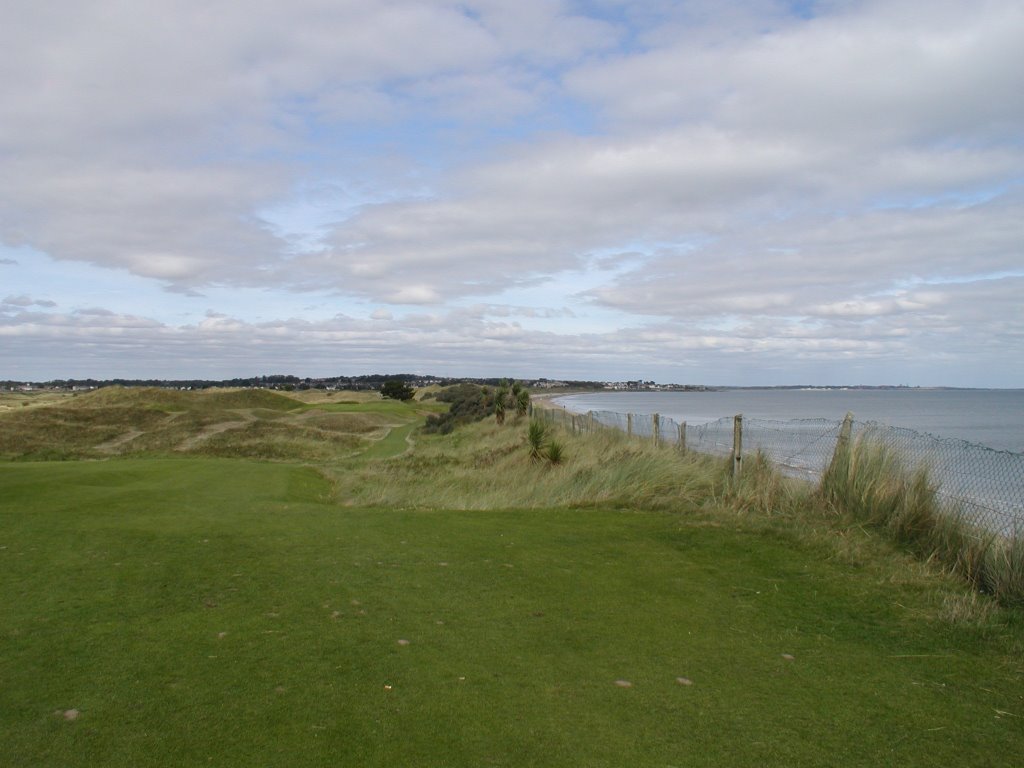
The 15th hole, one of my favourites


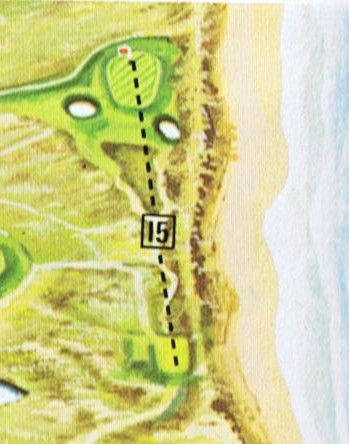
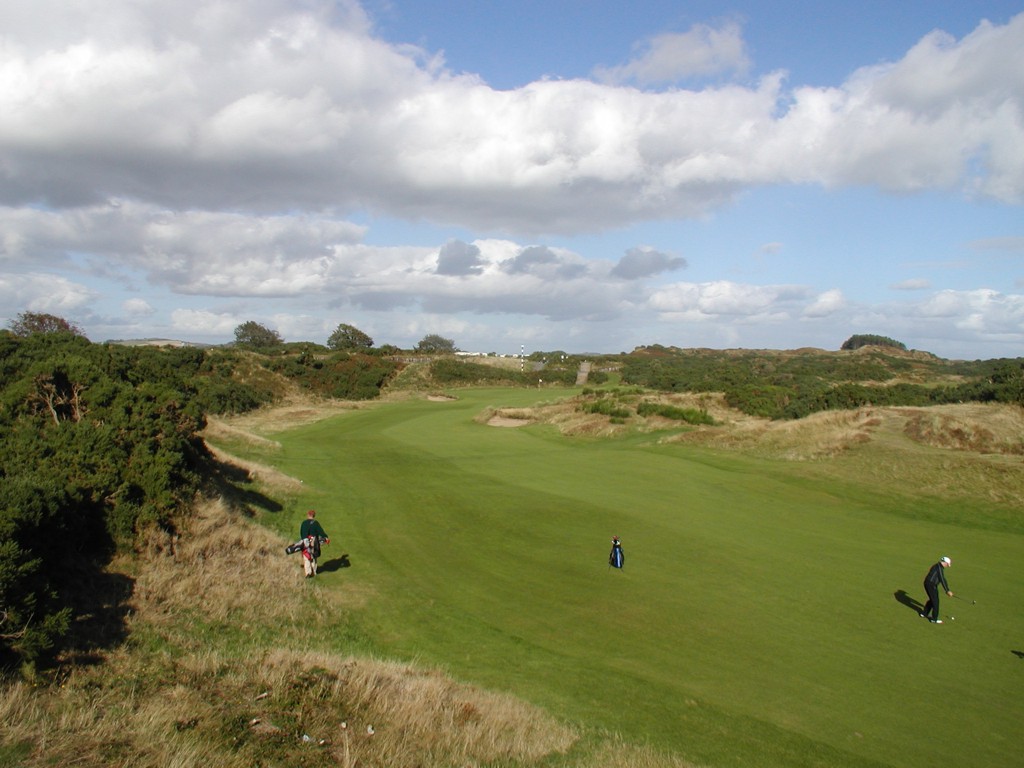
At 195 yards, the next hole is as beautiful and diabolical as it is simple. There is nothing fancy at the 15th at Portmarnock, the hole is pure in its design and clear in every facet of its challenge. There is nothing to figure out, just a shot to hit.

What makes the hole is position over everything else. The hole sits hard up against the ridge of sea side dunes that separates the beach from the course. The green is placed on a naturally occurring plateau that is very close to the dunes on the right. The shot is further complicated since the dunes are also covered in think vegetation and there is an out of bounds fence running along them too. What makes this hole great is the effect of the out of bounds combined with the prevailing winds. If the wind is coming off of the ocean, the only way to find the green is to hit at the out of bounds and bring the ball back in. If the wind is in the opposite direction the player must guard against over cutting the tee shot out of bounds.

There is some room to bail left but the up and down is quite complicated. The left is much lower than the green and is a mixture of rumples covered in short and long grass. There is no guarantee that bailing left will bring a favorable lie, and a bunker cut deeply on the front does swallow any shots in that area. You may be forced to play around that bunker costing you more shots. There is also a deep front right bunker but that one is more of a catch to overly daring approaches than anything else.

What I learned from this hole. Out of bounds was an incredibly well used an effective hazard in the origins of golf. It is used much less now because of liability issues with adjacent properties; but if the right situation could be found, placing green hard up against a boundary has a huge psychological impact on the way the player will tackle the hole. The other issue is providing a bail that will leave very mixed results and a lot up to chance. That left bunker can make the bail the worst possible choice. All this strategy is further emphasized by the green being up on a plateau.

A fine par three indeed.

Next Hole: http://thecaddyshack.blogspot.com/2006/06/18-holes-day-16-6th-at-creek.html

Wednesday, June 21, 2006

18 Holes – Day #14 - 5th at Merion


The tee shot into the banking fairway


I have been slowly building a list of holes that have captured my imagination, but very few listed match the next one. Merion’s 5th is more than a clever routing of a good long par four; it is also a unique concept that is brilliant yet underutilized in golf architecture. It represents the simplest way to create both difficulty and option all within a single hole, a concept so fine that bunkers are completely irrelevant.


The second still contending with the same bank


As Tom Doak has described in his writings this is one of the more natural holes to find. The creek on the left defines the left edge of the entire hole, first as a diagonal carry from the tee and then as a hazard against the left edge of the green. The tee shot is hit into a natural bank rising from the creek which makes the fairway very receptive, but the second shot is most likely from a lie well above your feet. A prefect tee shot with a draw can find the small flat area by the creek for a flat stance and a good look at the green, but most shots are played safely away from the hazard up on the side slope.

The green rather than being flat or pitched back into play slopes the exact same way as the fairway. This is the genius of the hole. Wilson left ample room above the green to bounce a ball in from the right, but it is very hard to judge the right line to get it on the green. Leave it above and you will not get up and down, pull the approach and you will hit it through the green and into the creek. Most try to play a mild draw and bounce it in, it seems to be the safest play; but a few with great skill try to hit a fade from a draw lie. This is the shot only the most skilled player can make, but the green will reward this shot.
This is a hole where you remember your fours and accept your fives.

What I learned was a long list. Having the green and fairway all fall in the same direction requires that the approach be shaped to hold both the fairway and green for position. Keeping the approach right of the green also as fairway means that a player can hit both the draw and fade to find the green. Having the creek as a diagonal and a fairway with large cross-slope means a player can shape the ball to hold the fairway or the other way to feed the ball around the corner to the flats. Throw in the clever diagonal of the creek; the flanking hazard at the green, the fact that the hole uses natural slopes, the uphill nature of the hole making the hole play longer, and the list goes on and on. I hope to design a hole that good in my life time.

Next Hole: http://thecaddyshack.blogspot.com/2006/06/18-holes-day-15-15th-at-portmarnock.html

Tuesday, June 20, 2006

18 Holes – Day #13 - 10th at Friar’s Head


The tee shot at the 10th with the green peaking out behind the dune


Sometimes something unconventional will bring the finest result.

The routing at Friar’s Head is one of the best that I have seen in modern time. The key is how Bill Coore weaved the holes through the tree covered dunes without destroying the nature of the site. One of the keys to the project was the brilliant transition from the dune area into the old potato farm, and the two par fives playing from on top down into the fields were the key. Getting to the 11th tee required what a short hole from the clubhouse to the top of the dune – rather than a connector - it turned out to be the most memorable hole on the course.

The story of the hole is quite interesting, Bill took all the staff over to look at the hole for their opinion about the huge dune that fronted the natural green site and kept putting off the decision on what to do with it. Originally Coore wanted to incorporate the feature in the design, but once cleared it, he kept thinking it was too much. Finally it was Ben Crenshaw who said he should leave the feature exactly how it is, and this decision made the hole. The mound is reminiscent of the features found at famous short holes in Scotland and Ireland where playing over them creates a sense of adventure.

What did I learn? There is no question in my mind that leaving natural features makes the most memorable holes. While half the green is blind, Coore made sure the other half is not, and this makes the hole enjoyable rather than intimidating. You have a feel to where the green is and how far you need to be. While the dune makes some of the pin positions blind, the green is enormous so it becomes an accessible target once you’ve carried the dune. The key to the hole was the choice to keep the quirky, but interesting, feature dune.

Next Hole: http://thecaddyshack.blogspot.com/2006/06/18-holes-day-14-5th-at-merion.html

Monday, June 19, 2006

18 Holes – Day #12 - 4th at Royal Portrush


The view of the approach to the green


Royal Portrush is as good a golf course as any I have ever played, while there are many fantastic views, the course is not what I would call beautiful. There are so many more spectacular looking courses like Royal County Down or The Island Club, but it is undeniably a design that has few rivals. No course puts pressure on your driving quite like Royal Portrush. No hole does it better than the 4th.

The tee shot on the 4th may be to the widest fairway on the golf course. The tee shot is downhill with out of bounds hard up against the right edge of the fairway, but what causes so much more problem is the incredibly deep pot bunker 20 yards inside the edge of the fairway on the right. Colt has placed a bunker right where you want to play. You can not afford to be short because you won’t get home in two and you certainly can’t carry the bunker, so to hit this fairway you face a choice of flirting with the bunker or the out of bounds. It’s your choice.

Once you have finally got on the roller coaster fairway, you face a daunting approach to a green set in between the dunes. The back half of the green is hidden by an enormous dune on the left. It takes courage to try carry the fescue covered dune to get to the back left pin, particularly because the carry is longer the further left you go. The right is open but you must thread the needle between the fronting dunes to find the green. All in all, a great challenge when you have a long iron in your hands.

What did I learn from this hole? At a certain point in every course a player must be asked to reach down and find their best. If an architect never asks this from a player, then they have not created enough challenge to hold the player’s interest over the long term. These are the holes that we measure our ability against. It is important for a player to know they can make two great shots under pressure, or for a weaker player to make the par of their life against an insurmountable foe.

Next Hole: http://thecaddyshack.blogspot.com/2006/06/18-holes-day-13-4th-at-friars-head.html

Friday, June 16, 2006

18 Holes – Day #11 - 13th at Gleneagles (Kings)


From the tee


Gleneagles is one of the most underrated courses in the world. It is full of great holes, on great land in a spectacular setting. It is largely ignored because it is not on the sea coast and because the resort is very expensive. The fun part about picking this hole is that James Braid already selected it for me when he called it ‘Braid’s Brawest’ which means Braid’s best.

The tee shot is up a natural valley with a nice wide rolling fairway stretching up a large roll on the left. One horrendous cavern of a bunker sits in the left centre of the ridge guarding the safest line. The right side of the fairway offers the advantage of a flat lie and a great angle; but you must avoid the heather covered ridge up the right, and more importantly the hidden bunker cut into the next small rise (where most balls run to if you don’t flirt with the first bunker). You face the choice, either threading the needle up the right, or bail out left and accept the awkward stance with a tough carry to the green.


The green is what makes the hole really fascinating and challenging to play. It sits up above on a natural plateau with two extremely deep bunkers cut into the fronting slopes. Braid has left plenty of room short of the green to bounce the approach in, because that is actually the only way to find the surface. The green falls away to the back left making the play to hit it short right and feed it into the green along the ground. Players must judge their approach shots to just clear the deep bunker in order to stay on the green; amazingly this hole is still played the way it always was despite the changes in technology.

What did I learn from this hole? Here is a hole type that has not bowed to technology. The fall away green remains one of the greatest defenses in golf. The judged or measured approach is rewarded, whereas a player who only looks at the green and the distance in is repelled out the back. There is lots of room from tee to green on this hole, but the precise placement of hazards right into the ideal line and target areas has made the hole extremely challenging for a good player. This is further proof that narrow fairways have nothing to do with toughness.

Next Hole: http://thecaddyshack.blogspot.com/2006/06/18-holes-day-12-4th-at-royal-portrush.html

Thursday, June 15, 2006

18 Holes – Day #10 - 14th at St. Andrew’s (Long)

How do you pick from all the delightful holes at St. Andrew’s. The back nine alone has the Road hole, the Eden and the 16th is pure inspiration for me. But the 14th hole holds some of the best ideas in golf all in one hole. It is certainly one of the best par fives in golf.

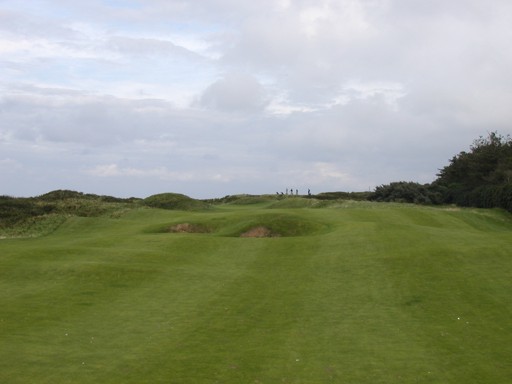
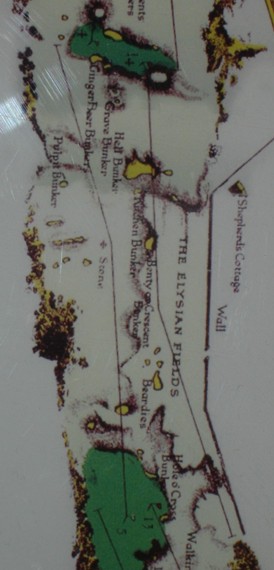
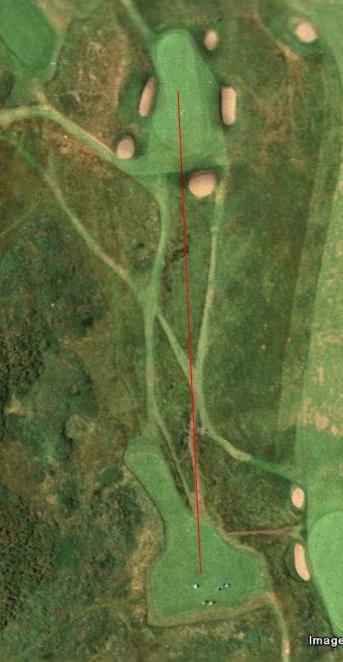
The tee shot is over whins and gorse, your invited to cut the corner and shorten the hole, but the out of bounds is tight to the right of the fairway. The prudent play is out to the left but you must skirt the Beardies and avoid the wickedly deep little Crescent bunker to find safety in the Elysian Fields. Once safely upon the Elysian Fields you face a fascinating dilemma. Do you play over the incredibly deep and menacing Hell Bunker to shorten the approach, or do you play wide and out to the left of the bunker for safety. It is not very often when one bunker can create the level of fear the Hell Bunker does. Right from the tee you are aware of it’s location and penal nature. Your goal is to stay out at all costs.

The most interesting feature to me is the green and the final shot. There is a large wicked roll that begins just off the front of the green and continues through into the front of the green. Nothing is more complicated than trying to get near a front pin. I watched group after group try fly it in and ending up in the back of the green. Finally an old gentlemen played a long bump and run from well out to within 5 feet. I asked him how he knew to do that. He smiled and told me it took him years to figure out there is no other approach to that green and he had to learn to hit the shot.

So what can be learned? First, that a mound can be much trickier and more sinister defense than a bunker. It is a very subtle form of hazard that is very hard to slove because it requires imagination. It befuddles a strong player, yet allows a weaker player an easier approach compared to a bunker – another great equalizer in the game. The Hell Bunker teaches us that a menacing hazard weighs on a golfers mind the entire hole. One bunker can be intimidating enough on it’s own to alter the psyche of the player. The thirds is that interior bunkering can adequately challenge the good player while the wide fairways give the weaker player the opportunity to enjoy the game. Finally even the out of bounds creates a classic diagonal carry providing risk and reward. What an outstanding hole to study.

Next Hole: http://thecaddyshack.blogspot.com/2006/06/18-holes-day-11-13th-at-gleneagles.html

Wednesday, June 14, 2006

18 Holes – Day 9# - 8th at Royal Troon (the postage stamp)


This beautiful photo is by David Scaletti, a great golf course photographer.


One of the most delightful shots in all of golf is the tee shot on the short par three 8th hole at Royal Troon. Only 126 yards away, with a beautiful backdrop of the sea and Ailsa Crag, the green seems inviting. The least enjoyable shot is the next one because most people have found they have missed the tiny green and now are scrambling to recover at best a par.

Willie Park gave the hole it’s famous name in Golf Illustrated when he described it as “a pitching surface skimmed down to the size of a postage stamp”. Much has been written about the hole mainly because of the many famous holes in ones, and just as many mid Open disasters too.

The shot is from a high plateau, over a small gully to an extremely narrow green set into the side of a large sandhill. The front of the green is protected by a large deep chasm of a bunker that will gobble up anything short. Two bunkers protect the left side along with the large dune. The bail side initially appears to be right, but this is where the disaster looms. The right bunkers are extremely deep and the recovery is up and onto the narrowest part of green with the left side bunker in behind. Back and forth between bunkers is common. Missing the bunker completely on the right finds you down in a deep hollow in with a tight lie with the green well above you and only 6 paces wide!. Simply put this benign looking hole has no where to miss.

What can be learned? A narrow target is the hardest to hit. If you want to make something hard, reduce the width of the green and flank it with bunkers. Front bunkers are less important than side bunkers for creating difficulty. The fact that the green is flat and on a slight angle only adds to the difficulty of the hole. More greens should be either level to demand more skill of the approach shot.

Next Hole: http://thecaddyshack.blogspot.com/2006/06/18-holes-day-10-14th-at-st-andrews.html

Tuesday, June 13, 2006

18 Holes – Day 8# - 4th at St. George’s (NLE)


A look from the crown down to the original gren site


I thought it would be fascinating to do one hole that no longer plays the way it was designed.

The 4th at St. George’s Golf & Country Club used to be called one of the greatest holes in Canada. It was a medium length par four that was an interesting option off the tee. You could play safely to the left side down in the valley and face a blind approach over a bunker strewn hill in front of the green; or take a big risk hitting to a crowned upper fairway with deep trouble on the right to gain visibility of the green and the ideal angle for the approach. In my mind it was one of the finest holes Stanley Thompson ever designed. It was a brilliant use of the natural land and its loss represents the disastrous results that come from altering a course to hold a major championship.

The old 4th was all about position. There were no bunkers in play from the tee, just one prominent landform to think about. There was little room on top of the crown but the landing was clear from the tee. There was a lot to risk since a slight miss right put you in a deep ravine with long grass that ran parallel to the fairway, but the reward was an open approach directly into the slope of the green.

So why take the risk off the tee? If you played safely to the left the natural slope took you to the left edge of the fairway. In your way stood a large hill of about 20 feet high with a series of deep bunkers. Getting in one of those bunkers was a disaster considering the length of the next shot. Hitting the ball safely over was not enough, the green was a very tough target surrounded by trouble. The front of the green fell right and into a deep swale in front, the left front had a very deep bunker, and the back of the green also has a bunker and deep rough The green itself (which is still there!) fell sharply from the back to the front right, meaning a long approach was an impossible up and down. Having to be that precise is a lot to ask, couples with being a blind shot, makes it even more intimidating – and that is why the risk was worth it from the tee.

What can we learn? Rather than routing the hole only through the natural valley, Thompson used the crown to best effect. By tucking the green behind the large ridge, instead of on top, he required the careful placement onto the crown as the only way to make the green visible on the approach. Having to flirt with the ravine on the right adds to the challenge of the hole. This unconventional routing approach made for a very strategic hole.


Next Hole: http://thecaddyshack.blogspot.com/2006/06/18-holes-day-9-8th-at-royal-troon.html

Monday, June 12, 2006

18 Holes – Day 7– 13 at Tobacco Road


Finally the first par five, but what a par five for ideas.

Tobacco Road is probably the most intimidating and frustrating course you can play for the first time. While it has plenty of width and playability, Mike Strantz uses blind shots and very overwhelming hazards throughout the round to hide that fact. Often the player simply looks at a massive display of sand with no clear idea of where to play, yet the hidden fairway is large and receptive hiding behind the bunkers or trees.

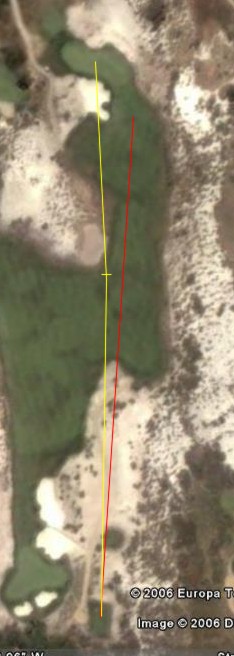
The 13th is a great example, off the tee the player has lots of room to hit the tee shot left (while the hole doglegs sharply right). If the player wants to become more aggressive, he ends up looking at a narrow neck of fairway that looks impossible to hit. What he does not realize first time out, is he can possibly carry the trees on the right and find a blind fairway, leaving a middle iron into the green. All I can say is, you better be down wind to give it a go.

Once off the tee, unless you have found a short cut, the next shot is through a narrow opening between intimidating bunkers out to a wide open fairway. Mike loves to make these shots look impossible and then give you ample room in behind. He believes that a player got more excitement from overcoming a seemingly impossible than making a routine one.


The aggressive line in red, the standard line in yellow.


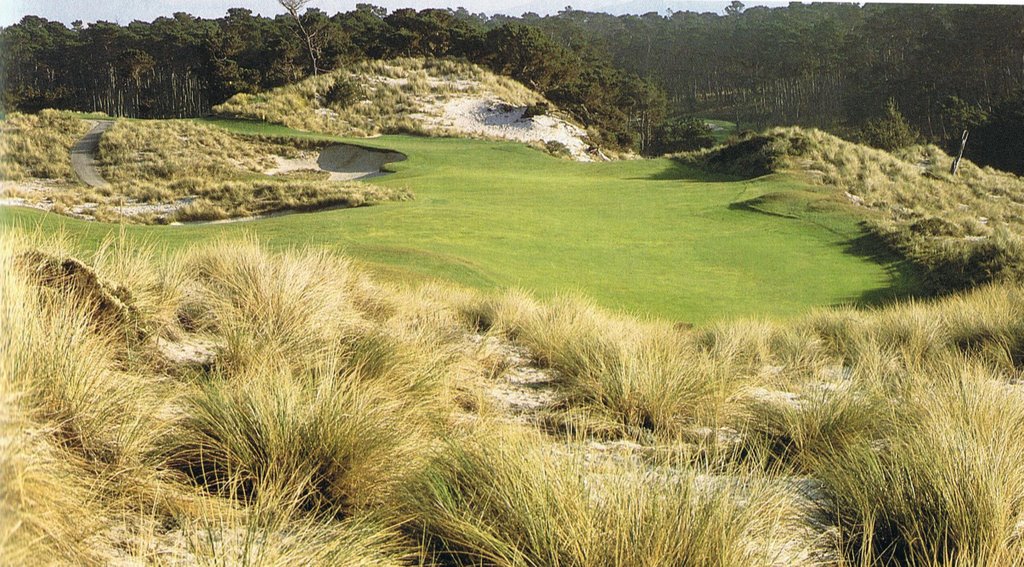
The final shot is where he really truly took it up a notch, or where he embraced one of the oldest and least used concepts in golf. He used a natural punchbowl set between huge sand piles (looking like dunes) so that the green is blind. You can see the flag through a narrow gap in the front if the pin is not left. Adding to the pressure and intimidation of the shot mike created huge scraggly bunkers right into the dunes in front. The player is left to feel the pressure to execute the shot because Mike has emphasized the hazard rather than the target as he does on most holes.

So what have I learned? Mike loves the short par five where there is a lot of opportunity to take a big risk; he has also made it clear that if you dare gamble, you may pay dearly. He provided optional routes and adequate bailout areas, but used visual trickery to make the hole appear much harder than it is. Mike teaches that visual intimidation is an important tactic, and that blind shots can still be part of that equation. He has taught us to take risks with our architecture and to say to hell with convention and criticism – it’s all about great holes.


Next Hole: http://thecaddyshack.blogspot.com/2006/06/18-holes-day-8-4th-at-st-georges-nle.html

Saturday, June 10, 2006

Galt Country Club and The Valley Holes


The 185 yard par three 16th, with the tees and green set at the height of the protective levee.


On Thursday I attended the 100th Anniversary of Galt Country Club. It was a wonderful day, where I finally got a chance to play the new holes AI had built a year previous. I was asked to speak to the media and members and this was approximately my speech. Thought you may find the whole thing interesting.

Galt can be best described as a course where the scorecard does not mean a thing. It is a course where position and accuracy are rewarded over length and brawn. I have always enjoyed the opportunity to introduce the course to anyone who hasn’t played there. I’m used to people checking the card and saying “let’s play all the way back”, and “this should be a good opportunity to shoot a low score” I always chuckle and smile knowing the last comment they will make is “this course is harder than I thought”.

I have a long love affair with this course, from the very first time I was invited out to play. I love the way it sets into the landscape and I enjoy the ease in which you can get around the course. I love the fact I can not score here, but I think I should. I admire how so much great golf is placed into such a small package, a testament to a series of architects before me and Doug, Percy Barrett, Stanley Thompson and Bob Moote. I have been fortunate to work with the club and Mark Piccolo for a long time. We have done a lot of small things for a lot of years. A little bunker work, added some additional tees and even rebuilt a the 7th green along the way but I don’t think we really changed much of the character of the course.


The 15th, with the new water course on the left, the fairway at the levee height and the river on the right of the second landing.

A couple years ago we were faced with a project that would change the nature and character of the course. The Valley holes had become an increasing problem over the years and were out of play so often that something needed to be done. The decision was made to raise the holes, so that all playing areas were out of the 100 year flood. Easier said than done, the restrictions and negotiations with the Conservation Authority to get this approved were very trying, but perseverance from the club and Merv Redmond in particular helped finally obtain our approvals. The reason there is so much water on the Valley holes was simply to balance cut and fill in the valley and to provide enough long term water storage for the club. The technical aspect of the project dictated the design a lot.

The original three holes were very open and mildly interesting holes but had no relationship to the Grand River. The architectural vision for the Valley Holes was to try including the Grand River as a key part of the design. The trees were cut down along the Grand River and the holes were raised so that the 15th and 16th felt like the River was in play along both holes. I knocked it in the river on my first play of the new 16th hole, a place I had never been before!
We opened up spectacular views down the river which improved the overall feel of the holes. The club now had a view up the grand on the 14th and down the Grand on the 16th. The water on the interior represents the water course that once flowed through the holes when it was an island. The original concept was to allow the river to flow through once

Friday, June 09, 2006

18 Holes – Day 6 – 9th at Cypress Point


One of the most beautiful and inviting shots in golf.


I must tell a story on this one, my father and I were lucky enough to play Cypress Point together. On the ninth hole we waved up a group up to play through but instead they suggested they join us for a few holes. We eventually parted ways after some fun together but it was pretty cool for my father to play with his current favorite player Mark O’Meara

You stand on the tee and you feel compelled to have a go at the green, the same feeling you have on most great short holes. At just shy of 300 yards the green is very reachable, when you couple this with an inviting stretch of fairway all the way to the right front of the green, it is an invitation to be aggressive. Mackenzie does a beautiful job of tempting and teasing you with such an inviting target.

Mackenzie provides you with all the options, you can lay-up and then play a short iron approach, or risk the driver and be left with an easy pitch run straight up the green. Where he proved to be very clever was how he escalated the level of difficulty the closer you got. Have a go at the green and you could find yourself in either the 20’ deep front left bunker or miss right and risk deep trouble in the dune grass that pinches the landing area the closer you are to the green. Either way you must make one great shot.

The long narrow green is a key architectural feature; it is angled sharply left to reinforce his strategy perfectly. Additionally the green falls steeply from left to right and has a big impact on where you want to approach a pin from. If a player is willing to risk hitting the driver into the narrow throat in front of the green, he is rewarded with a very straightforward pitch into bowl shaped green. If the player chooses a lay-up from the tee he will face the daunting short iron over the fronting chasm to a very wide but very shallow green. Shots long and short are both in deep trouble. Now if the pin is in the front right, you have to have a go because the pitch into the front right pin is incredibly difficult considering how small the target it is and that it has no backstop to help you.

What can we learn from this par four? Mackenzie uses temptation as the key element of the hole; he invites an aggressive play through a clear and obvious reward. The way he placed the green on a diagonal reinforced the strategy of the hole. It is the perfect drivable par four, fraught with danger, full of options and stunningly beautiful.

Next Hole: http://thecaddyshack.blogspot.com/2006/06/18-holes-day-7-13-at-tobacco-road.html

Thursday, June 08, 2006

18 Holes – Day 5 – 13th at Royal County Down


The 13th from up on the left dune, looking over the diagonal dune and bunkers at the green.


Royal County Down is the most remarkable golf course I have ever played. All the blindness and partial blindness somehow doesn’t interfere with the joy of playing the course. There are many great holes there, but the one that has the most interesting lessons is the par four 13th.

The tee shot is quite open compared to most holes and it is easy to assume a ball anywhere in the fairway is the correct play. But a key diagonal dune that begins in the right rough and extends all the way to the green is the key to the hole. A player hitting safely onto the right side of the fairway has a completely blind approach over the dune, which is covered in long grass, bunkers and even a little gorse. The play is actually to the far left side of the fairway where the green becomes “mostly” visible. From that point the hole can be attacked without crossing the main part of the dune or it’s bunkers, but getting to that position you must be careful to avoid the gorse in the hillside just left of the fairway.

My favorite part of the hole is the partially blind approach. Your eye says stay left - where the sole deep bunker awaits - yet the easy route is to use the hidden kicker slope short and right of the green to feed the ball in. Why don’t people hit it there, because most can’t get by the fact that they have to hit it blindly over the dune and trust their stroke to be accurate? It’s a mindset that mainly North American golfers struggle with since we’ve used to seeing everything well.

So what is to be learnt? Rewarding accuracy with visibility is an old technique that is largely ignored in the modern era of earthmoving and fairness. It is an excellent way to reward positional play. Blindness makes players uncomfortable and is a terrific way to get inside the player’s mind. Deception and intimidation still make a player uncomfortable and must be used to add challenge and interest to the game.


Next Hole: http://thecaddyshack.blogspot.com/2006/06/18-holes-day-6-9th-at-cypress-point.html

Wednesday, June 07, 2006

18 Holes – Day 4 – 4th at National Golf Links of America


A view from the tee, with everything in front of you.


Charles Blair Macdonald studied the classic holes of Great Britain and found the 15th at North Berwick to be one of the most superior holes he had ever come across. He mentions in his writings that there are only four or five great holes in golf and that the Redan was one of the finest concepts of them all.

At the National Golf Links of America, Macdonald set out to find a natural site for his Redan. He had stated that every hole had room for improvement and the Redan was no exception. He was not fond of the blindness of the original and found a natural site for the green that was clearly visible from the tee. The joy of MacDonald’s version of the hole is that all the strategy and difficulty are clearly visible from the tee; what’s even more enjoyable is the opportunity for the player to watch the result from the tee.


The red line is the direct line, the yellow is the bounce in approach


MacDonald continued his improvements with the bunkering. While he copied most of the green’s shape, angle and contour understanding that was the key to the strategy, increased the depth of the “Redan” bunker and the back bunker, making the hole all the more perilous from the tee. While the hole was more visible and inviting, the penalty for missing the shot was much more severe. MacDonald’s version of the feels more of “an all or nothing shot” than the original does, which adds to the fun and the pressure of pulling off a great shot. The hole was so good that North Berwick’s famous head professional, Ben Sayers, called the Redan at the National superior to the original.

So what have I learned from this hole? How effective a defense it is to place a green on a diagonal line from play and defend it with a front bunker. This is the basis of the strategic school of design. But the biggest lesson is the green which places a player in a defensive mode. Rather than playing into a green pitched towards play that receives and favors the high shot, the fall away green requires more creativity and a running approach is the safer play. It favors the flight of the middle handicap more than the high aggressive flight of the great player because they won’t want to chance bouncing in the approach. Finally there is nothing better than providing an option. The player must make the decision to either play directly over the hazard with a precise shot or draw and approach around the fronting hazard using the land to feed the ball onto the green. This requires creative thinking rather than just swinging the correct club.


Next Hole: http://thecaddyshack.blogspot.com/2006/06/18-holes-day-5-13th-at-royal-county.html

Tuesday, June 06, 2006

18 Holes – Day 3 – 13th at Pine Valley


The fantastic approach to the 13th green, where everything feeds left


On a course full of great holes, this is the one that stands out above all. I have always been amused that A.W. Tillinghast claims to have designed this hole. I would bet that like everything at Pine Valley, it should still be attributed to Crump. I think Crumps’s strength was the ability to solicit all ideas from all his friends including Tillinghast, his brilliance was to use the best ideas and combine them all into one vision – his vision.

I had previously talked about the drive as being noteworthy. The drive is to the top of a high ridge that falls off in pretty much each direction. While a crown, the fairway is still wide enough to receive the tee shot, although great care should be taken from rolling off the left side where the player is stymied from going at the green. It is certainly one of the hardest drives on the course because of the crown shape to the land.

The beauty of the hole lies in the second shot. The long downhill approach is to a very large green that runs diagonally away to the right. Miss the green left or long and you are in deep trouble. The player is given two options; make the full carry over the wild exposed sandy waste to the large green, or to play a draw short and right and let the natural contours bring the ball down onto the green. The two choices work well, the green is large enough to receive a long iron, and the slopes are steep enough to feed the ball onto the surface. There are few holes that have such clear options that both work so well. The 13th remains one of the greatest models for a long par four that I know.

What I learnt from this hole was the routing aspect of the green site. Crump placed the green on a natural knoll on the end of a ridgeline. He used the formidable valley in front to create a wasteland of sand to force a carry and then took the natural side hill leading t the green and turned it into fairway so that the fairway banks around the waste area; because of this, the fairway can be used to feed the ball around the waste area and onto the green. Crump has allowed the player to play boldly over, or delicately around, depending on their confidence at the time. No matter which shot you play, it is as thrilling a shot as there is in golf.

Next Hole: http://thecaddyshack.blogspot.com/2006/06/18-holes-day-4-4th-at-national-golf.html

Monday, June 05, 2006

18 Holes – Day 2 – 14th at Royal Dornoch


The photo says more than I can try to


One of my favorite holes with one of the best hole names I know, “Foxy” remains a lesson in the value of selecting an using natural green sites to your advantage. The 14th at Royal Dornoch is placed on a modest plateau, which in itself is not an unusual choice for any green site. What makes it really fun is that the approach is with a long iron to the shallow green that will only accept the most exceptional shot. Anything coming up short is cast away by the slopes of the plateau. The fascinating aspect of the hole is that every approach is possible while none are really favored. Throw in the wind and you have one of the more ominous approaches in golf – and yet there isn’t a single hazard in your way!

The joy of the hole is not only on the approach but in the recovery shot, since it can be as difficult as the approach. It’s a great test of your creative abilities because there is still no standard shot for getting up and down, and the best alternative usually involves finding a creative route along the ground. If you are left, you get an opportunity to try any of the options you feel most comfortable with. If you played short rather than risk the direct approach to the green, the green sets up well from in front, but you still must contend with the shallow green. But if you went after the green and missed long or right, the pitch shot is close to impossible and you now have your hands full.

I did not begin with the tee shot initially because I’m still not sure what play is most prudent. The right flirts with the dunes and seems inviting, and yet the left seems to provide slightly more depth in the green to hit into, but I’m still not sure of the merits of either. I do know my father played left safely left and was successful by running a wood along the fairway and up the slope. This is most likely the best approach to the green. I played down the right for what I thought was an advantage, but my aggressive approach was easily cast aside by the crowned nature of the green. The recovery was tough and a shot was lost to par.

So what did I learn from this. Never underestimate the value of using a plateau to place a premium on the approach. That short grass is often a better defense than a bunker and is likely the most misunderstood and least used of the natural challenges available to an architect. It doesn’t hurt the average players but confounds the good player from the approach through to the recovery. Finally that if a green lacks the depth to receive the shot, then the approach is becomes very demanding - but if short or lay-up options exist that is a reasonable alternative (to going directly at the green) – the hole is very difficult but quite fair.

Next Hole: http://thecaddyshack.blogspot.com/2006/06/18-holes-day-3-13th-at-pine-valley.html

Sunday, June 04, 2006

18 holes/18 days - Day 1 - 10th at Riviera

I'm going to talk about the 18 holes that most influenced my thinking. I will touch on each hole and what I think makes them great and what I learnt from each one. I will stick to 18 holes from 18 courses by 18 architects.

Day 1 - 10th at Riviera


the smart line in red, the usual line in yellow


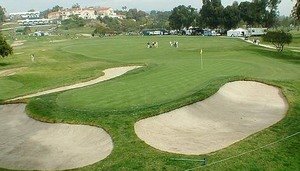
My favorite “designed” hole is undoubtedly the short par four 10th at Riviera. I love most short par fours since everybody has a chance on a short par four. For the average player, here lies the opportunity to make a par; and for the better player, a chance to make birdie.

The 10th hole at Riviera may be the most deceiving hole in all of golf, after all a 311 yard par four should be a push-over right? The hole is easily reachable from the tee which naturally entices a bold player to play for the green. One of the joys of the Nissan is watching how many players try to hit the green, and make five. Even though they know missing right is certain peril and most strokes are lost from missing right, they continue to look directly at the green. The true genius of the design lies in the green itself, it slopes sharply away unless you come in from well left. This is a very special hole, after all how many holes do you know where the longest way to the hole is the most efficient to make a score?


the green falls away to the right


But is doesn’t stop with just the green. When you see the hole, you are surprised to find out it is built over a huge flat wide-open expanse. Thomas and Bell have added a series of bunkers that further add to the feeling of width. The other thing the bunkers do is perfectly frame the line directly to the green. The funny part is the left edge of the fairway, where the smart lay-up is played, looks like the worst option from the tee. How many holes do you know where the smart play is the least obvious and the riskiest play is the most understandable?


notice how the bunkers tell you to go at the green, and look at all the width


The player is left on the tee just brimming with confidence that they can knock it on, and the architect has gone well out of his way to encourage this. You may get lucky with your silly choice and make a birdie or a par through an excellent tee shot (as I did). But as my host, a regular member said, you won’t pull that off two days in a row. Once you make six from the right, you take the route to the left all but a few times a year – if you want to score.The hole has many options, needs a great deal of learning to play it well, and allows all level of players a good chance at a score. This is a perfect hole at only 311 yards. So please explain to me why we need 7500 yard courses?

So what did I learn from the 10th? I learnt that the tilt of the green can dictate position on the fairway. That deception still works in this day and age of yardage. That enticement done well, will usually win out of rationale thought because we just can help ourselves “from having a go” That 300 yards is still enough despite technology.

Next Hole: http://thecaddyshack.blogspot.com/2006/06/18-holes-day-2-14th-at-royal-dornoch.html

Friday, June 02, 2006

What Beyond the Scenery Made Pacific Dunes Great?


The second of the back to back par threes, the wonderful short 11th


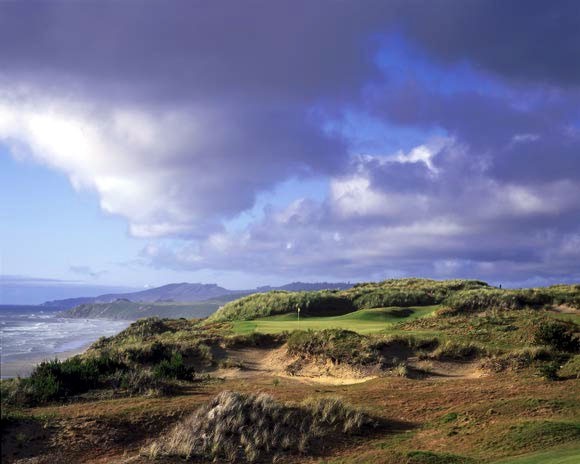
There is no question the setting is unparalleled. The beautiful sand dunes and jaw dropping views up and down the coast make Pacific Dunes one of the most beautiful locations in golf. It bears a striking resemblance to the holes east of 17 Mile Drive at Cypress Point. It was undoubtedly one of the great sites to be given to any architect in recent memory. As Bill Coore said, “He was the right architect on the right site at the right time in his career”. He went on to suggest that he could not do a better job and since Bill Coore is the top architect in golf, this would be the ultimate compliment.

But it’s not just the site that makes the course great. The architecture is very provocative, and many of Tom’s decisions took courage to go against convention. While I really like Bandon Dunes, there is no question in my mind that Pacific Dunes is a superior golf course on an equal site. So why is that?

Well the best thing to do is give you a list of the unconventional ideas he used to make the course great. Number one is he designed a modest length golf course that would be called short by modern standards. Why would he do this you ask? Because that was what the best routing the site would yield according to Doak. He also pointed out that Bandon Dunes was plenty long so building a shorter course was not a big issue. So big deal it’s a little short. Well what this allowed Doak to do was build more short and interesting par fours than most modern courses. There are a couple of real classics in the 6th and 16th.


Looking down the coastline, over the blow out bunkers, on the spectacular 13th


Now I mentioned the routing, and that was where Tom took the largest risk and opened himself up to criticism by designing an unconventional distribution of holes. He used back to back par threes to open the back nine. They fit perfectly and placed two dramatic holes looking out and then along the ocean. These are two very memorable holes to play. He ended up with a routing on the back nine that had two (yes two!) par fours, since that was the best routing for the holes. Imagine a course with one three and one five on the front; then four threes, two fours and three fives on the back. Yet it was the right thing to do.

The final ideas are the details of the course. Tom also used alternate greens on the ninth and alternate tees on the tenth rather than choosing between two equally good options on the holes. Rather than bunkers he has blow outs that fit beautifully into the natural dune areas. He created very wide fairways for playability in high winds and then bunkered inside the fairway lines to preserve the width while providing some strategic challenge to each of the holes. He built wonderfully rolling greens that flow naturally out into the fairway of chipping areas so naturally that you don’t notice the transitions.

Finally Tom never worried about people finding the course not challenging enough and concentrated on making it the most beautiful and interesting place you may ever play. Playing it makes me think of my round at Cypress Point. What architect wouldn’t like that comparison?

Thursday, June 01, 2006

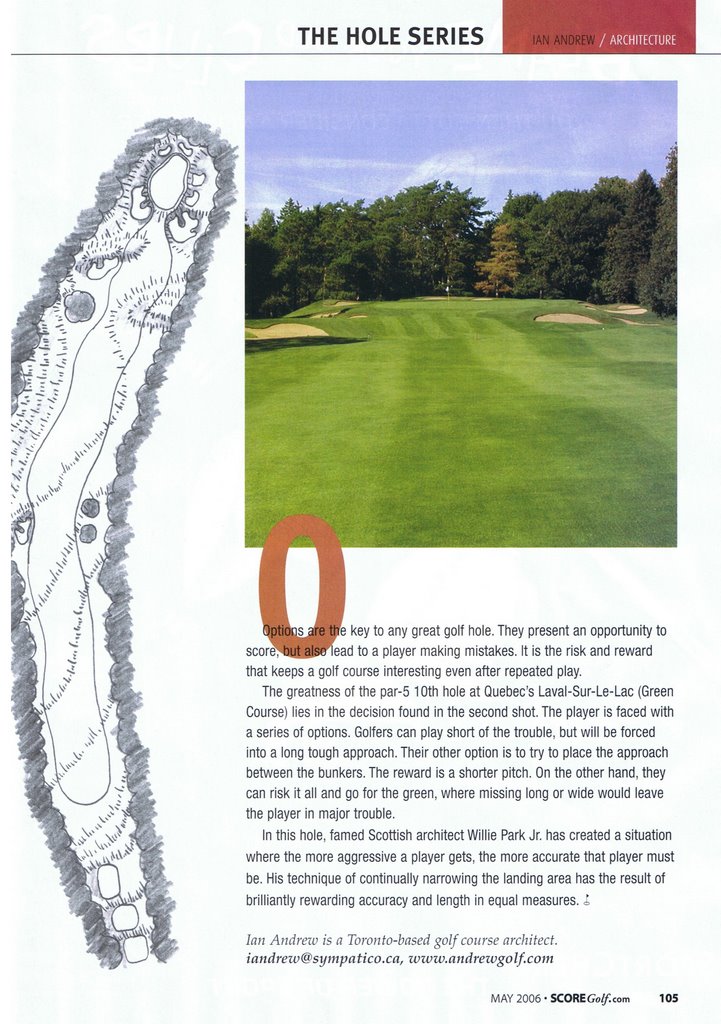
THe Hole Series in Score - #2


Click on the image to read full size page

Wednesday, May 31, 2006

Stepping Back in Time at Allandale


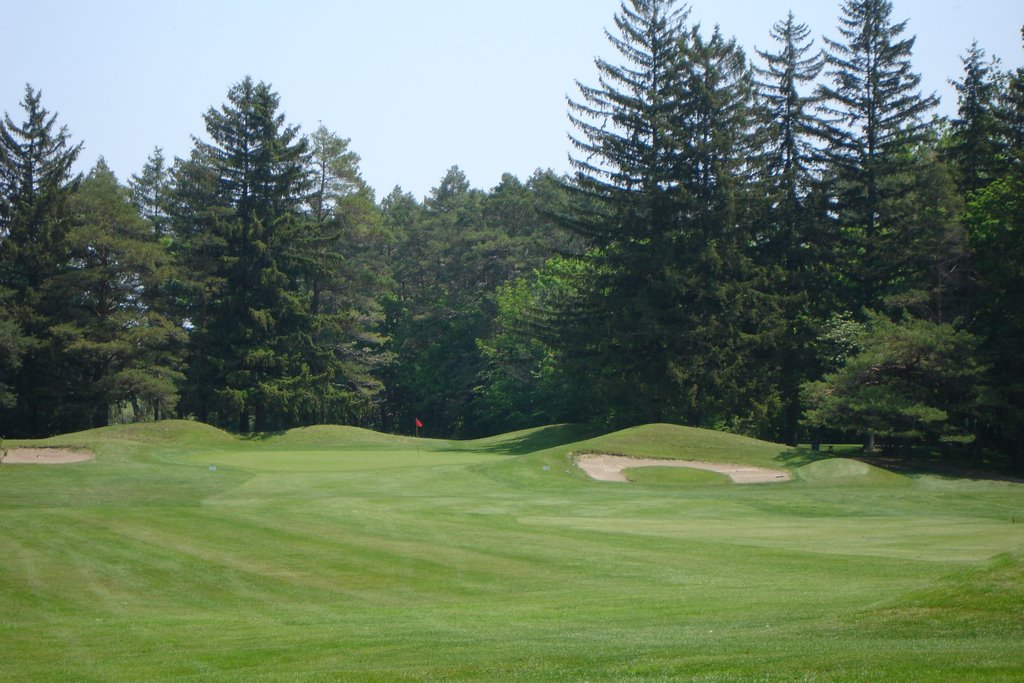
The amazing opening green site, as good as anything I've seen


On Monday I met up with two friends (and fellow Stanley Thompson enthusiasts) to play Allanadale Golf Club. For Thompson fans Allendale likely gets passed over because it is only 9 holes, and is one hour north of Toronto. But for anyone who hasn’t made the trip for those reasons has missed out on a unique experience. Allandale Golf Club is probably the most intact piece of Stanley Thompson in Ontario. When you begin to go through the best known Thompson courses in Ontario you’ll find they are all altered. St. George’s has four green sites that are not original, Westmount has three new holes, even Cataraqui has a couple of holes on the front nine that Stanley didn’t do, and a couple of greens that were rebuilt. Allandale is all there, still intact, like stepping back to 1927.

Now I will say up front that about seven greens need recapturing to find the original contours, but that really is nothing beyond a year or two getting the grass back to green height. The contours will add a lot to the already fascinating contours that bring memories of Highland Links for their charm. The greatest improvement would be to recapture the back tier on the fascinating 5th. That is almost as good as the back pin at the 2nd at Catarqui.

Many of the bunkers have lost there lines, but because of the way they have grown in the old lines are fairly clear on most of them. The rest of the bunkers are now grass, but once gain because of the way they were removed the bunker complexes are all 100% intact waiting to be brought back to life.


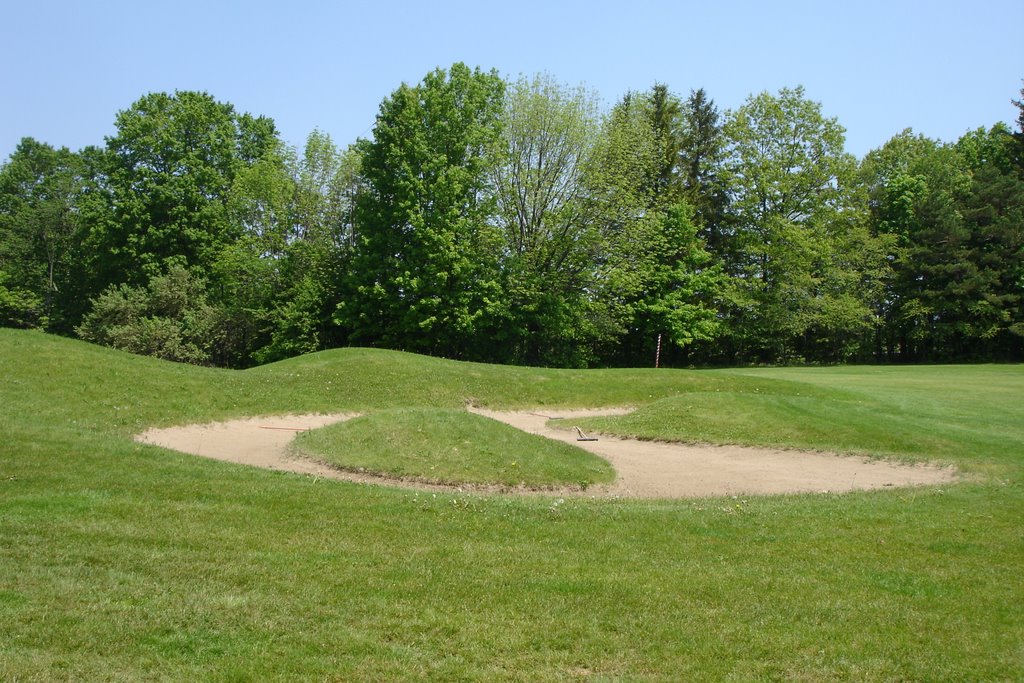
The carry bunker, short of the green, on the 5th


The charm of the place is you get to play the same routing, the original greens, essentially the original bunker placement and even the old tees (there are a couple of new tees, but even they are barely noticeable). You can’t beat that for getting to experience what Thompson laid out. The owner, Brian McCann said that he has only planted three trees in all the time he has owned and operated the course, so even the width that Thompson created has not been lost by silly planting schemes that ruin a lot of Stanley’s work.

Brian mentioned that a few people have come through, including a member of the Stanley Thompson Society, and told him to spend big money making fixing things and making changes. But I just can’t understand why. He only needs to slowly recapture what has shrunk or been grassed in - Nothing else! I will be back to play there with my son, a perfect place for us to enjoy the game as it is meant to be. Did I mention that nine holes in this incredible setting is only $21. during the week. Go! If you are a Stanley Thompson enthusiast and you haven’t been there…..go!

Tuesday, May 30, 2006

How to Restore With Limited Information


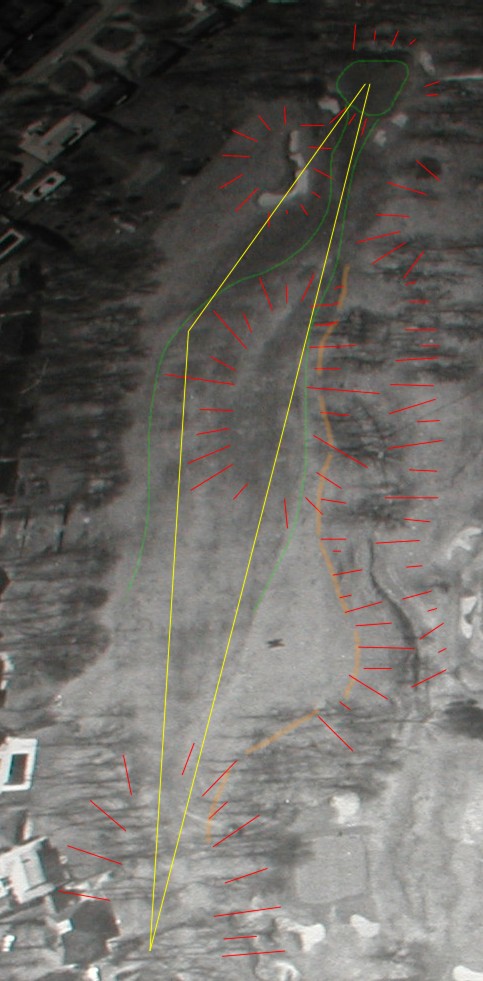
A possible future look at Scarboro


I just found out today that I am one of three architects who have been asked to research and produce a long range plan for Scarboro Golf & County Club. I have been given an amount of time and a budget to provide this to the club. I’m very excited about this opportunity for a couple of reasons. One, the course is a standout, and once well restored or renovated could likely make the top 10 in Canada. While it has a few quirky spots, there are many more moments of shear brilliance in the architecture. Two, the course is attributed to A.W. Tillinghast and this would be my first time working with one of his courses. This now puts me on a path to learn as much about Tillinghast and his architecture as I can. I really like getting to understand the architecture and thought process of a new architect; I find the process very inspiring. I have already read a series of books and contacted a few architects and authors with questions about Tillinghast. I have done much of the intellectual research needed to understand his philosophy and I feel I’m one trip to New York away from collecting all the background information that I need. Third this is my first chance to really do things the way I want to which includes allocating the proper time to do things the best I can. This last freedom is one that I needed if I wanted to do better work.

As I’ve likely stated before I like to restore or renovate through research. I know that some of the key items at Scarboro do exist, but other information still eludes me.

I thought I’d spend the remainder of the blog dealing with the typical problem I may eventually face on this project. What do you do with the architecture when you don’t have any old photos, when the plans and aerials don’t provide enough detail to be accurate, and the existing landforms have been altered? This is the hardest point in a restoration; almost every course has a blank spot or series of blank spots in the information you have to use.

When I have discovered a lost bunker by plan but the original landforms are missing I like to; use the aerials to ensure location, the plans or notes to follow the intent, use the other existing landforms to provide the basics of any new form, and finally draw on a collection of his best work to provide examples to be borrowed. The idea of this is if any new shapes or bunkers need to be created to replace lost ones, the work is essentially still Tillinghast. It has been simply borrowed from another one of his projects to keep his true to his style (and to avoid any hint of my own). As restorers and renovators we are often put in this position. What I aim to do is to try making my work as accurate to the style as possible so that anyone looking at a new bunker may mistake it for an original. If you can’t tell what I’ve done, then I have succeeded in my work.

Monday, May 29, 2006

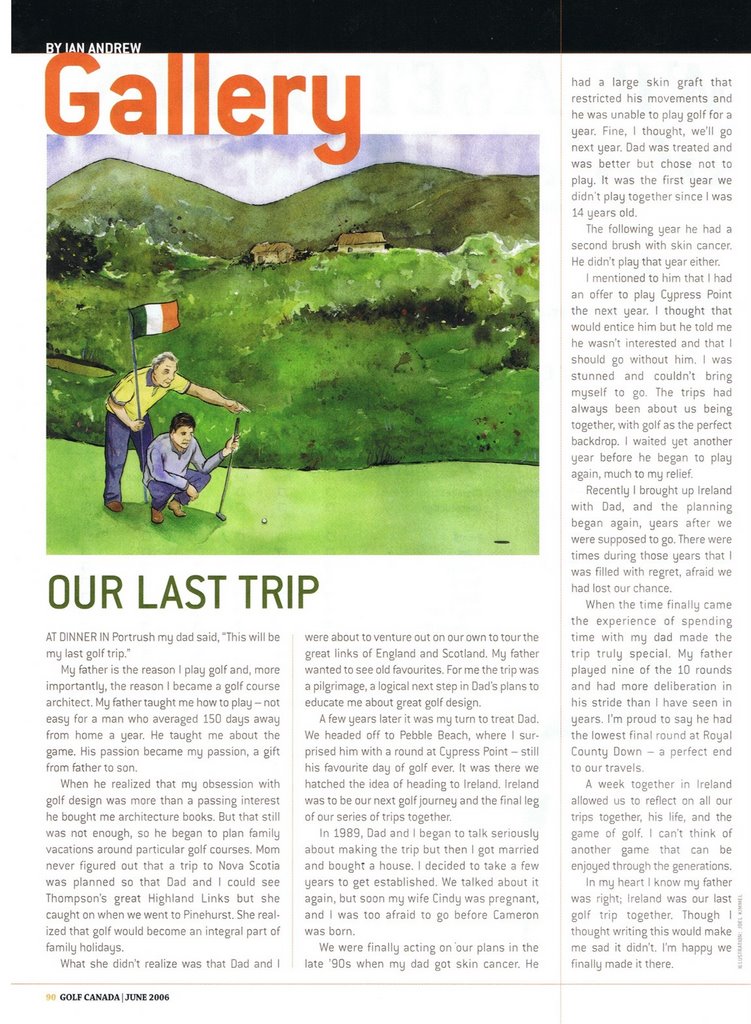
Article in Canada Golf – and A Thanks to Rob Thompson


Found on the last page of this months Canada Golf

Click on the image to read it


This may be an appropriate time to thank Robert Thompson. Robert encouraged me, not only to write the blog, but to begin to write about golf. He has been a huge help in letting me understand the basics of writing, the reasons why writing will help me with my career objectives, and how to go about getting my message out through what I write. He has been a huge help to me.

This article was the first thing I wrote after Rob had convinced me to begin to put my thoughts to page. I also thought Alison King did a marvelous job of cutting the piece down to fit. It took me a while to realize what was missing.

Life is good

So How Did I Become an Architect?


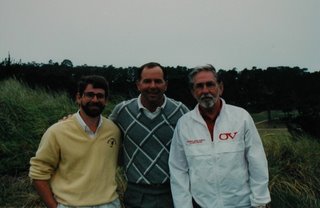
This may not be Pebble, but it's a mile away, and the middle guy won at Pebble four times.


Yesterday’s blog sort of spurred on the idea of telling my story.

I began watching golf during the Pebble Beach Pro Am when I was 12 years old. I remember watching this beautiful course and paying no attention to any of the players – I was in love with the holes. Dad reminded me a couple of years ago that I immediately grabbed paper and began drawing the holes in plan. Then the future architect took over and it lead to designing new holes. God I wish I still had those to post. Dad said a few months later I was still watching golf and drawing holes when I asked if this was somebody’s job to design courses.

He started me playing a year after that and I decided to write to the ASGCA for “help” They suggested I take Landscape Architecture and that course of action became set in stone. From day one I always wanted to be a golf architect so I went to both Ryerson and the University of Guelph for Landscape Architecture. While interning one at a large Landscape Architecture office, one of the designers suggested I call a really nice guy named Doug Carrick.

I called Doug and talked to him about my desire to be a golf architect and asked if I could go on site with him. He graciously invited me along to follow him around on site and I knew this is what I wanted to do; the only problem was he wasn’t busy enough to hire me. While he likely doesn’t remember that day, it was the best day I ever spent with Doug because he actually took the time to explain the design as we went. He finally did have an opening a year later but I would have had to quit with a couple of months left in school and I couldn’t bring myself to do that. I eventually interview with Tom McBroom after graduating but I found him so argumentative and arrogant during the interview that I actually got up and said I was not interested in working there and walked out. Our half an hour argument was over whether you should be able to run the ball up onto most greens, I was already talking Thompson and Ross at this point since Dad gave me a steady diet of books to read. Funny thing is we have met for lunch and get along fine; I think he has no idea that he interviewed me.

I found myself working as a Landscape Architect for a while until out of the blue Doug called with an opening. We had kept in contact through the years and he hired me to come join with him. Now the important part to this is I actually talked to Doug on a regular basis for almost three years before I ended up working for him. If there is one thing a budding architect must know - nobody is hired off a resume – most know the architect informally well before hand.

I worked for Doug for 17 years. You could call the initial years an apprenticeship, Doug provided the basic education in the office and I handled getting drawings and specifications out on time. When we were up to date I was invited to tag along on site to listen and learn. The next stage was taking the responsibility for small renovation projects where I met with clients, did all the design work and then ran the job in the field - this eventually lead to large renovation projects. This was a great education in all facets of the job and was a great preparation for the final stage - being in charge of new project. I learned to write specifications, tenders, create new details, produce an entire set of working drawings, administer the project, deal with consultants, sub-consultants, deal with owners, planners and all the issues that nobody realize exist until they actually build a course.

I stayed possibly longer than I should have but I felt some loyalty to Doug. Finally after a long tenure with Carrick Design, and being accepted as a member of the American Society of Golf Course Architects, I was left with one goal left unfulfilled. I want to build a course from beginning to end where I am able to use all the techniques and strategies that I believe make a better golf course. This is not a knock on Carrick’s work, but rather a desire to go somewhere completely different, and that is how I come to be on my own.

So why the blog? Partially to slowly collect all my ideas on paper, partially to communicate with others interested in architecture, partially because I needed to learn to write badly, but mainly to organize my thoughts on what I want to do. I hope to be able to continue blogging right through to my first completed project. I think the run through the design process and construction would be fascinating to write about.
Sunday, May 28, 2006

How to Start to become an Architect


From Megan's website


The tough part about blogging is finding an idea on what to write about. Often something has taken place, an email has arrived, or I have read something that sets me off writing. Most of this blog has been written spur of the moment when I sit down to blog. I will admit there are days where blogging feels like a job, fortunately most of the time I still enjoy the exercise. This morning I woke up to finish my article that I’m writing for a publication (more to come later). I knew after that I would likely write the blog, but today was a rare day where I was stumped. I turned on the computer and my subject was waiting. Thanks Megan.
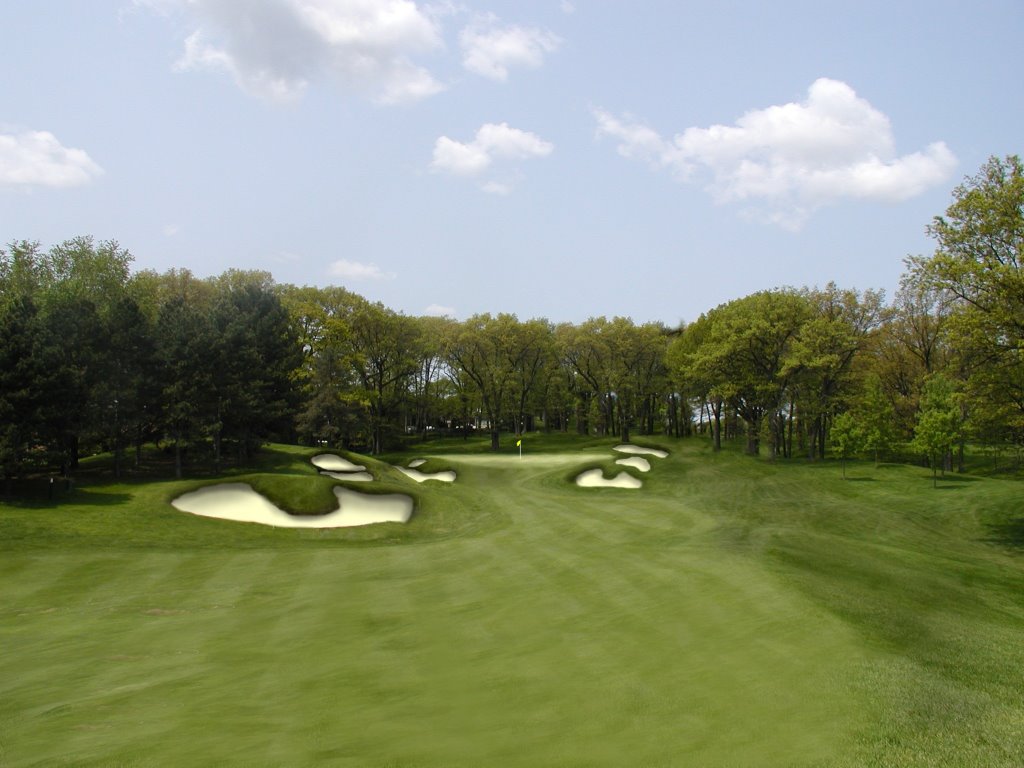
"Megan Heckeroth writes, “I always wanted to get involved in this part of golf because I get design ideas and have no place to channel them. particularly as I play all over the world and see unique features not used elsewhere. Any advice on how a tour pro can get involved in course design?”

Megan by the way has an interesting blog of her own:
http://www.megangolf.com/index.asp

What I would recommend is that you take this golf season to read a series of books first.
My essential five architecture books are:

Golf Architecture In America by George Thomas
Some Essays on Golf Architecture by Colt and Allison
Anatomy of a Golf Course by Tom Doak
Golf Architecture by Alister MacKenzie
The Architectural Side of Golf by Wethered and Simpson

Here are some other suggested readings:

1. Golf Course Architecture, Design Construction and Restoration by Mike Hurdzan
2. Golf Architecture A Worldwide Perspective Vol. 1 – 3 by Paul Daley
3. The Links by Robert Hunter
4. Any book by Geoff Shackelford
5. The Evangelist of Golf by George Bahto

In Megan’s case I would recommend working with a golf course architect. If you really want to learn the business then you’re going to have to learn, particularly on how to actually build courses, from someone with more experience. If your young and reading this, go work on a golf construction crew, the education is invaluable for the rest of your career. The process is then to gain experience, get the background education and finally end up either working for a design firm or starting your own. You will have to work for someone in some capacity before you can work for yourself – we all have.

Tomorrow - my road to becoming an architect and finally on my own