Saturday, April 29, 2006

Patrick’s Questions Part 2
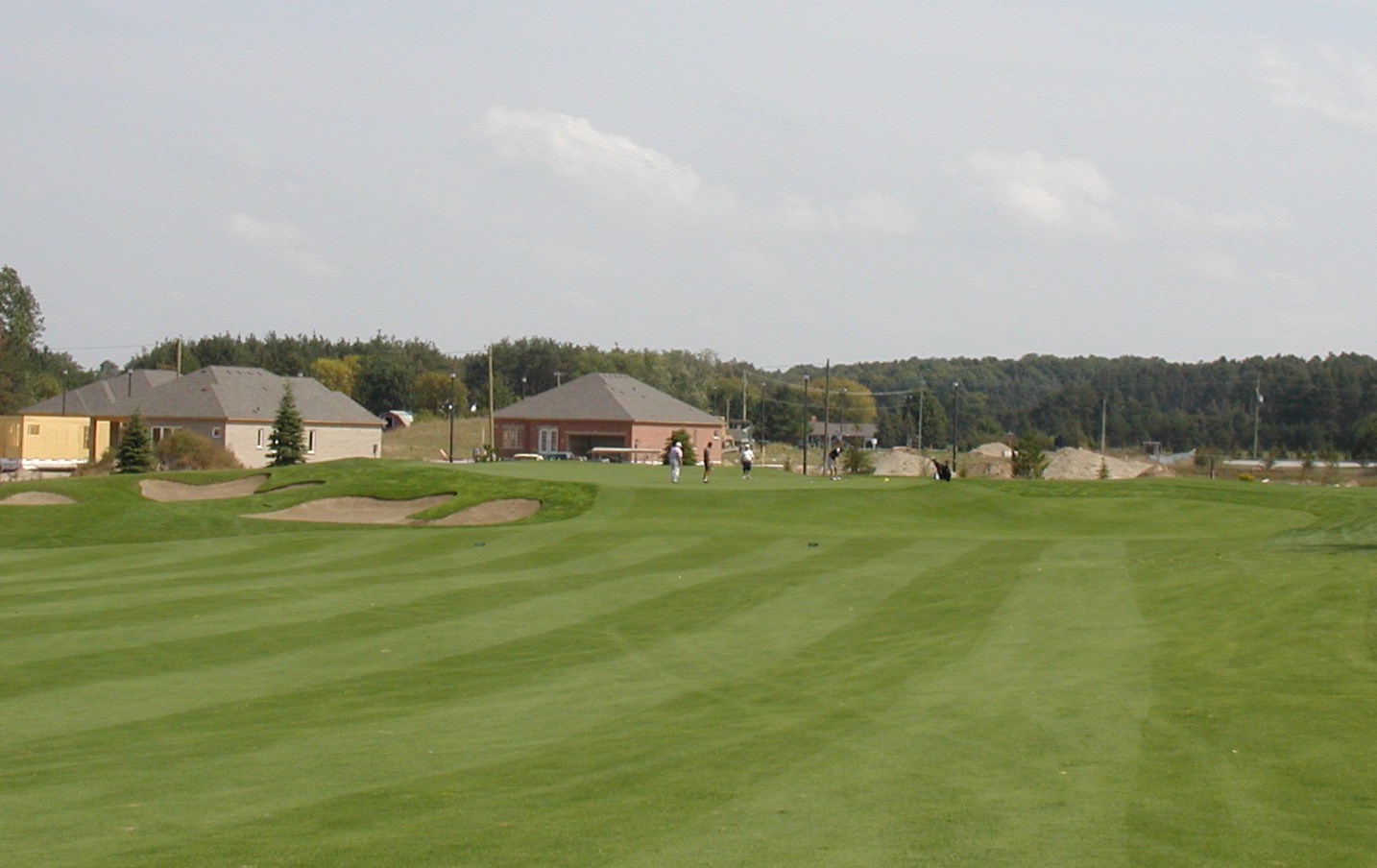
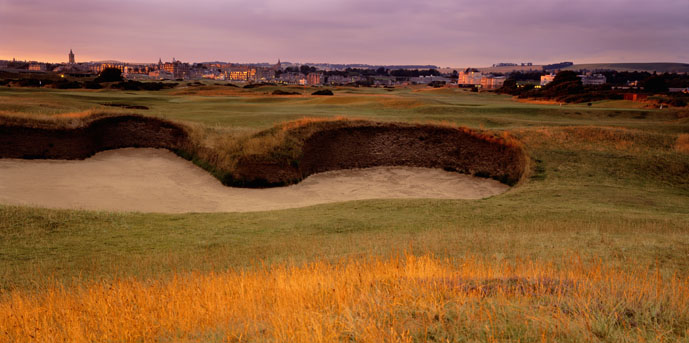
The 7th at Ballantrae, crowned green, bunkers left, short grass all the way around. My tribute to the duece.


I was wondering if you could discuss bunkers from an architect's viewpoint. From what I can tell, they have many purposes, including giving a hole definition as well as to add strategic elements. Many are supposed to be penal, and for many amateurs they are. But for professionals, it seems like they will sometimes aim to be in them as opposed to the greenside rough since it's more likely that the lie will be predictable. Doesn't this seem to be the antithesis of their original intent? If so, how can this be fixed? I've read that some people advocate not raking bunkers. This is a good solution for match play, perhaps, but not for tournament play.

I’ll let Walter Travis answer with the following quote about bunkers. "The primary idea of a hazard is to punish, to the extent of one stroke, a poorly played shot, and to make the recovery exceedingly difficult, and even by the virtue of the following shot being extraordinarily good. If this end is not attained, the existing hazard fails to fill its functions."

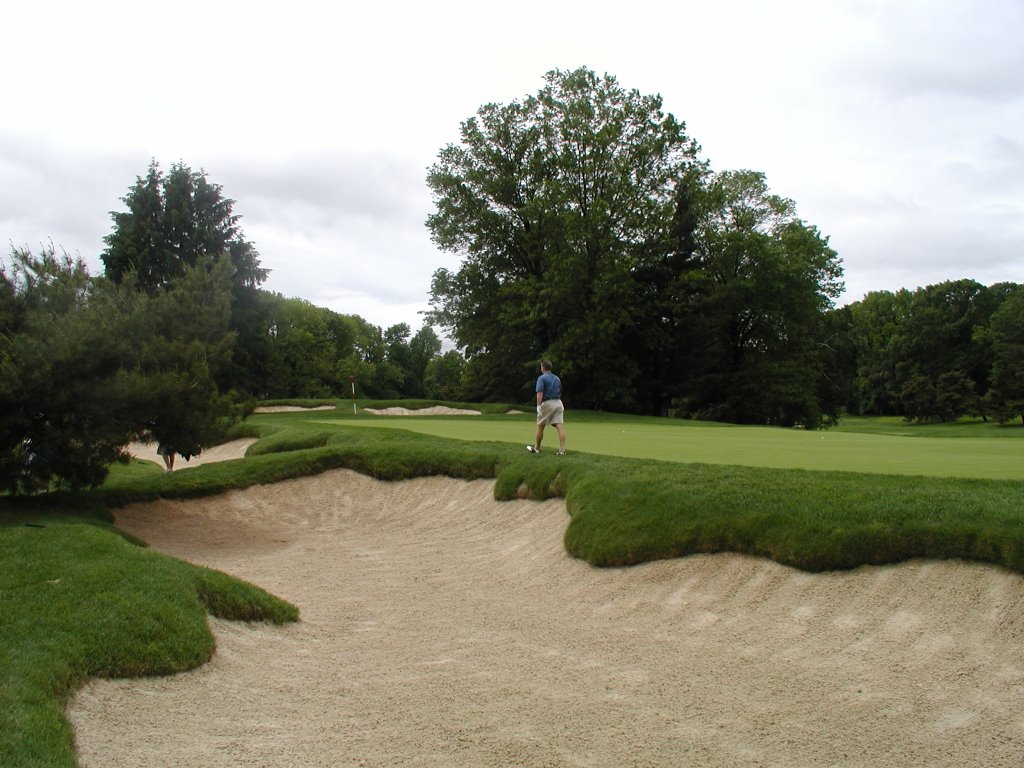
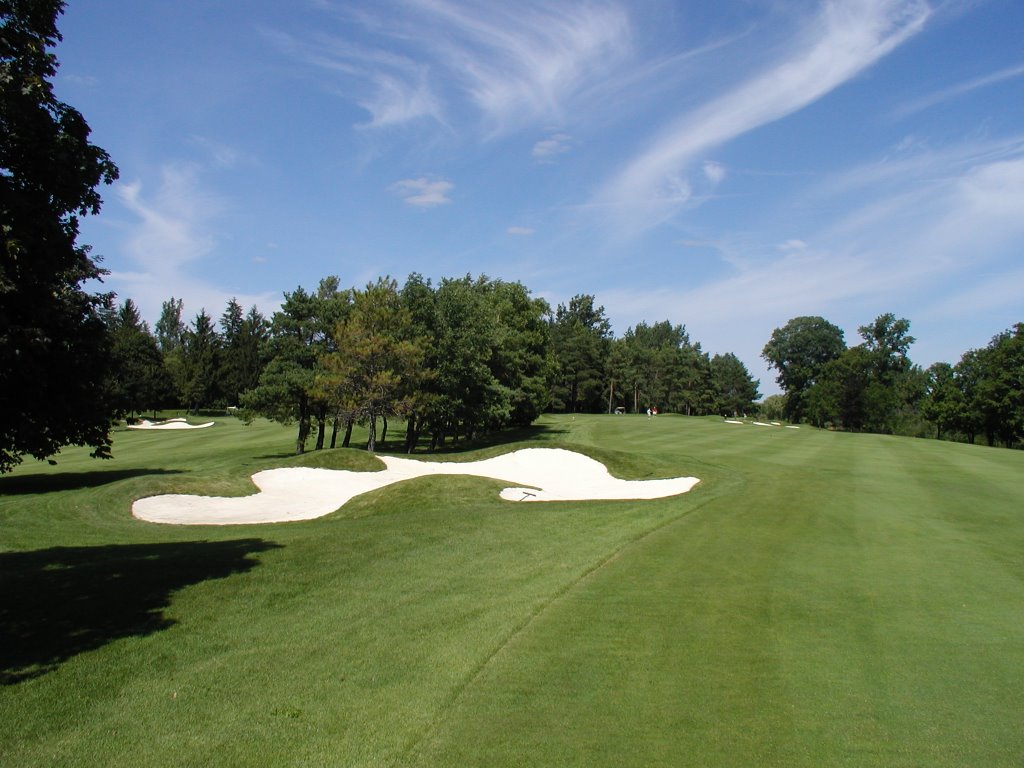
The bunkering that is done today needs to lose the idea of “fairness.” The approach is to make them as playable as possible, not just in the maintenance, but also in the shaping. Most are designed to run the ball down to a good lie and give the player the best opportunity for success on the next shot. We even have a standardization of bunker sand in Toronto for consistency – what happened to adjusting to the local sand? This is a long way removed from the origin which was an exposed area of natural sand where a player had to simply extract themselves in the fewest shots possible. Now the fried egg, ball against a lip, standing partially in or out of the bunker is called bad design instead of bad luck. Bunkers need to return to being hazards that the player wants to avoid them rather than just pretty splashes of white used to add contrast to the lush green. They have lost there meaning in many modern courses.

How course maintenance is crucial to maintaining the strategic elements of a course. For example, here in California, almost all the courses in the Monterey Bay area are soft in the winter from the rain, which means that even if the wind is up, you can't really play the ball along the ground, even if the architect had intended it, since it just won't release from the fairway. Are there design features that make sense when a course is brand new but end up deteriorating over time because it's too difficult or expensive to maintain?


The 10th, surrounded by short grass and the defended by the rolls in the front


Architects account for the predominant conditions like prevailing wind direction in their designs, but anything beyond that is too much to try build into a design. As a player you must adjust your game and sometimes your expectations to shoot the best score in those conditions. I always win money in the rain because of that.

I designed the course at Ballantrae with chipping and putting from the hollows in mind. After a few years the banks of the run offs became very thatchy and you couldn’t bounce the ball off the banks or putt up the slopes because your ball died as soon as it hit. This is where maintenance can remove the most important aspect of your design and there is little you can do other than to ask the super to get rid of the thatch.

The thing that usually disappears is elaborate bunker faces because they require a lot of handwork to keep. This is where architects and superintendents need to be on the same page to preserve the character of the course. If not the superintendent will slowly make changes while your not there if they don’t believe in the importance of the architecture you produced. Most bunker changes occur through inadequate budgets or an internal desire to reduce the maintenance on the course. I would rather remove a few bunkers than lose really interesting architecture.

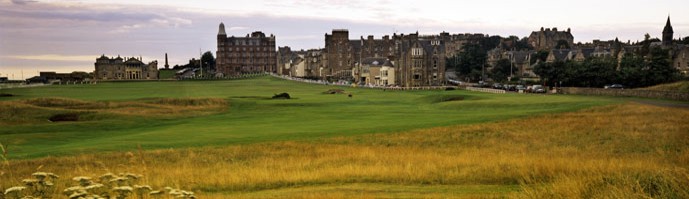
Friday, April 28, 2006

Patrick’s Questions Part 1


I had a wonderful email from Patrick, that I though would be best answered on line. Patrick was game for this too. I will have to do this in two parts.

If the Old Course is amongst the very best courses in the world, why aren't there more like it? I don't mean re-creating it, but incorporating the same ideas. Everyone who has seen it (I haven't) talks about how different it is from any other course. I have played Rustic Canyon in southern California, and my impression of it is that it's as close to the Old Course as I've seen in my limited experience. I loved every moment of that course. Is there something about this style that prevents it from being built more frequently? Are appropriate soil conditions for such courses uncommon?

The Old Course is all about playing shots. There are very few places on the course where you talk about the unparalleled beauty or the dramatic shaping of feature. The Old Course is on a plain piece of land where the best dunes are actually on the New Course (these are small by UK standards). The greatness of the course is found in smallest and subtlest of contours, the kind that the camera can not catch and most players don’t find “in one round”. This is a course that grows on you as you learn it, and you need to play it more than once to appreciate the courses different strategies depending on which pin you get that day. There is not one way to play any hole at the Old Course – you must figure out the best route yourself, because the architecture doesn’t visually tell you what to do. I think learning a golf course doesn’t suit our short attention span (blame MTV for the next generation being worse). Many golfers want everything clear from the first tee to the last putt. Well that isn’t the Old Course.

When you go around the Old Course you are blown away by how playable it is, how the green contours are far more important to scoring than any other course you have played, how often you have to hit blind or semi blind shots, how you seemingly can hit it anywhere, but you can’t score if you do, that sometimes results seem to be unfair (the “F” word), that a few of the holes are too easy (the Old Course has breather holes).

Yet you can not wait to play the course again, and each time you play the course your respect for the architecture goes up. That defines greatness.


So why isn’t anything built like the Old Course?

It’s partially it’s a fear of criticism, but mainly it’s because of the modern desire for holes that make great postcards over holes that play well. I think it was Sam Snead who called it a cow pasture on his first visit, and I must admit when I first saw the course I was not initially blown away. Most modern architect's could not weather this criticism. Modern architecture strives to give fair, well-defined courses with exceptional playing conditions. Blind shots, severe penalties, unclear strategies, and dull looking architecture can and will bring criticism. Architects are like most people, they have a need to be liked, and that is the failing of many. They play it too safe, and building a course based upon the Old Course would not be playing it safe.

On that note, if Pinehurst #2 is such a great strategic course because of its greens, why aren't similar greens built more often? Your website advocates shaved fringes (which are ubiquitous at Rustic Canyon and lots of fun), but it seems that this is a fairly rare feature.

You could talk about Pinehurst, Muirfield (in Scotland) and the Old Course all at the same time because they are all perfect pieces of architecture that look very plain. Pinehurst is knocked primarily because it is a tough course to photograph, it looks kind of plain and the property is not very exciting. It still remains the most compelling course to try score on where you can’t lose a ball. I built Ballantrae north of Toronto as a tribute to the concepts on “the deuce” and the course is very well liked for it’s green complexes. People do try to emulate parts of the duece, but very few carry the idea through the whole course.

I do think lots of architects have embraced the run offs and roll offs, I just think these areas need to be larger to have more impact on the short game, like Rustic Canyon. The ground game makes for the best and most creative golf, and once you play in Ireland and Scotland you wonder why people like parkland golf in the United States since it’s so one dimensional. I think the short grass around the greens has been embraced by architects and is being used a lot by the younger ones in particular.

Wednesday, April 26, 2006

Par 4 Redans

I was asked for a couple of examples, how about two from the same course, The Creek Club in Long Island.


The "puchbowl" reverse redan green at the 6th feature a high front left all draining through the small opening back right. The bunkers in front are DEEP. Probably my favourite par four of all.


The opener at The Creek Club by Raynor, notice the carry bunker, the deep left greenside bunker and the high right shoulder.

Redans I’ve built


St. Catharines, you can aim left of the bunker and feed the ball across the green. The green slope right the whole way.


I have built a few over the years.

The first true redan I ever built was the 17th at Ballantrae in Aurora. While the concept for the hole was good and the green worked as planned, the hole is too short. The original hole was going to be 200-210 yards before the housing lots got changed in the middle of construction to increase the lot sizes to increase the housing square footage. The hole was forced down to 165 yards (back tees) which allows players to always fly at the green surface every time. It taught me that there is a minimal length for the concept to work properly.

I have built two reverse redans; one at St Catharine’s (the green and fronting bunker at least) and one at Frog’s Breath (where bunkers are exchanged for rock and the hole is uphill adding length - very stunning looking). I have run a few greens away but have not built the feeding grade going into the green up to have the same impact as a redan would have on the approach.

There is no question in my mind that I will likely do a redan green on my next course. There just too much fun to play!

The Redan


The redan at Shinnecock Hills


My favorite hole concept is the redan. I feel there should be a redan green on almost all courses because of the interest it creates for the player. The redan is one concept that favors the shot maker as opposed to the bomber.

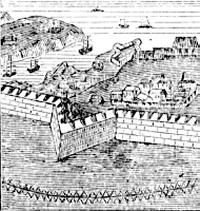
The “redan” can be described as quite an efficient technique in thwarting enemy approaches. The use of this unusual structure has caused many failed attempts at gaining on this position. This description could be describing the old fortification like the Great Redan in Sebastopol Russia, or it could also describe the most unusual and effective defense posed entirely by a green complex at North Berwick.

Horace Hutchinson interestingly described the front bunker complex as the redan. “The redan is a deep steep-faced bunker close to the green, but is of no great length or breadth. The driven ball may go nicely to the right of it and curl round as to lie on the green without crossing the great escarpment of the fortification at all. But it has an aspect of no little terror as one faces it from the tee."

He is right, that the name of the hole comes from the angle of the bunkering and the diagonal they create since they are similar to angle of the redan fortification. But in today’s context the name redan is used to describe the green contours and the concept of a fall away green set on a diagonal. To back Hutcheson up, the French word Redan actually means “jagged notch.” A redan is the extension outward of the wall between two parapets. The extension is projected outwards in the shape of a “V” and the redan is used to describe the extension. The tooth on a saw, if that helps you visualize it.

The redan hole is found in North Berwick and is thought to be a creation of the green keeper David Strath. The redan is a single shot of around 180 yards to a green that falls away diagonally to the left of the hole. The hole is partially blind over a couple of carry bunkers that provide the line. The left diagonal is defined by the “redan” created by the two deep fronting bunkers. The right has three deep bunkers short right and the green falls off sharply all the way around the back.

Strategically the hole is set up by the diagonal line presented by the front left bunkers, and the player must deal with the hazard, by playing over or around as Hutcheson suggested. Where the hole begins to get clever is that the land falls sharply off at the right, and if a player plays too safe away from the left “redan” bunker, they often end up in one of the three deep bunkers. The recovery shot from this position is the worst on the hole. The best position to miss may be long, but this area has some rough ground and you may come up with a delicate lie. The joy of the hole remains the dilemma from the tee, a high fade to hold the green, or a slight draw to feed the ball, either way it certainly is a fun hole to play. The key to the hole remains in a contour of the green that slopes away and to the back and left. Since there is no backstop or upslope commonly used to receive the ball, judgment and precision are put at a higher premium on the approach shot. The green is slightly funnel shaped so a ball finding the surface will be rewarded unless it comes in too hot to stay on the green, but anything missing the green leaves a tough recovery shot.

This green style has been used on par four’s by architects like Seth Raynor and been copied on countless par threes by Tillinghast, MacDonald, Thomas and Flynn just to name a few. Many copies of the redan were built at well over 200 yards since the architect’s like Flynn felt that length was important to retaining the original strategy. The green itself is an architectural technique, and a technique that should be used much more to combat the current equipment. This is one way to take back some of the technological advantage from the one dimensional “bomber”, and give the advantage back to the shot makers.

Tuesday, April 25, 2006

Time on Site – Part 2 – Other Examples


While many people lay claim to the idea that time on site equals quality, I would like to look at a couple of examples for perspective first. I’m not aiming to take sides on this issue, although I will say [for myself] I prefer as much time on site as I can get. For example, I like to edge my own bunkers to get exactly the look I want.

Let us start by looking at the time Alister Mackenzie spent at Royal Melbourne. We know on Oct. 25th he arrived at Melbourne, Australia. We know on Nov. 11th he was still in Australia, consulting at Royal Sydney. We know he was in New Zealand on January 1st. We also know that he consulted with many of the great courses while there, so that his time was well divided between different sites. So how did Mackenzie get everything done so well at Royal Melbourne in that short period of time? The answer is he didn’t, he relied on Vern Morcom and Alex Russel to get the job done while he couldn’t be there and after he had left Australia. I looked all day to find the exact time spent on site but I could not, but I do remember “a few weeks” was the description in one article I found years ago.

At Pacific Dunes Tom Doak’s plan was to visit the site every three weeks or so all the way through construction. He summed up his perspective well with the following two quotes from Dream Golf by Steven Goodwin (out fairly soon and a good read), “I work best when I’m working fast and am excited about what I am doing, but I understand that construction can’t really move that fast. When I was on site every day I would get tied up emotionally on every little detail of our projects….” So instead of being there daily, Tom choose to have Jim Urbina and he would join Jim for four or five days at a time. Each visit he would review the previous holes that were started during the last visit and would set up the next group of holes for Jim to work on. Tom said about this arrangement “I found that being away from the site off and on gives me a better perspective on how we’re doing…”

When Doug and I worked on Muskoka Bay, we went up every Friday for two straight years. I also made some additional trips during golf construction to make sure we kept on schedule. We flagged out all the tree removal, directed all the blasting, organized all the sand capping, placed all the tees and greens according to the space left by the outcrops of rock and trees. We even moved an entire par three during the clearing. We also approved each bunker and I was on site to approve every green contour in the field. Near as I can tell through my notebooks I was on site just over 70 times and I averaged 10 hours on the site (not including traveling time) each visit.

I’m not sure if one continuous period of teaching and planning is any better or worse that a cluster of days every few weeks. Whether a weekly visit is enough or whether daily supervision leads to a better product. I’m still inclined to think that time on the site makes all the difference to the quality of the course, but Tom’s point of being off site some times to avoid over thinking and to recharge the mind is a great idea.

Monday, April 24, 2006

Time on Site – Part 1 – Stanley Thompson at Capilano


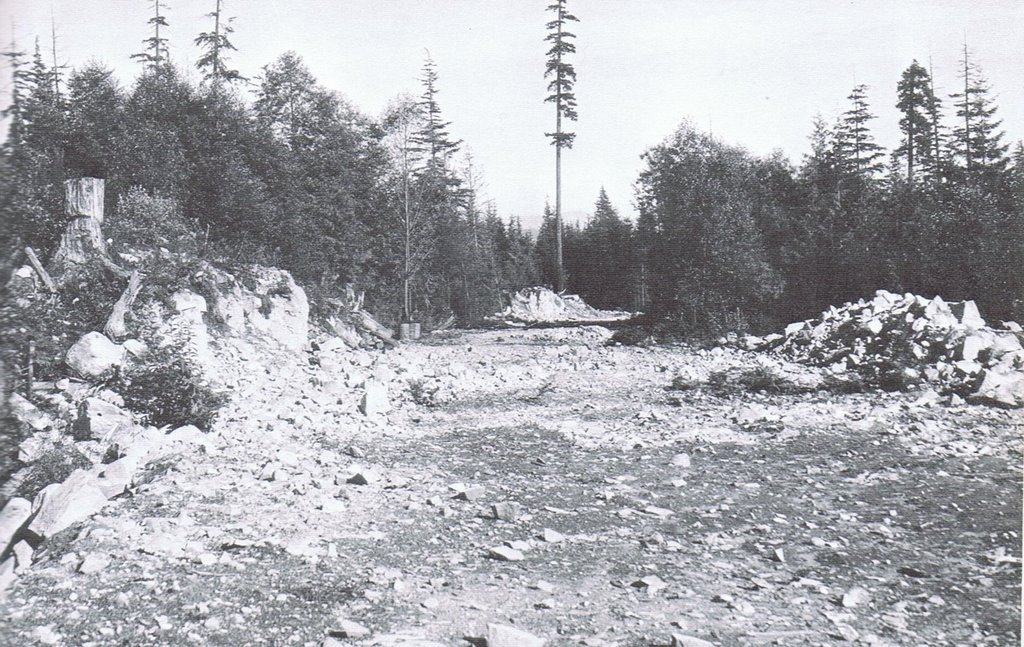
The 15th during construction


Stanley Thompson sent a January 2nd, 1936 telegraph to John Anderson discussing his visit to Capilano, “Expect arrive Vancouver fifteenth instant spending several weeks west coast stop. ………” He obviously spent three weeks working on the construction and seeding of the course. I think each trip was likely of this duration due to the travel time and the limited number of visits he made.

His fees were $732 per visit “including all traveling expenses.” Each visit require four nights on a train in either direction. So three weeks actually meant 12-13 days on site. An interesting note was from those fees had commissions he received from the purchase of goods for the course (like grass seed) deducted from the total. He was not handsomely paid for Capilano and in fact had to send a letter in September 24th, 1938 still trying to collect $253.75 for the last payment.

In a letter on March 9th 1936 he states, “….I am coming to Vancouver in the end of March and I will spend three or four weeks during seeding time to supervising same and flashing the bunkers and greens. This will put the course beyond the tampering stage as regards to the architecture." Again it is clear that Thompson has from 12 to 18 days on site on this visit.

This is supposed to be the 6th hole during construction, but look at the photo below and see if you think it really is the 15th green.


We know Stanley Thompson went to West Vancouver in the spring of 1933 to inspect the site “and had his course design on paper.” Clearing began immediately under the direction of Stan Conway (they first cleared centerlines and worked out), so we can assume this trip began construction. When we look at the pay days we discover there is no record of him being paid in 1933, but he was paid in April 20th 1932. I personally think this is an error in the book Hathstauwk since he first met Taylor at the Waldorf Astoria in July of 1932. The pay date should read April 20th, 1933. This was obviously the visit to the site that produced the routing of the course. He submitted construction plans in June of 193 (this did include irrigation drawings - clearly referred to in another letter).

Using the notes for pay, his next visit came on October 24th 1934. The clearing at Capilano was absolutely brutal and I would bet that little actual course construction began until 1936. The site had to be cleared of massive trees (some of the stumps can still be seen and are 6-8 feet across. The site was also full of rock outcrops and strewn with boulders too. Just cleaning up after clearing must have been the bulk of the work judging by the photos.


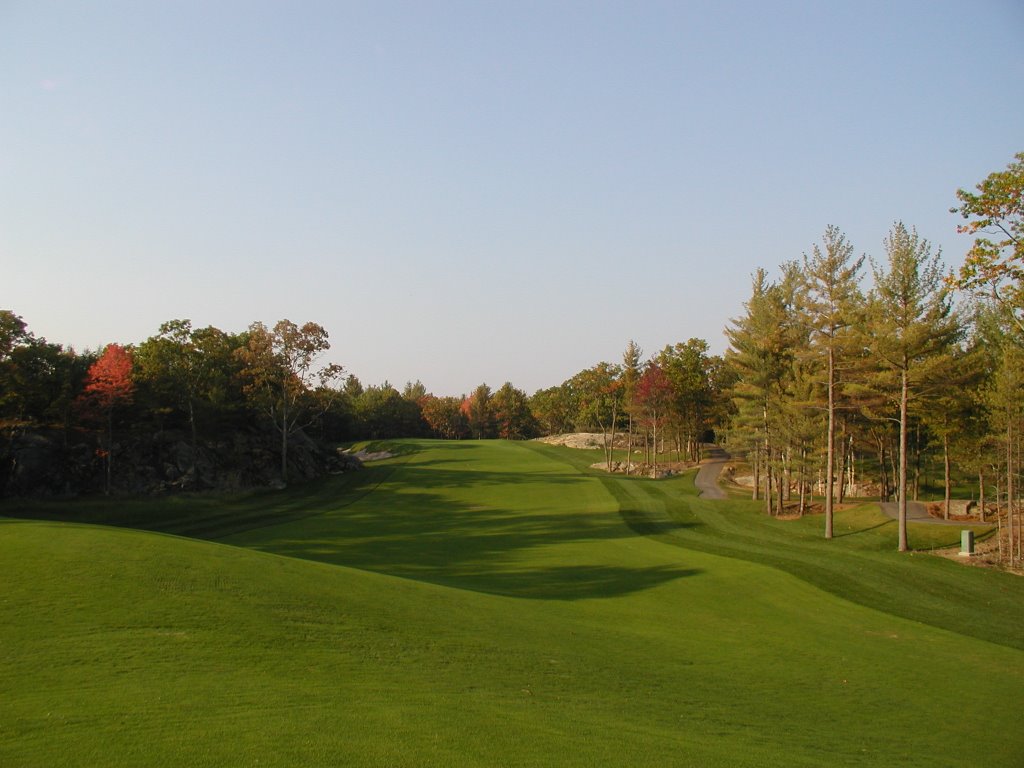
The 15th at capilano today


His next visit was November 9th, 1935, followed quickly by a visit on January 31st, 1936. He was fully the golf course construction and was supervising the green contours and bunker shaping on these trips. He wrote 12 pages of Finishing Notes on February 4th, 1936 that outlined all the work he wanted completed on each hole to finish the golf course. Much to my chagrin, he included a great deal of suggestion on planting and even produced an extensive planting plan for the course. Play began in the late summer of 1936.

Near as I can tell Stanley only visited the site 4 times, once to route the course, once to supervise clearing and twice during the golf course construction. He spent about two weeks on average on the property for an estimated total of 60 days.

Sunday, April 23, 2006

Doug Carrick - Thanks


I thought it was a good time to talk about how I got to this point. I have made it very clear how my father has helped and influenced my desire to be a golf course architect. I’ve talked a lot about my current influences on what I think about architecture and what I want to do now that I’ve gone solo. But the one thing I have neglected to do is thank the man who made it possible.

Doug Carrick and I first met when I asked him if we could meet on one of his construction sites (King Valley) to see what he was building (I’m still quite fond of King Valley and it remains one of my favorite works that he built). It was my first time on a golf course construction site for me, and Doug let me follow him around for a half a day. Doug and I kept in regular contact for about three years and I was waiting for an opening (hoping to get hired). Finally Doug hired me in 1989 to come work for him, first as a draftsman, but fairly soon after that he began to introduce me to construction projects. In the first 5 years Doug spent a lot of time teaching me what he knew about design and helped me understand what I needed to know about construction and contracts. I enjoyed those years the most, everything was exciting and new. For the next 5 years my role expanded as we got very busy, Doug allowed me to handle most renovation and got me involved with supervision of some of the new projects too. I also buried myself in learning construction, construction details, specification writing, and finally contracts. I spent the time to be the expert in the office in this area. Through all of this Doug was always very encouraging, and to his credit was willing to listen to new ideas.

Over the next five years the office grew, two more were eventually hired, and the business changed growing larger. As I look back in hindsight, when we became an office of four it was also the time when the work became more segmented and the interoffice collaboration stopped. It was not as much fun at Carrick Design anymore – and this was a factor in why I eventually moved on. I stuck mostly to renovation work because I enjoyed the autonomy, and Cam and Steve now handled most of the new construction. For the last two years I made the effort to try take things back to the way it was before and actively worked with Doug on Muskoka Bay and Frog’s Breath. We did everything together and I must say this was two of the most satisfying years I spent with Carrick Design. I enjoyed Doug’s company, I enjoyed the interaction between us and I enjoyed what we built. I also enjoyed rebuilding a little bit of that lost relationship that we had through the earlier years. I’m grateful I waited two more years to go to have that experience with Doug again. I simply enjoyed being with Doug on site.

So to Doug I say thanks and I owe you a debt of gratitude.

Saturday, April 22, 2006

Weekend Schedule

Sorry about the late post, but I'm into my second day with a hockey tournament. We're 3 and 0 and that is why I posted late today. I may be late tomorrow unless I get something done tonight.

Ian

The Flow of Merion – the best in golf


The difficult approach to the 11th


I have become obsessed in understanding how the flow of a golf course influences the way you enjoy a great design. One example is how Cypress Point was a slow build to a wonderful Oceanside climax, to me that reminds me of music or a great book. Where I’m more interested is how to use flow to effect the way a player thinks.

Darwin was a fan of Hunter’s book ‘The Links’ – but in the book Hunter argued that the 10th at St. Andrew’s (I believe it was 10th or maybe the 9th) was great golf hole. Darwin said he couldn’t possibly believe that, it was a non-descript breather. But Darwin said it would be a crime to touch the hole, it came at a natural point in the round (between some very challenging/confounding holes coming in and then going out) and its place in the greater scheme of the golf course was perfect. His thoughts are similar to Simpson’s who believed that the ideal golf course must possess at least one bad or odd golf hole

This got me thinking of Merion, a difficult start, a breather or shorter stretch, and a big nasty tough finish. I was at Merion last year and there is something special in the way Wilson has presented his eighteen holes. I was taken by the way every hole fitted together, but more so about how the course unravelled like a three act play. The first six holes are a build of difficulty to the 5th and 6th, where precision is paramount. He then takes down the distance with a run of short holes which are fraught with difficulty and lots of options. It is the thinking part of the course. It also presents the most pressure for a good player, since good players feels they should score well and gets really dejected when the inevitably drops too many shots. Finally Wilson comes in with a really tough finish getting progressively harder to the extremely difficult 18th. Each shot is more difficult than the last finishing with the iron to 18. The pressure and build to the final shot is almost epic.


The bunkering on the 3rd


Merion left me wondering if this flow happened with the holes just working out that way, or if this was an ingenious technique to mentally test and manipulate the player’s emotions. Most architects typically try to build the round like a good story leading to a climax. There usually try to build through moments of excitement interspersed with fun holes (peaks and valleys) along the way; all leading to something more dramatic or clever at the end. Merion’s lessons are very poignant and very eye-opening in regards to flow. The next time I do a routing I will test the flow as well as the holes to see if I can offer something unique.

Friday, April 21, 2006

Collaboration


Pine Valley, the greatest collaboration in golf


I had a recent chance to play a course that I still think is the best I have seen. The day I was set up to play, was during one of those periods where my game was just not sharp (and I had very few answers for it). I showed up in the morning to find out my caddie had been caddying at the course for 40 plus years. I made an unusual choice for me (I don’t give away control easily), and said you not only have my bag but I’m also going to let you make every decision today too (never done this before). I told him I would like to spend the round looking at the architecture, and if there is something you would like to show me about the course, please take the time to point it out to me. That was my second smart move; my caddie pointed out many things that I had missed on my first trip, primarily by looking backwards to understand the influential slopes. They were more apparent backwards as it turned out. I had also told him right up front that score doesn't matter, and all I hoped for was a couple of memorable shots that I could fondly remember. At the first tee he looked at me with a great deal of curiosity and suspicion, but proceeded to hand me clubs, which I simply swung till I was done all 18. I had more great moments than I would have expected; but more importantly I found I had simply soaked in the day (and most importantly the nuances of the course).

This wonderful experience got me thinking about the value of collaboration in golf beyond the player caddie relationship. The obvious relationship is the architect and shaper. Everyone knows that an architect is great assisted by the abilities of the shaper. In many cases the shaper has more skill than the architect and spends his time making a bad architect look good. In the ideal situation they become co-designers where the architect brings the way he wants to dictate play and a concept of what he want to see. The shaper brings an eye to how to lay this concept in the land and how to make the adjustments to the land appear natural. I can name every good shaper I worked with for the last 15 years and how most take their coffee.

The next thought is the great examples of collaborating architects and the great work they produced. Pine Valley is the site of the greatest known collaboration in Golf Architecture history. Look how many great minds contributed to such a great course. George Crump may have had the final say on what we know as Pine Valley, but the ideas of so many great minds, help make up the greatest collection of holes on one course.


The 10th at Friar's Head, a great par three


The second type of collaboration is of two architects who choose to work together to make better courses. Thomas and Bell, Colt and Allison are two of the greatest teams that come to mind. There is no question in my mind that Crenshaw and Coore is the leading architecture firm of our current era. The reason for this is that Bill and Ben not only trust each other, but they trust everyone else’s instincts who work for them. They allow the creative people that they work with enough room to bring additional ideas to the design. That is why they build better work than other firms.

So why do so many modern architects have such a need to lead the company rather than to collaborate? Dana Fry has suggested it may insecurity, I think it is the opposite reason, ego. His office is well known for their charette approach to designing golf courses. The layout that has the best routing gets built regardless of who routed it, or if it was worked on by a series of different people. Yet many other architects control it all. I left Carrick Design because that was Doug’s approach, we were allowed minor imput but that was really it. I don’t think it was insecurity, I think it is more likely that he become so sure of his design ideas that he was not interested in exploring other alternatives. Before you dump on Doug or others in that group, you must realise how many great architects did operate this way. I know through a couple of anecdotes that Stanley Thomson was not interested in any suggestions from his staff. Like everything else there are two ways to do things, I myself would enjoy the opportunity to collaborate with another architect, it would be another great learning experience. Others perfer to go it alone.

Thursday, April 20, 2006

Part II – The Impossible Decision


The 9th tee, notice the cedars on the left protect the 8th hole and on the right protecting the 18th hole

So finally we come to my dilemma. At Peterborough Golf and Country Club the 17th green, 18th tee, 9th tee and 8th green lie all within about 100 yards. The 8th and 17th greens are original Thompson greens with restored bunkering around them and represent some of the best remaining examples of his work at Peterborough. There is definitely no where to go left of the 17th green since the 15th hole is already too tight on that side. Fortunately the planting of large spruce helps to mitigate this proximity from being a bigger problem. To separate the holes for more safety, the only possible direction is to shift all the holes after 17 green to the right. The 11th green would also have to be relocated and is another of the (few) original Thompson greens left and a real beauty. Spreading the holes out towards the right and shift the 11th green right of its existing location will reduce the risk but it will not get eliminate the problem. If this change is made, all three Thompson greens would be gone (something I wanted to avoid if I could) and all the existing trees between the 18th, 9th, 8th and 11th would be removed with the readjustment of holes. There would have to be replanting of this area for safety and separation.


Looking down the 11th hole with the 8th green on the left, note the close relashionship.

The next option I looked at was to move the tees forward which would pull them out of the bottleneck, but badly weaken the holes by removing the length on these strong par fours. This would definitely lessen the chance of these tee shots finding the adjacent 8th and 17th fairways, but would increase the possibility of the approaches from the 8th and 17th (both par fives) hitting the players on the shorter tees. I think this is simply an exchange of one problem for another. As an architect I would become liable for creating the new problem.


The 17th hole with a line of cedars on the right seperating it from the 18th hole

The last option is what to do about the planting of cedars and maples between the holes. To deal with many issues I have removed all the trees between holes to make the safety issue clearly visible. This allows the player to be clearly forewarned about the risk they are about to enter into, and also makes it easier for an adjacent player to yell a warning from the tee. This works to solve a lot of issues, but in this particular case it comes with a risk. For the full tee shot or ball that has a proper flight this would be the answer. Where this increases the risk at Peterborough is with the quick hook where the ball will take off at body height. The cedars do an effective job of knocking almost all these types of shots down and making the holes safer against this particular type of miss. Also, on the approach shots to both par fives, the cedars do a nice job of knocking down the drifting approach from getting into the adjacent fairway. The tightness of the cedars on the 17th in particular encourage players to play a lay-up rather than risk losing a shot in the cedars if they have a difficult approach of a tough lie. If the area was opened up, many more players would be attack the green from out of ideal positions and would pose a greater risk for the players on the tee on holes 9 and 18.

So as you can see as an architect, I literally have a question without a correct answer, and yet I will be liable for whatever I write. This is not such a simple job as you think is it?

Wednesday, April 19, 2006

Part I - Old Courses, Safety and Liability


The 17th green at Peterborough G&CC


I can't believe how much liability is taking over decisions in golf design, it really is depressing at times.

I was at Peterborough Golf & Country Club yesterday to review the golf course. The golf course is on 150 acres, but it has two locations there are triangles of unused land, because of this Peterborough has a series of safety issues. Some are solvable or at least can be minimized with some alteration to the golf course. Others are far more complicated since the distance between holes doesn’t meet “current” safety standards. Herein is the problem with a lot of golden age designs; they may have been fine with the equipment of the 20’s and 30’s combined with the limited amount of play (about a third the amount as compared to the present), but in today’s context many of these courses are not safe and have no flexibility to move holes to make them safe. What further complicates the issue at other courses is the housing surrounding most of these golden age layouts is way too close to the holes. At Peterborough they are fairly fortunate on this end; housing issues are fairly minor compared with the internal issues they face.

To explain how this issue has grown, when I first began working with Doug Carrick the safety set back between holes was 60 meters at Mandarin, the last project I worked on with Doug the minimum distance we used was 80 meters and Doug was often looking for 90 meters. This is how equipment has altered not only the game, but the safety of the game. When Thompson renovated Peterborough he stayed with the very common technique of keeping the tees and greens close for convenience, because they did not have the worries of safety, or more important (now) liability.

Liability in golf has changes so dramatically in the last 20 years. At one point it was understood that if you built a house next to a golf course, you have assumed the risk of getting golf balls in your backyard with your decision. The decision at Islington last year has put that assumption into question since the judge felt that the club needed to make alterations to minimize the safety issue on the 3rd hole. Now golf courses are placed in the position of becoming proactive with a safety issue to avoid liability for not addressing the issue.

Up until recent times the possibility of a player getting hit by a golf ball on the course that was considered the inherent risk of playing the game. A player who hit himself with a golf ball at Osprey Valley sued the course and architect because he blamed “them” after he hit his ball into a stacked wall of stone that was left on the hole. How many players would take a full swing from 10 feet in front of a 4 foot wall of stone? That case was settled out of court. Well now a member at Peterborough, hit by another player’s ball, has sued Peterborough Golf & Country Club suggesting that the congestion of holes on the course caused him to be hit in an adjacent fairway. This is where liability is going and it has huge implications on the courses. It will push the course and architect into making changes to the course (that they really don’t want to do) just to avoid lawsuits.

There is a chance that lawsuits and liability may become the biggest driver of changes to golf courses in the coming decade.

Tomorrow Part II – The Impossible Decision

Tuesday, April 18, 2006

Question of the Week 3 - Which Thompson would you most want to restore?


The old 4th green at St. George's


If you had a chance to restore any Thompson course which would it be? Would your choice be influenced by the amount of information available (ie. sketches, routing plans, photos, personal accounts, etc.) that would allow you to restore the course as accurately as possible? Or would you prefer to work on a course that has been apathetically" (props to CP) renovated by others so that you could restore it to its former self? Jeff Mingay

Let’s look at some of Stanley’s best courses to help make that decision.

While I would dearly love to fix the 3rd hole at St. George’s to finish the job, the rest of the course is essentially restored for the most part. I was very fortunate to have that opportunity and I still feel it was the most important contribution I have made to golf. I would love to return the 4th and 15th to the tough par fours they were but that is not in the cards, so St. George’s would not be my choice.

Highland Golf Links is definitely a strong contender because it is quite intact, and fairly easy to restore. The so called restoration by Cooke made a bit of a mess to the bunkers and introduced some of the worst paths in history, but most of that can be fixed without major surgery. What Highlands has going for it is the quality of old photos and other background information, so this would be a good candidate.


Jasper from around 1930


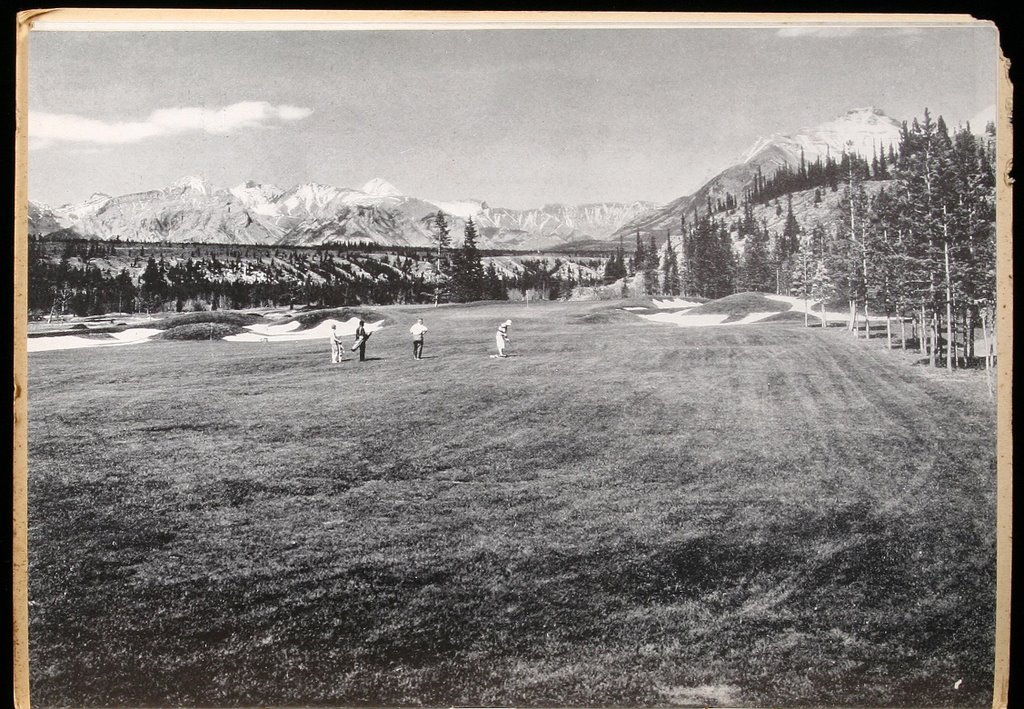
Jasper Park would be fun because this is likely the most intact and well preserved course and they also have a great collection of plans and photos available too. I would love to work there just for the shear joy of being on that property. As much as I’m in love with Jasper, I would choose another if I had to select one. Plus they need the least help of any of the clubs.

Banff Springs is an interesting one since so much has been altered. I have to believe that all the photos and plans are still in the Fairmont archives. While restoration would be fun, it will only happen if Thompson is made “a person of historic significance”, so that the Parks Services would see to a “restoration” actually taking place. The greens are a dicey issue with the Mercury and the number of rebuilds but the rest could be returned. I will pass until they stop tinkering with the original works.

Capilano has the least information and only limited interest in “true” restoration. The layout is stunning, but this is an easy one to pass on.

Westmount is the course with 15 Thompson holes and 3 outstanding Robinson holes which exceed the originals (kudos to Robbie). Here is an interesting one to consider, the historic information is a bit sketchy, but the potential is far higher than many of the clubs listed before. The original bunkering is gone completely, the challenge of recreateing that from scratch would be a challenging test that I would relish. Tree removal and a bunker restoration/renovation would put this “easily” back in the top 10, definitely a top contender.

The rest don’t really jump at you. Cataraqui has had most of the work done, so there is not a lot to do. St. Thomas, a spectacular hidden gem is half Thompson and half Robinson; while one of the finer layouts in Canada, restoration is a questionable route.
And finally former great layouts like Montebello are essentially gone.


13th at Highlands without the trees

My choice would be Highland Golf Links. It would be based on the thorough collection of photographs, memories, and other information that would make an accurate restoration easily achievable. It would also be a pleasure to undue one of the worst [so called] “restorations” done where the architect did not do his research or care about accuracy. Highland Links could be everything a great restoration is about; preservation, restoration, respect, education and leaving a legacy. It would be an ideal project for me.

Monday, April 17, 2006

Finding Harry Colt


The Colt Plan at Toronto Golf


In the early 1960's, Toronto Golf Club was in the process of replacing their pro shop. John Hunt, the long time head professional and an avid golf collector, was rooting through the old pro shop to see if there was anything left to salvage or keep before the building was demolished. He found, hidden in a cubby hole on an old wooden roller, the original parchment plan drawn by Harry Shapland Colt. Toronto Golf Club had selected H.S. Colt because at the time, he was widely recognized to be the finest architect in golf. John had found one of his rare drawings. In hindsight we recognize that John rescued one of golf’s great historical documents. He took the document home to keep it with the rest of his collection. Upon his retirement, John had the plan restored by the Royal Ontario Museum and professionally framed. He then presented the plan to the club. John’s motives for returning it were simple: “That is where it should be. With the club.” The club is currently in the middle of a historically based restoration, and the Colt plan will help inform key decisions in this process.

It seems incredible to think that important documents such as this would not be prudently cared for. But it is important to take perspective on what was occurring in golf at the time. Modernization was the vogue – not only for golf, but for society. Think about how many historical buildings were knocked down to make way for modern structures of glass and steel and cement. The idea of preserving or restoring anything – let alone golf courses – was not a consideration. “New” was in fashion and history had little or no value at this time. Rob McDannold, the respected pro of Hamilton Golf & Country Club put it best “In those days a typical club would not be aware of the history they possessed, because to them it was not yet history.”

Hamilton Golf and Country Club, the site of the 2006 Canadian Open, received a call in 2003 from the recent widow of a former club president. She had found the original Colt hole by hole drawings as well as the course layout. They were in her basement and she wanted to know whether the club would be interested in them or should she put them in the trash.

Rob McDannold strongly feels that the former president saved the plans and that, “If the club had them, they would have been destroyed.” Between the 1950’s and the 1970’s many amateur historians or collectors removed artifacts from clubs, particularly when the club showed no interest in preserving and keeping the documents. Sometimes they had the club’s blessing, sometimes they did not. Often they would take it home before it got tossed away. Unfortunately, many of these same people are now left in an awkward position – how do they return these historically relevant items? They may choose to hold on to them rather than face questions about how they acquired them.


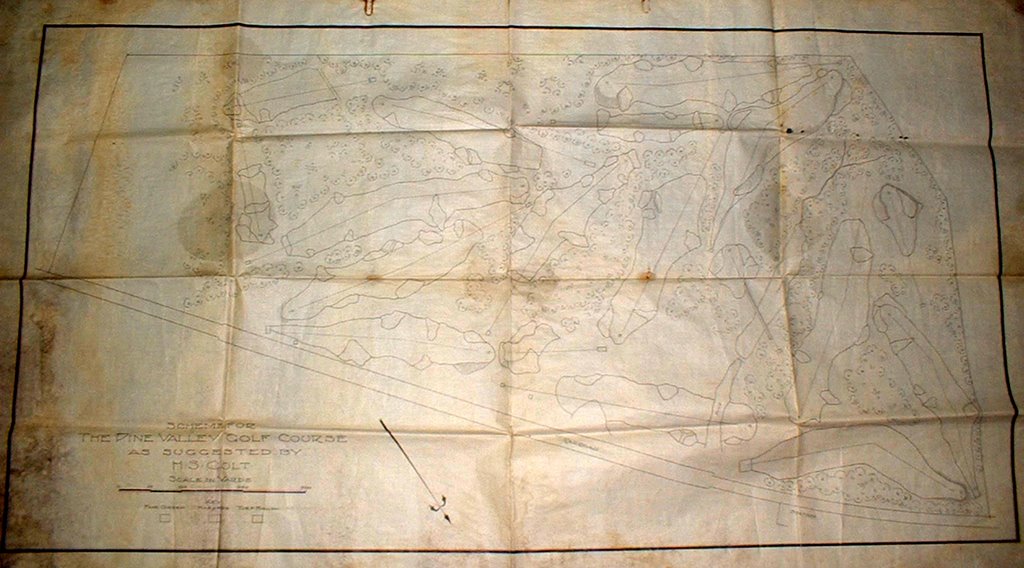
The Colt Plan for Pine Valley


The latest example of this occurred recently when a Pine Valley plan became available on eBay. A gentleman found a fascinating old golf course plan drawn on vellum while visiting a flea market in Berlin, New Jersey. He doesn’t recognize the plan since he knows little about golf. Since it is dated 1913, he decides to spend the flea market price of $54 and take his chances. He keeps it for three years and then decides to put the plan up for sale on eBay. He expects to get between $500 and $1000 because he has figured out that the plan is of a highly regarded golf courses. But this is no ordinary plan. This is the missing H.S. Colt plan for Pine Valley, for which many research historians have been looking for decades. It is the plan that will help solve the endless debate over who designed Pine Valley.

A historian named Wayne Morrison made arrangements with the gentlemen to verify the plan. Upon authenticating the plan, he then assembled a group of historians to privately purchase the plan for $15,000, with the intention of returning the plan to the club. To the credit of the seller, once he realized the significance of the document, he also wanted it to find its way back to the club. The club decided to reimburse the purchasers for the amount they had spent to return the plan. Only a well-heeled club like Pine Valley, or a wealthy collector, could afford to acquire a document as important as this. The club was fortunate in this instance, because this was a collector’s dream.

Sunday, April 16, 2006

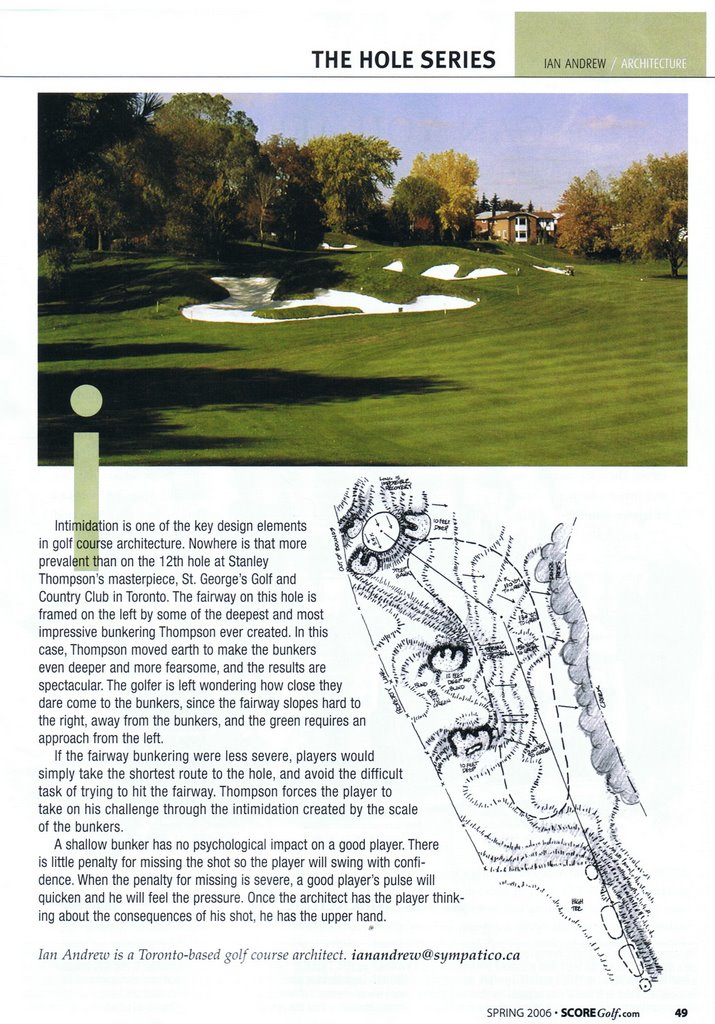
Hole Series in Score Begins


The hole series begins in the Spring 2006 issue of Score Magazine.

Friday, April 14, 2006

Carry Angles

Carry angles are the simplest form of risk and reward. The hazard is placed on a diagonal to play, and the player is left to choose how much of the hazard they are going to try and carry. The more they try to carry, the longer the shot, but the easier the approach is into the green. The less they risk, the shorter the shot, and the tougher the approach into the green.


In the drawings the first red line of the drawing represents the carry angle. The second red line at the green represents another carry angle. The second line also illustrates the reason for trying bite off as much as you dare from the first angle. If you play wide to the left, you are left with a full carry over the hazard; but if you can play over the diagonal hazard successfully, you are left with a clear pitch into the green. This is very simple risk and reward architecture.
The reasons that I like carry angles to create strategy are:
1. risk and reward scenarios encourage more aggressive and exciting play
2. they clearly defend the shortest route to the hole without removing the aggressive play
3. they create varying degrees of risk depending on ability of the player
4. this style makes strategies very obvious and the ideal line very clear for players

Architect who most typifies this example:
1. William Flynn, the master strategist used this style predominantly in his work.
2. Canadian Doug Carrick uses this approach on most of his holes.
3. Bob Cupp enjoys this technique a great deal too.


The reasons I don’t like to overuse carry angles:
1. Technology renders these holes obsolete very easily since it is based upon a precise carry distance
2. When carry angles are overused, the player begins to make automatic decisions, which lessens the interest for the player.
3. Most carry angles are created by the architect, usually using bunkers, and there ends up being too much repetition in what the player sees.
4. While strategically strong, there is too little fun, chance and discovery left in the course. I think this architecture can fail by being too planned out to enjoy.

My thoughts about using this technique:
1. It remains one of the best techniques to use to challenge a player mentally
2. Do not use this exclusively since the best architecture mixes many styles. One strategy is dull, no matter which one you choose.
3. This is best used by finding a natural carry angle in a creek or ridge to avoid repetition
4. Alternate with other techniques like triangulation, doesn’t get compromised by technology.

Wednesday, April 12, 2006

An Alternative to Dealing with a Perfectly Flat Site


The cape hole at National Golf Links. The green site is raised and recovered land, notice the lack of mounds.

One of my stated objectives as an architect is to move as little earth as possible and to try and retain as much of the natural contour as possible. So how would I deal with flat featureless sites? The answer is simple, I would have to move fill just like any other architect. The difference is how I would choose to do it.

The approach I would take to creating an interesting looking golf course on a featureless flat site is to build new landforms that appear to be part of the original site condition. Creating the appearance of an abandoned sand and gravel quarry will allow for lots of fill and a very natural looking condition. Building an esker or a flat topped ridgeline or ravine will give the site a prominent natural feature that will become a common element, tying the site together. Regardless of which feature is added to improve esthetics and interest, I would avoid placing fill where the golf course meets its boundaries. In this way, the course blends into its surroundings and yet still takes advantage of the surrounding views.

Most importantly, I would avoid creating any containment mounding which unfortunately seems to be the standard answer to just about any flat site in modern architecture. Containment mounding is used primarily to create definition. Unfortunately it also leaves the most artificial looking landscape possible no matter how good the shaping is. The course will always act as a contrast to the surrounding property and look forced upon the landscape. Without exception, the most highly regarded courses in the world all blend naturally into their surroundings.
The final secret to handling a site like this is a brilliant technique pioneered by Seth Raynor and Charles Blair MacDonald at the turn of the century. Instead of adding containment mounding to the outside for framing and definition, they used mass fills to lift the landing area and green sites. The playing field itself becomes the focus, by the very fact that they stand up and out from the surrounding landscape. Pete Dye did an outstanding job using this technique at TPC at Sawgrass.


Fairway raised up, but no containment mounds to compete with backdrop of trees

This has additional side effects too. First, the golf course will always blend perfectly into the surrounding countryside regardless of topography. Definition was supplied by raising the target areas up for clear visibility. The next benefit is the is the best of all. The bunkers are cut naturally into the raised areas, clearly framing strategies and fitting naturally into the landscape. Finally, the fairways drain naturally off into the roughs avoiding area drains in fairways and wet conditions in the key play areas.

Raynor and MacDonald were able to create golf courses with severe lines that also looked natural. What I have outlined is their technique, which also offers the perfect alternative to dealing with a flat site. Once again we learn and borrow from the past to make great work in the future.

Tuesday, April 11, 2006

Blindness – an architectural failing or charm?


where the golfer on the right is, only part of the green is visible


A blind hole: A hole where the golfer can not establish a clear line of site to his target on one or more of the shots because of intervening topography.

Blind shots have largely been eliminated from modern golf for three reasons. One is the architect has the equipment and resources available to move enough earth efficiently to eliminate blindness. The second reason is that many in the golfing industry see the blind shot as architectural weakness or poor design. But the main reason is that liability and safety concerns force the architect to try and remove any potential risk through earthmoving. And yet an enigma like Tobacco Road gets built that truly ignores convention and embraces the blind shots as part of golf.

Most golfers immediately dismiss the blind shot for having no place in the game. But I caution you on being so hasty, considering some of the most famous blind holes. The Road Hole at St. Andrew’s, the 8th at Pebble Beach (a hole Jack Nicklaus called the best par four in golf), and the stunning 9th at Royal County Down are three of the finest holes in golf and yet each has a blind shot. One of my favorite courses in the world, Royal County Down, has more blinds shots than any other great course I know. While the course is dismissed by some, others revel in a course that is barely touched by the hand of man. I think that people can ignore a blind shots when the following shot is of such high caliber that it more than makes up for the original blind tee shot. Where the debate becomes far more interesting is the blind approach.

Again there are wonderful examples to chose from; The Himilayas and Alps hole at Pretwick, MacDonald’s Alps and Punchbowl holes at The National Golf Links of America, The punchbowl hole at Cruden Bay. The approach shots are indeed blind yet they offer some of the best golf in the world.


the tee shot on 18 at Tobaccoo Road


The last style of “blind” hole is where a player is asked to play for position to get a clear view into the hole, and if they miss the shot to the wrong side they are left with a blind approach due to the topography. Many holes such as the 3rd at Muirfield, and the 13th at Royal County Down are fine examples. When I researched the lost holes at St. George’s, I found out both the 4th and 15th were holes of this very character. In older writings they were described as the finest holes on the course, and yet they fell victim to an architect who did not understand their merits

There is still room for a blind shot, it adds variety and interest to a round, and may help a transition across difficult ground without destroying the natural character of the land. It also offers architects another psychological tool to make a great player uncomfortable. Even blocking the green site from view, but leaving the flag visible has an impact on the how comfortable a player is over a shot. Players have come to expect everything visible and clearly defined on each shot, and break in this pattern bothers them. As architects, we are always looking for a way to add tension in small doses throughout the round; the blind shot has the same impact as water, out of bounds or a forced carry. All four add additional tension, but only the blind shot works without the fear of penalty strokes. Pete Dye has built a series of short par fours requiring a blind wedge into a small target. The PGA players hated the original short 12th at TPC because of the blindness, and it was this dislike that he used to torment them on such a short and easy hole. Pete was a master at getting in the players minds.

The Scots will tell you that a hole is only blind once and that a player need only decide upon a line and hit the shot. But then again the Scots never worry about fairness; they just play the game as it comes.

Monday, April 10, 2006

Part 3 of 3 - 7 Common Mistakes of Green’s Committees


The latest way to select an architect?


No. 1: Shopping for the Right Opinion
Many clubs are quite prepared to go look for a golf architect that will give the green’s committee the answers they are looking for. Often the right answer is not what they want to here, but many don’t like to let the facts get in the way of their own personal opinion. Dealing with a committee is quite complex, you have to deal with a lot of personal agendas and egos to make any progress. Some want to change everything whereas others want no expense or disruption. It is very hard to get the committee to focus on the real goal, which is what is best for the golf course.

No. 2: Not Enough Time or Money
I have been asked to ensure a restoration is accurate, only to be told that they can’t afford more than a visit every 10 days. Imagine a club finding their own contractor to save money, who then cuts corners on everything leaving behind work that needs to be rebuilt only a few years later. My least favourite was working with a dozer operator provided by the club who had no golf experience because he was half the going rate. The work was limited by his ability to understand. The only way to ensure a successful project is to provide an appropriate budget and a realistic schedule to get the work done well. Committee’s must remember, like everything in life, you get what you pay for.

No.3 : Micromanagement
Green Committee members and chairmen must first have a basic understanding of the membership, the club’s history and the golf architecture of their course. It is a steep learning curve, and often it involves removing preconceived views to understand what is best in their situation. There are no standard answers, particularly in renovation. With a little knowledge, and not enough understanding, it is easy to become a backseat driver. Rather than helping, the committee member will often inhibit the golf course architect from doing their best work. The architect needs direction and interaction with the committee to do what’s best for the club, but any uninvited involvement meddling reduces the ability of the architect to do his best work.

No. 4: Unrealistic Demands
Television has hurt the game. Members are enamoured by what they see on the television and want their own championship course in championship conditions all year. They want us to build bunkers that always provide a perfect lie. They want greens to run fast regardless of weather. They want any imprefection or uneven stance removed for fairness, regardless of architectural merit. If a green is too difficult with current green speeds, they would rather rebuild it for playability than save the great green by slowing the speed. Television, personal ego and the insistence on stroke play have all conspired to make the golfers demands unrealistic. Golf was never about fairness. I wish all members would understand that the ability to deal with adversity differentiates between a great player and a good one."

No. 5: The Legacy
The biggest hindrance can often be dealing with a large ego, with the worst being the retired golf pro that still considers the course his. Many members view serving as green’s chairman as a chance to leave their mark on the course, regardless of advice. This is usually how holes that didn’t need a change get rebuilt. Often key projects or vital equipment purchases are put off to get the vanity project done. Green Committees can avoid this pitfall by developing master plans for long-range improvement, and then having the architect put together a phasing plan to prioritize the work. Such plans often address proposed architectural changes for the golf course, but also should include the less sexy infrastructure necessities such as irrigation, drainage systems and maintenance facilities.

No. 6: Unbalanced Representation
Committees are cumbersome and often have difficulty reaching important decisions. It is even worse when they are unbalanced often fail to consider the golfers of different abilities. It should be no surprise that many of the changes made in the name of "toughening up the course" or "modernizing" it wind up making the course too difficult for the majority of players. Green Committees should be comprised of golfers of both genders and all abilities. This helps to take different perspectives into account, and it helps to keep lines of communication open with other golfers.

No. 7: The Inability to Make Tough Decisions
The duties of a green chairman and Green Committee are not for the timid. Issues often arise that require tough decisions that may anger factions within the golf membership. Flashy projects like bunker renovation is usually an easy decision, but replacing the irrigation system or adding miles of much need drainage takes some conviction, but it is trees where the strength of the chairman or committee is vital. I have yet to find a course that wasn’t in need of tree removal programs. Removing trees becomes such an emotionally charged issue, but the removal is so important to turf, playability, views and the health of the trees themselves. If you don’t like to offend anyone, don’t serve on a green’s committee.

I will look at something more design related tomorrow.