Thursday, April 20, 2006

Part II – The Impossible Decision


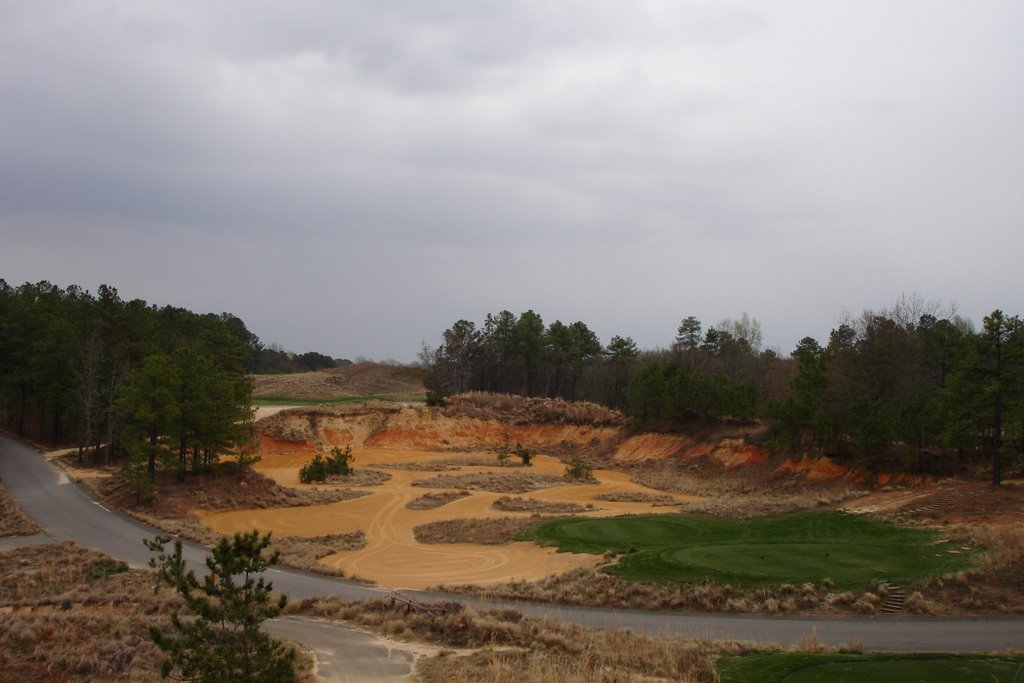
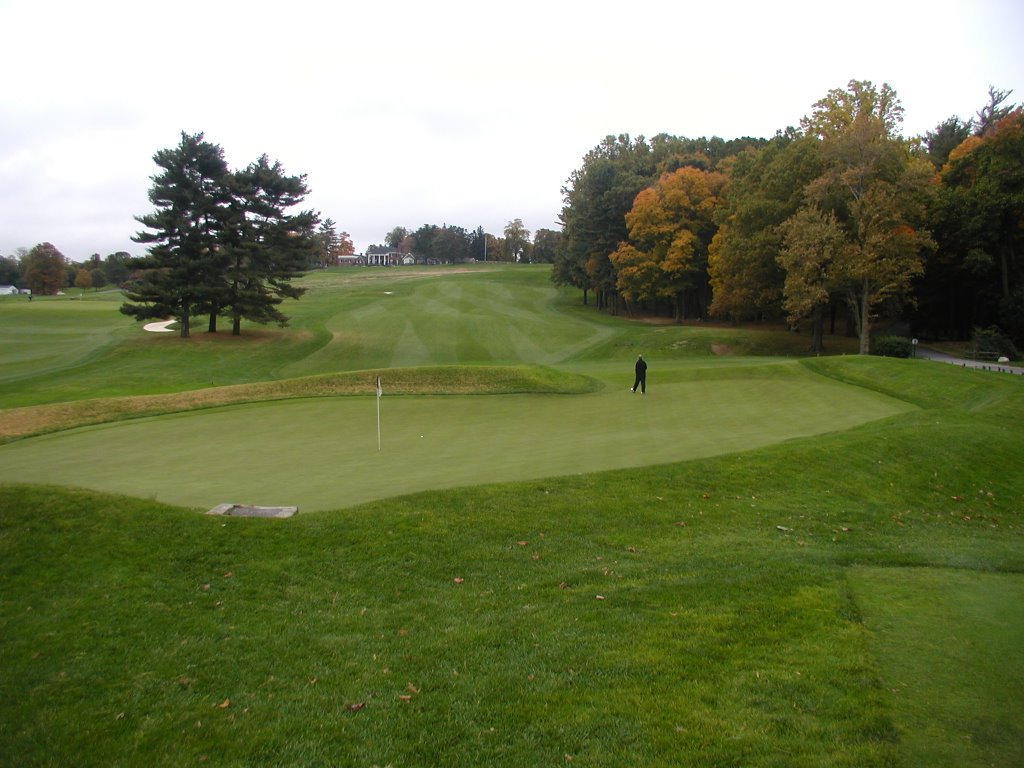
The 9th tee, notice the cedars on the left protect the 8th hole and on the right protecting the 18th hole

So finally we come to my dilemma. At Peterborough Golf and Country Club the 17th green, 18th tee, 9th tee and 8th green lie all within about 100 yards. The 8th and 17th greens are original Thompson greens with restored bunkering around them and represent some of the best remaining examples of his work at Peterborough. There is definitely no where to go left of the 17th green since the 15th hole is already too tight on that side. Fortunately the planting of large spruce helps to mitigate this proximity from being a bigger problem. To separate the holes for more safety, the only possible direction is to shift all the holes after 17 green to the right. The 11th green would also have to be relocated and is another of the (few) original Thompson greens left and a real beauty. Spreading the holes out towards the right and shift the 11th green right of its existing location will reduce the risk but it will not get eliminate the problem. If this change is made, all three Thompson greens would be gone (something I wanted to avoid if I could) and all the existing trees between the 18th, 9th, 8th and 11th would be removed with the readjustment of holes. There would have to be replanting of this area for safety and separation.
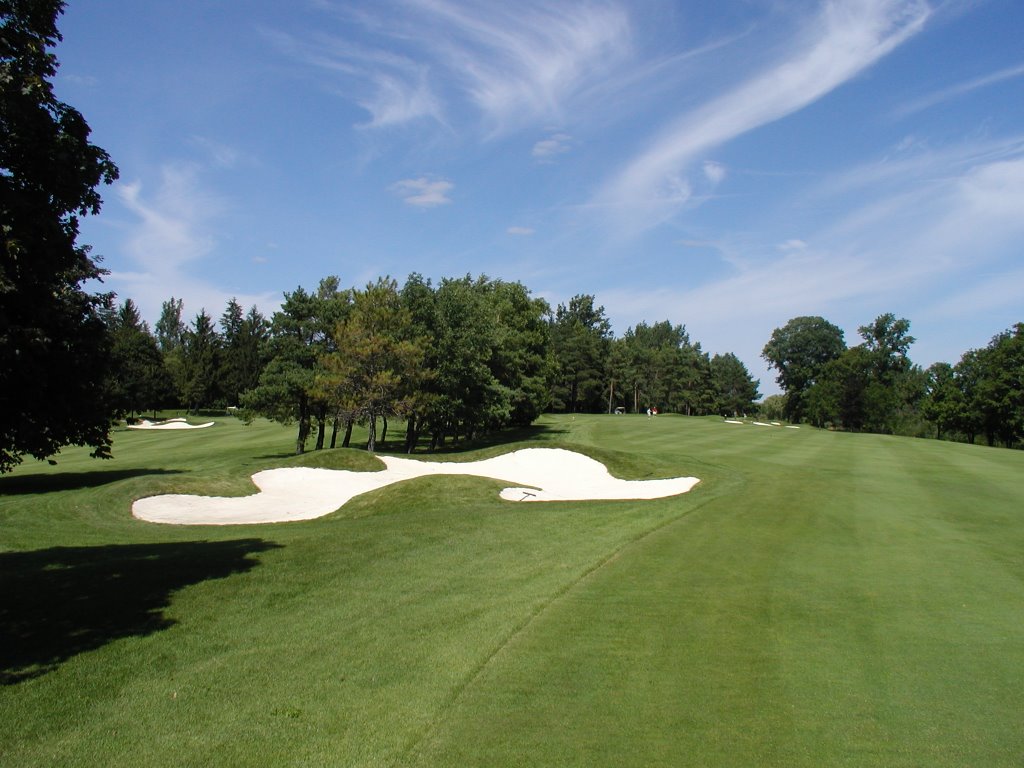


Looking down the 11th hole with the 8th green on the left, note the close relashionship.

The next option I looked at was to move the tees forward which would pull them out of the bottleneck, but badly weaken the holes by removing the length on these strong par fours. This would definitely lessen the chance of these tee shots finding the adjacent 8th and 17th fairways, but would increase the possibility of the approaches from the 8th and 17th (both par fives) hitting the players on the shorter tees. I think this is simply an exchange of one problem for another. As an architect I would become liable for creating the new problem.
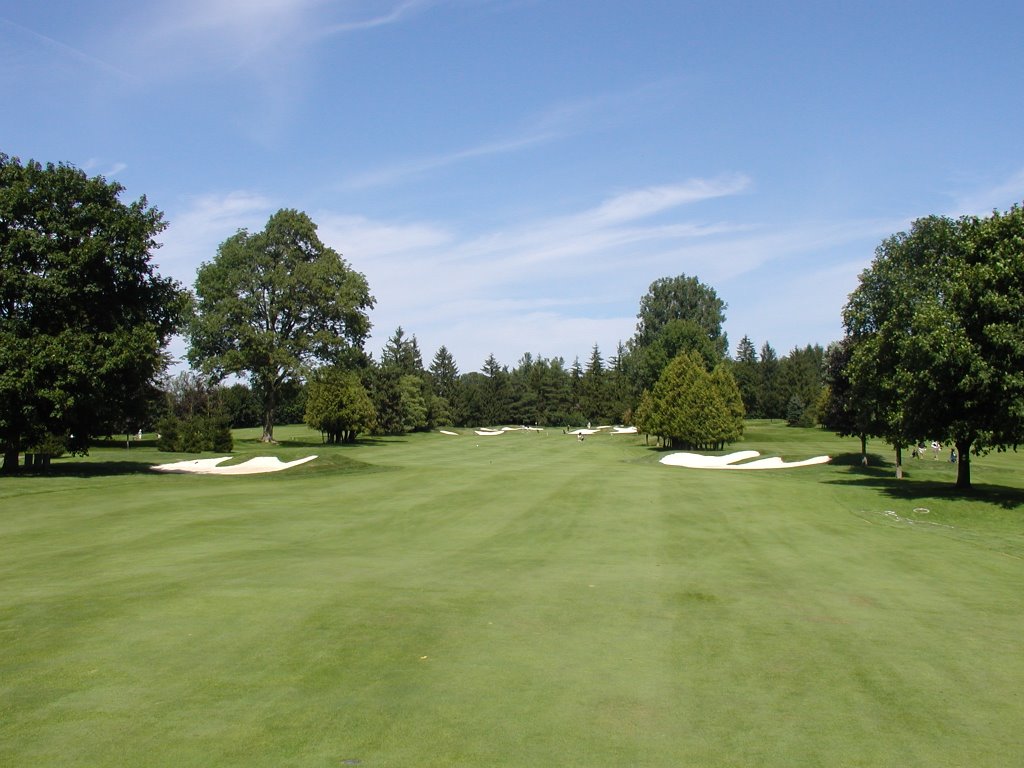


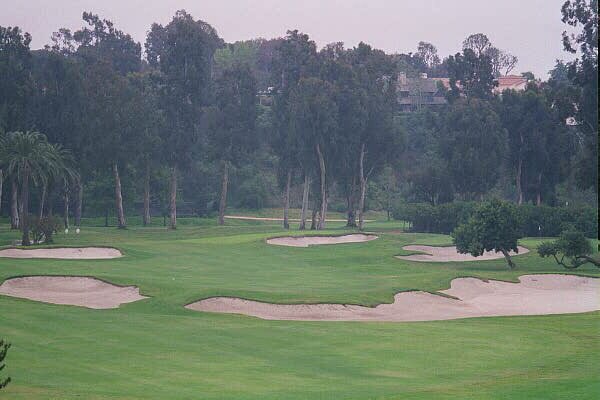
The 17th hole with a line of cedars on the right seperating it from the 18th hole

The last option is what to do about the planting of cedars and maples between the holes. To deal with many issues I have removed all the trees between holes to make the safety issue clearly visible. This allows the player to be clearly forewarned about the risk they are about to enter into, and also makes it easier for an adjacent player to yell a warning from the tee. This works to solve a lot of issues, but in this particular case it comes with a risk. For the full tee shot or ball that has a proper flight this would be the answer. Where this increases the risk at Peterborough is with the quick hook where the ball will take off at body height. The cedars do an effective job of knocking almost all these types of shots down and making the holes safer against this particular type of miss. Also, on the approach shots to both par fives, the cedars do a nice job of knocking down the drifting approach from getting into the adjacent fairway. The tightness of the cedars on the 17th in particular encourage players to play a lay-up rather than risk losing a shot in the cedars if they have a difficult approach of a tough lie. If the area was opened up, many more players would be attack the green from out of ideal positions and would pose a greater risk for the players on the tee on holes 9 and 18.

So as you can see as an architect, I literally have a question without a correct answer, and yet I will be liable for whatever I write. This is not such a simple job as you think is it?

Wednesday, April 19, 2006

Part I - Old Courses, Safety and Liability


The 17th green at Peterborough G&CC


I can't believe how much liability is taking over decisions in golf design, it really is depressing at times.

I was at Peterborough Golf & Country Club yesterday to review the golf course. The golf course is on 150 acres, but it has two locations there are triangles of unused land, because of this Peterborough has a series of safety issues. Some are solvable or at least can be minimized with some alteration to the golf course. Others are far more complicated since the distance between holes doesn’t meet “current” safety standards. Herein is the problem with a lot of golden age designs; they may have been fine with the equipment of the 20’s and 30’s combined with the limited amount of play (about a third the amount as compared to the present), but in today’s context many of these courses are not safe and have no flexibility to move holes to make them safe. What further complicates the issue at other courses is the housing surrounding most of these golden age layouts is way too close to the holes. At Peterborough they are fairly fortunate on this end; housing issues are fairly minor compared with the internal issues they face.

To explain how this issue has grown, when I first began working with Doug Carrick the safety set back between holes was 60 meters at Mandarin, the last project I worked on with Doug the minimum distance we used was 80 meters and Doug was often looking for 90 meters. This is how equipment has altered not only the game, but the safety of the game. When Thompson renovated Peterborough he stayed with the very common technique of keeping the tees and greens close for convenience, because they did not have the worries of safety, or more important (now) liability.

Liability in golf has changes so dramatically in the last 20 years. At one point it was understood that if you built a house next to a golf course, you have assumed the risk of getting golf balls in your backyard with your decision. The decision at Islington last year has put that assumption into question since the judge felt that the club needed to make alterations to minimize the safety issue on the 3rd hole. Now golf courses are placed in the position of becoming proactive with a safety issue to avoid liability for not addressing the issue.

Up until recent times the possibility of a player getting hit by a golf ball on the course that was considered the inherent risk of playing the game. A player who hit himself with a golf ball at Osprey Valley sued the course and architect because he blamed “them” after he hit his ball into a stacked wall of stone that was left on the hole. How many players would take a full swing from 10 feet in front of a 4 foot wall of stone? That case was settled out of court. Well now a member at Peterborough, hit by another player’s ball, has sued Peterborough Golf & Country Club suggesting that the congestion of holes on the course caused him to be hit in an adjacent fairway. This is where liability is going and it has huge implications on the courses. It will push the course and architect into making changes to the course (that they really don’t want to do) just to avoid lawsuits.

There is a chance that lawsuits and liability may become the biggest driver of changes to golf courses in the coming decade.

Tomorrow Part II – The Impossible Decision

Tuesday, April 18, 2006

Question of the Week 3 - Which Thompson would you most want to restore?


The old 4th green at St. George's


If you had a chance to restore any Thompson course which would it be? Would your choice be influenced by the amount of information available (ie. sketches, routing plans, photos, personal accounts, etc.) that would allow you to restore the course as accurately as possible? Or would you prefer to work on a course that has been apathetically" (props to CP) renovated by others so that you could restore it to its former self? Jeff Mingay

Let’s look at some of Stanley’s best courses to help make that decision.

While I would dearly love to fix the 3rd hole at St. George’s to finish the job, the rest of the course is essentially restored for the most part. I was very fortunate to have that opportunity and I still feel it was the most important contribution I have made to golf. I would love to return the 4th and 15th to the tough par fours they were but that is not in the cards, so St. George’s would not be my choice.

Highland Golf Links is definitely a strong contender because it is quite intact, and fairly easy to restore. The so called restoration by Cooke made a bit of a mess to the bunkers and introduced some of the worst paths in history, but most of that can be fixed without major surgery. What Highlands has going for it is the quality of old photos and other background information, so this would be a good candidate.


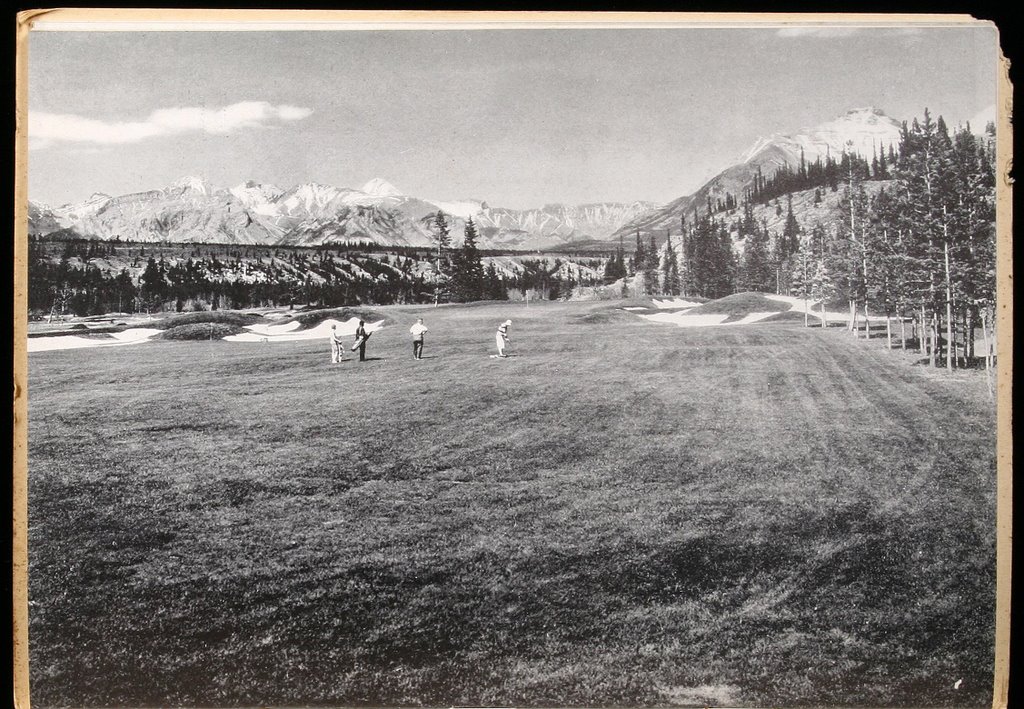
Jasper from around 1930


Jasper Park would be fun because this is likely the most intact and well preserved course and they also have a great collection of plans and photos available too. I would love to work there just for the shear joy of being on that property. As much as I’m in love with Jasper, I would choose another if I had to select one. Plus they need the least help of any of the clubs.

Banff Springs is an interesting one since so much has been altered. I have to believe that all the photos and plans are still in the Fairmont archives. While restoration would be fun, it will only happen if Thompson is made “a person of historic significance”, so that the Parks Services would see to a “restoration” actually taking place. The greens are a dicey issue with the Mercury and the number of rebuilds but the rest could be returned. I will pass until they stop tinkering with the original works.

Capilano has the least information and only limited interest in “true” restoration. The layout is stunning, but this is an easy one to pass on.

Westmount is the course with 15 Thompson holes and 3 outstanding Robinson holes which exceed the originals (kudos to Robbie). Here is an interesting one to consider, the historic information is a bit sketchy, but the potential is far higher than many of the clubs listed before. The original bunkering is gone completely, the challenge of recreateing that from scratch would be a challenging test that I would relish. Tree removal and a bunker restoration/renovation would put this “easily” back in the top 10, definitely a top contender.

The rest don’t really jump at you. Cataraqui has had most of the work done, so there is not a lot to do. St. Thomas, a spectacular hidden gem is half Thompson and half Robinson; while one of the finer layouts in Canada, restoration is a questionable route.
And finally former great layouts like Montebello are essentially gone.


13th at Highlands without the trees

My choice would be Highland Golf Links. It would be based on the thorough collection of photographs, memories, and other information that would make an accurate restoration easily achievable. It would also be a pleasure to undue one of the worst [so called] “restorations” done where the architect did not do his research or care about accuracy. Highland Links could be everything a great restoration is about; preservation, restoration, respect, education and leaving a legacy. It would be an ideal project for me.

Monday, April 17, 2006

Finding Harry Colt


The Colt Plan at Toronto Golf


In the early 1960's, Toronto Golf Club was in the process of replacing their pro shop. John Hunt, the long time head professional and an avid golf collector, was rooting through the old pro shop to see if there was anything left to salvage or keep before the building was demolished. He found, hidden in a cubby hole on an old wooden roller, the original parchment plan drawn by Harry Shapland Colt. Toronto Golf Club had selected H.S. Colt because at the time, he was widely recognized to be the finest architect in golf. John had found one of his rare drawings. In hindsight we recognize that John rescued one of golf’s great historical documents. He took the document home to keep it with the rest of his collection. Upon his retirement, John had the plan restored by the Royal Ontario Museum and professionally framed. He then presented the plan to the club. John’s motives for returning it were simple: “That is where it should be. With the club.” The club is currently in the middle of a historically based restoration, and the Colt plan will help inform key decisions in this process.

It seems incredible to think that important documents such as this would not be prudently cared for. But it is important to take perspective on what was occurring in golf at the time. Modernization was the vogue – not only for golf, but for society. Think about how many historical buildings were knocked down to make way for modern structures of glass and steel and cement. The idea of preserving or restoring anything – let alone golf courses – was not a consideration. “New” was in fashion and history had little or no value at this time. Rob McDannold, the respected pro of Hamilton Golf & Country Club put it best “In those days a typical club would not be aware of the history they possessed, because to them it was not yet history.”

Hamilton Golf and Country Club, the site of the 2006 Canadian Open, received a call in 2003 from the recent widow of a former club president. She had found the original Colt hole by hole drawings as well as the course layout. They were in her basement and she wanted to know whether the club would be interested in them or should she put them in the trash.

Rob McDannold strongly feels that the former president saved the plans and that, “If the club had them, they would have been destroyed.” Between the 1950’s and the 1970’s many amateur historians or collectors removed artifacts from clubs, particularly when the club showed no interest in preserving and keeping the documents. Sometimes they had the club’s blessing, sometimes they did not. Often they would take it home before it got tossed away. Unfortunately, many of these same people are now left in an awkward position – how do they return these historically relevant items? They may choose to hold on to them rather than face questions about how they acquired them.


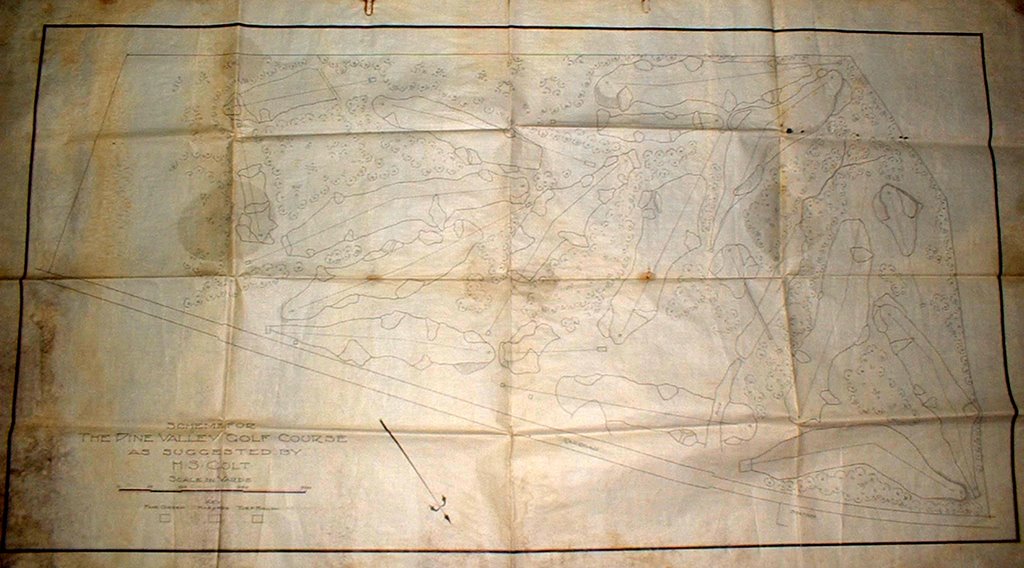
The Colt Plan for Pine Valley


The latest example of this occurred recently when a Pine Valley plan became available on eBay. A gentleman found a fascinating old golf course plan drawn on vellum while visiting a flea market in Berlin, New Jersey. He doesn’t recognize the plan since he knows little about golf. Since it is dated 1913, he decides to spend the flea market price of $54 and take his chances. He keeps it for three years and then decides to put the plan up for sale on eBay. He expects to get between $500 and $1000 because he has figured out that the plan is of a highly regarded golf courses. But this is no ordinary plan. This is the missing H.S. Colt plan for Pine Valley, for which many research historians have been looking for decades. It is the plan that will help solve the endless debate over who designed Pine Valley.

A historian named Wayne Morrison made arrangements with the gentlemen to verify the plan. Upon authenticating the plan, he then assembled a group of historians to privately purchase the plan for $15,000, with the intention of returning the plan to the club. To the credit of the seller, once he realized the significance of the document, he also wanted it to find its way back to the club. The club decided to reimburse the purchasers for the amount they had spent to return the plan. Only a well-heeled club like Pine Valley, or a wealthy collector, could afford to acquire a document as important as this. The club was fortunate in this instance, because this was a collector’s dream.

Sunday, April 16, 2006

Hole Series in Score Begins


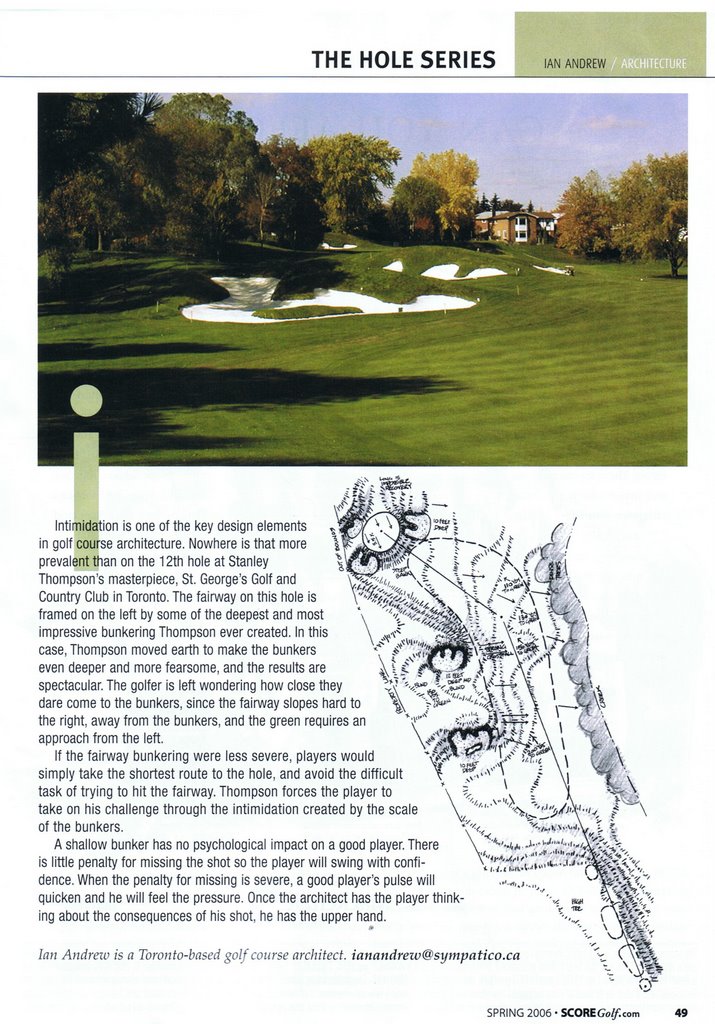
The hole series begins in the Spring 2006 issue of Score Magazine.

Friday, April 14, 2006

Carry Angles

Carry angles are the simplest form of risk and reward. The hazard is placed on a diagonal to play, and the player is left to choose how much of the hazard they are going to try and carry. The more they try to carry, the longer the shot, but the easier the approach is into the green. The less they risk, the shorter the shot, and the tougher the approach into the green.


In the drawings the first red line of the drawing represents the carry angle. The second red line at the green represents another carry angle. The second line also illustrates the reason for trying bite off as much as you dare from the first angle. If you play wide to the left, you are left with a full carry over the hazard; but if you can play over the diagonal hazard successfully, you are left with a clear pitch into the green. This is very simple risk and reward architecture.

The reasons that I like carry angles to create strategy are:
1. risk and reward scenarios encourage more aggressive and exciting play
2. they clearly defend the shortest route to the hole without removing the aggressive play
3. they create varying degrees of risk depending on ability of the player
4. this style makes strategies very obvious and the ideal line very clear for players

Architect who most typifies this example:
1. William Flynn, the master strategist used this style predominantly in his work.
2. Canadian Doug Carrick uses this approach on most of his holes.
3. Bob Cupp enjoys this technique a great deal too.


The reasons I don’t like to overuse carry angles:
1. Technology renders these holes obsolete very easily since it is based upon a precise carry distance
2. When carry angles are overused, the player begins to make automatic decisions, which lessens the interest for the player.
3. Most carry angles are created by the architect, usually using bunkers, and there ends up being too much repetition in what the player sees.
4. While strategically strong, there is too little fun, chance and discovery left in the course. I think this architecture can fail by being too planned out to enjoy.

My thoughts about using this technique:
1. It remains one of the best techniques to use to challenge a player mentally
2. Do not use this exclusively since the best architecture mixes many styles. One strategy is dull, no matter which one you choose.
3. This is best used by finding a natural carry angle in a creek or ridge to avoid repetition
4. Alternate with other techniques like triangulation, doesn’t get compromised by technology.

Wednesday, April 12, 2006

An Alternative to Dealing with a Perfectly Flat Site


The cape hole at National Golf Links. The green site is raised and recovered land, notice the lack of mounds.

One of my stated objectives as an architect is to move as little earth as possible and to try and retain as much of the natural contour as possible. So how would I deal with flat featureless sites? The answer is simple, I would have to move fill just like any other architect. The difference is how I would choose to do it.

The approach I would take to creating an interesting looking golf course on a featureless flat site is to build new landforms that appear to be part of the original site condition. Creating the appearance of an abandoned sand and gravel quarry will allow for lots of fill and a very natural looking condition. Building an esker or a flat topped ridgeline or ravine will give the site a prominent natural feature that will become a common element, tying the site together. Regardless of which feature is added to improve esthetics and interest, I would avoid placing fill where the golf course meets its boundaries. In this way, the course blends into its surroundings and yet still takes advantage of the surrounding views.

Most importantly, I would avoid creating any containment mounding which unfortunately seems to be the standard answer to just about any flat site in modern architecture. Containment mounding is used primarily to create definition. Unfortunately it also leaves the most artificial looking landscape possible no matter how good the shaping is. The course will always act as a contrast to the surrounding property and look forced upon the landscape. Without exception, the most highly regarded courses in the world all blend naturally into their surroundings.

The final secret to handling a site like this is a brilliant technique pioneered by Seth Raynor and Charles Blair MacDonald at the turn of the century. Instead of adding containment mounding to the outside for framing and definition, they used mass fills to lift the landing area and green sites. The playing field itself becomes the focus, by the very fact that they stand up and out from the surrounding landscape. Pete Dye did an outstanding job using this technique at TPC at Sawgrass.


Fairway raised up, but no containment mounds to compete with backdrop of trees

This has additional side effects too. First, the golf course will always blend perfectly into the surrounding countryside regardless of topography. Definition was supplied by raising the target areas up for clear visibility. The next benefit is the is the best of all. The bunkers are cut naturally into the raised areas, clearly framing strategies and fitting naturally into the landscape. Finally, the fairways drain naturally off into the roughs avoiding area drains in fairways and wet conditions in the key play areas.

Raynor and MacDonald were able to create golf courses with severe lines that also looked natural. What I have outlined is their technique, which also offers the perfect alternative to dealing with a flat site. Once again we learn and borrow from the past to make great work in the future.

Tuesday, April 11, 2006

Blindness – an architectural failing or charm?


where the golfer on the right is, only part of the green is visible


A blind hole: A hole where the golfer can not establish a clear line of site to his target on one or more of the shots because of intervening topography.

Blind shots have largely been eliminated from modern golf for three reasons. One is the architect has the equipment and resources available to move enough earth efficiently to eliminate blindness. The second reason is that many in the golfing industry see the blind shot as architectural weakness or poor design. But the main reason is that liability and safety concerns force the architect to try and remove any potential risk through earthmoving. And yet an enigma like Tobacco Road gets built that truly ignores convention and embraces the blind shots as part of golf.

Most golfers immediately dismiss the blind shot for having no place in the game. But I caution you on being so hasty, considering some of the most famous blind holes. The Road Hole at St. Andrew’s, the 8th at Pebble Beach (a hole Jack Nicklaus called the best par four in golf), and the stunning 9th at Royal County Down are three of the finest holes in golf and yet each has a blind shot. One of my favorite courses in the world, Royal County Down, has more blinds shots than any other great course I know. While the course is dismissed by some, others revel in a course that is barely touched by the hand of man. I think that people can ignore a blind shots when the following shot is of such high caliber that it more than makes up for the original blind tee shot. Where the debate becomes far more interesting is the blind approach.

Again there are wonderful examples to chose from; The Himilayas and Alps hole at Pretwick, MacDonald’s Alps and Punchbowl holes at The National Golf Links of America, The punchbowl hole at Cruden Bay. The approach shots are indeed blind yet they offer some of the best golf in the world.


the tee shot on 18 at Tobaccoo Road


The last style of “blind” hole is where a player is asked to play for position to get a clear view into the hole, and if they miss the shot to the wrong side they are left with a blind approach due to the topography. Many holes such as the 3rd at Muirfield, and the 13th at Royal County Down are fine examples. When I researched the lost holes at St. George’s, I found out both the 4th and 15th were holes of this very character. In older writings they were described as the finest holes on the course, and yet they fell victim to an architect who did not understand their merits

There is still room for a blind shot, it adds variety and interest to a round, and may help a transition across difficult ground without destroying the natural character of the land. It also offers architects another psychological tool to make a great player uncomfortable. Even blocking the green site from view, but leaving the flag visible has an impact on the how comfortable a player is over a shot. Players have come to expect everything visible and clearly defined on each shot, and break in this pattern bothers them. As architects, we are always looking for a way to add tension in small doses throughout the round; the blind shot has the same impact as water, out of bounds or a forced carry. All four add additional tension, but only the blind shot works without the fear of penalty strokes. Pete Dye has built a series of short par fours requiring a blind wedge into a small target. The PGA players hated the original short 12th at TPC because of the blindness, and it was this dislike that he used to torment them on such a short and easy hole. Pete was a master at getting in the players minds.

The Scots will tell you that a hole is only blind once and that a player need only decide upon a line and hit the shot. But then again the Scots never worry about fairness; they just play the game as it comes.

Monday, April 10, 2006

Part 3 of 3 - 7 Common Mistakes of Green’s Committees


The latest way to select an architect?


No. 1: Shopping for the Right Opinion
Many clubs are quite prepared to go look for a golf architect that will give the green’s committee the answers they are looking for. Often the right answer is not what they want to here, but many don’t like to let the facts get in the way of their own personal opinion. Dealing with a committee is quite complex, you have to deal with a lot of personal agendas and egos to make any progress. Some want to change everything whereas others want no expense or disruption. It is very hard to get the committee to focus on the real goal, which is what is best for the golf course.

No. 2: Not Enough Time or Money
I have been asked to ensure a restoration is accurate, only to be told that they can’t afford more than a visit every 10 days. Imagine a club finding their own contractor to save money, who then cuts corners on everything leaving behind work that needs to be rebuilt only a few years later. My least favourite was working with a dozer operator provided by the club who had no golf experience because he was half the going rate. The work was limited by his ability to understand. The only way to ensure a successful project is to provide an appropriate budget and a realistic schedule to get the work done well. Committee’s must remember, like everything in life, you get what you pay for.

No.3 : Micromanagement
Green Committee members and chairmen must first have a basic understanding of the membership, the club’s history and the golf architecture of their course. It is a steep learning curve, and often it involves removing preconceived views to understand what is best in their situation. There are no standard answers, particularly in renovation. With a little knowledge, and not enough understanding, it is easy to become a backseat driver. Rather than helping, the committee member will often inhibit the golf course architect from doing their best work. The architect needs direction and interaction with the committee to do what’s best for the club, but any uninvited involvement meddling reduces the ability of the architect to do his best work.

No. 4: Unrealistic Demands
Television has hurt the game. Members are enamoured by what they see on the television and want their own championship course in championship conditions all year. They want us to build bunkers that always provide a perfect lie. They want greens to run fast regardless of weather. They want any imprefection or uneven stance removed for fairness, regardless of architectural merit. If a green is too difficult with current green speeds, they would rather rebuild it for playability than save the great green by slowing the speed. Television, personal ego and the insistence on stroke play have all conspired to make the golfers demands unrealistic. Golf was never about fairness. I wish all members would understand that the ability to deal with adversity differentiates between a great player and a good one."

No. 5: The Legacy
The biggest hindrance can often be dealing with a large ego, with the worst being the retired golf pro that still considers the course his. Many members view serving as green’s chairman as a chance to leave their mark on the course, regardless of advice. This is usually how holes that didn’t need a change get rebuilt. Often key projects or vital equipment purchases are put off to get the vanity project done. Green Committees can avoid this pitfall by developing master plans for long-range improvement, and then having the architect put together a phasing plan to prioritize the work. Such plans often address proposed architectural changes for the golf course, but also should include the less sexy infrastructure necessities such as irrigation, drainage systems and maintenance facilities.

No. 6: Unbalanced Representation
Committees are cumbersome and often have difficulty reaching important decisions. It is even worse when they are unbalanced often fail to consider the golfers of different abilities. It should be no surprise that many of the changes made in the name of "toughening up the course" or "modernizing" it wind up making the course too difficult for the majority of players. Green Committees should be comprised of golfers of both genders and all abilities. This helps to take different perspectives into account, and it helps to keep lines of communication open with other golfers.

No. 7: The Inability to Make Tough Decisions
The duties of a green chairman and Green Committee are not for the timid. Issues often arise that require tough decisions that may anger factions within the golf membership. Flashy projects like bunker renovation is usually an easy decision, but replacing the irrigation system or adding miles of much need drainage takes some conviction, but it is trees where the strength of the chairman or committee is vital. I have yet to find a course that wasn’t in need of tree removal programs. Removing trees becomes such an emotionally charged issue, but the removal is so important to turf, playability, views and the health of the trees themselves. If you don’t like to offend anyone, don’t serve on a green’s committee.

I will look at something more design related tomorrow.

Sunday, April 09, 2006

Green Committee's - Part 2 of 3 - The Role of a Greens Committee


I'll give Architect Alister Mackenzie, who apparently had little regard for committees, the first word. In his 1930s manuscript, The Spirit of St. Andrews, he wrote, "The history of most golf clubs is that a committee is appointed, they make mistakes, and just as they are beginning to learn from their mistakes, they resign office and are replaced by others who make still greater mistakes, and so it goes on."

The Greens Committee has a responsibility of overseeing the management of the golf course, but they must not be involved in its day-to-day management. They should be involved in the selection of a golf course superintendent and a golf course architect. They should also provide the superintendent with a basic budget and general direction for the club. They are not there to micromanage either expert. They need not have specific knowledge of turfgrass management or golf architecture, but they must understand the game of golf. They must be willing to learn and know when to listen. Know it alls or dictators are disruptive to a greens committee and the experts it hires

In charge of the committee is the green chairman. The chairperson’s task is to organize and hold regular meetings of the committee and superintendent to discuss new ideas or to deal with any problems that have arisen. The greens chair or committee representative should also be present for any meeting with the golf architect, and should be able to make to make quick decisions when changes arise in the field. An effective chairman and committee can develop and implement plans that can be enjoyed by golfers for generations. Conversely, an ineffectual committee can drag the course down, through meddling or poor decision making. Being a chairman or member of the Green Committee is not a popularity contest. Tough decisions frequently must be made regarding disruptive and expensive programs and projects, and thick skin and an ample dose of conviction are required. Green Committees serve a vital role in the operation of the golf course.

If you are going to serve on a greens committee remember you are there to serve the best interests of the golf course, not for your own personal interests. If you can not do this, do not serve on the committee. As a golf course architect that is my commitment, the best interests of the course must come first.


I think Alister MacKenzie should be allowed to also have the final word of advice to a greens committee. “How often have we known committees, presumably consisting of men of intelligence, receiving the statement that golf is played for fun, with eyes and mouths wide open in astonishment? It is always difficult to persuade them that the chief consideration that should influence us in making any alterations to a golf course is to give the greatest pleasure to the greatest number. Any change to a course that does not do this is manifestly a failure.”
7 most common mistakes: http://thecaddyshack.blogspot.com/2006/04/part-3-of-3-7-common-mistakes-of.html

Saturday, April 08, 2006

Green Committee's - Part 1 of 3 - Will they Listen?


The 10th at Toronto Golf

As my wife said, “What it all boils down to is the club belongs to the members”

I have had a few situations in my career where a green’s committee or chairman only wants me to do their bidding for them. They have decided on the changes that they want to make and how they want it done – all they need is an architect to do it. What they want from their architect is to act as salesman, construction supervisor and mostly a figurehead. They want the rest of the club to assume that all work is approved and directed by the architect while they secretly go about their business behind the scenes. This is unfortunately more common than you would think. After all ask any golfer and they will tell you they know lots about golf architect. For some architects this is an arrangement is acceptable as long as they are well paid, for me it is pure frustration.

In the past I was guilty of trying to please too many people and have certainly learned from this experience. To be truthful, the quality of the work is always comprised – as I stated before what is a horse designed by a committee? A mule. I face an interesting decision along these lines once again with a course I love run by people who want to direct rather than listen. What an interesting dilemma - get involved and hope for committee change - or pass on the work and never work with the club again.

Why have I returned to this topic?

Well I just read through the Report to Members from the Course Committee regarding Toronto Golf Club. They are working with Dr. Martin Hawtree, a man they have hired due to his expertise with H.S. Colt. I was really looking forward to the direction that he offered them. Toronto Golf Club happens to be one of my favourite 5 courses in Canada. The one thing that struck me about the report was there was a great deal of backslapping about how great Toronto Golf is and how lucky to have a Harry Colt design, but very little deals with correcting the lost history and restoration they should be taking on.

Colt bunkers built in 1914

I have a copy of the Colt Plan and have all Colt and Alison’s field notes, so that I’m well versed in what in the history and legacy of the course. I would bet that he gave them a very clear vision and directive of what he wants to do and I would love to see that report. I sure got the impression that the committee has chosen to simplify his thoughts to avoid making drastic moves that could upset membership. I want to make it clear this is MY speculation, but I’ve seen this style of report before. If you can’t make the right decision for fear of upsetting someone – stay off the board and for god’s sakes don’t chair a committee – your doing harm.

I’m only going to give one example that stood out – since I have some historic photos to make a point “Our bunkers are not good examples of Colt’s work”. The committee report talks about repairing the leading lip instead of restoring the bunkers. They have Colt’s instructions on how to build them and how they should look. There are lots more examples in the report, but I just wish clubs would listen to their architects. The results at St. Georges should have been a lesson for all clubs (including Toronto). There was lots of committee involvement ( I like that involvement), but they also trusted (me) the architect to do what is best for the course, and now everyone is pleased with the results including historians.

The role of a green's committee and the green's chairman: http://thecaddyshack.blogspot.com/2006/04/green-committees-part-2-of-3-role-of.html

Thursday, April 06, 2006

The Best Hole I know –the 10th at Riviera


the smart line in red, the usual line in yellow


My favorite “designed” hole is undoubtedly the short par four 10th at Riviera. I love most short par fours since everybody has a chance on a short par four. For the average player, here lies the opportunity to make a par; and for the better player, a chance to make birdie.

The 10th hole at Riviera may be the most deceiving hole in all of golf, after all a 311 yard par four should be a push-over right? The hole is easily reachable from the tee which naturally entices a bold player to play for the green. One of the joys of the Nissan is watching how many players try to hit the green, and make five. Even though they know missing right is certain peril and most strokes are lost from missing right, they continue to look directly at the green. The true genius of the design lies in the green itself, it slopes sharply away unless you come in from well left. This is a very special hole, after all how many holes do you know where the longest way to the hole is the most efficient to make a score?


the green falls away to the right


But is doesn’t stop with just the green. When you see the hole, you are surprised to find out it is built over a huge flat wide-open expanse. Thomas and Bell have added a series of bunkers that further add to the feeling of width. The other thing the bunkers do is perfectly frame the line directly to the green. The funny part is the left edge of the fairway, where the smart lay-up is played, looks like the worst option from the tee. How many holes do you know where the smart play is the least obvious and the riskiest play is the most understandable?


notice how the bunkers tell you to go at the green, and look at all the width


The player is left on the tee just brimming with confidence that they can knock it on, and the architect has gone well out of his way to encourage this. You may get lucky with your silly choice and make a birdie or a par through an excellent tee shot (as I did). But as my host, a regular member said, you won’t pull that off two days in a row. Once you make six from the right, you take the route to the left all but a few times a year – if you want to score.
The hole has many options, needs a great deal of learning to play it well, and allows all level of players a good chance at a score. This is a perfect hole at only 311 yards. So please explain to me why we need 7500 yard courses?

Wednesday, April 05, 2006

Template Architecture – Borrowing from the Past


the original redan


Before beginning the National Golf Links of America, Charles Blair MacDonald toured the great courses of the United Kingdom and Europe. He set out to find the finest holes and to dissect them to use their strategies. He didn’t try to replicate any of the great holes, he was far too smart for that, instead he choose to take the holes and adapt them to suit the site conditions. His decision to adapt meant that he could use multiple ideas on a single hole, and it also meant that a hole could become more through better ground than the original.

The 15th (The Redan) at North Berwick, Scotland is more than a hole, it is an architectural concept. The green is set on an angle running away to the left, what makes the green unique is the land from the fairway in front to the back of the green runs away from play too. Add in bunkers tight on the front and back, combined with the narrow nature of the green, and you have one of the most imaginative holes in golf.


the redan at NLGA


MacDonald brought the Redan to NLGA. His Redan is better than the original for one main reason. It offers all the same architecture, but it is clearly visible since it is slightly downhill the whole way. All Raynor’s and MacDonald’s Redans were made visible, because he saw the blindness in the original as a weakness. While following the architecture of the original, he looked for ways to improve the architecture. This is template architecture.


the 3rd at Tobacco Road


At Tobacco Road Mike Stranz’s 3rd hole borrows directly from the 3rd hole at Pine Valley. Pine Valley’s 3rd is a par three surrounded by sand with a green that feeds the ball from right to back left to access the tucked pin positions. Both holes look much alike, but the problem is they do not play alike. The 3rd at Pine Valley the steep grades are used to feed the ball into flatter areas on the green; whereas the severity of Mike’s green make much of the pin position relatively inaccessible due to strong slopes and the lack of good flattish pinning areas. While they look very similar, this is an example where the original works strategicly better than the newer version.


the 3rd at Pine valley


Finally since it is Master’s week I thought I would talk about the 4th at Augusta National. The 4th was MacKenzie and Jones’s tribute to the amazing 11th (called Edan) at St. Andrew’s. The front bunkers at Augusta are placed to mimic the Strath and Shell bunker fronting the green, while a little more formal and a little less intimidating, the position is quite close. The biggest difference now is the green at Augusta is missing the huge shelf that makes the Edan at St. Andrew’s truly unique and a tough test of distance control. Augusta’s green is well sloped but has no major change of elevation. The other new difference is the hole at Augusta is 240 yards, which removes the remaining comparisons by the distance alone. The Edan has been built at Garden City (#18) and lots of other course too. None have matched the cunning of the original green contours.

All great architecture has roots in classic holes, seeing and understanding the great strategies is vital in creating your own great holes. Even the best architects in history paid attention to what others did well before them.

Monday, April 03, 2006

The Rise of Inoffensive Architecture


One of the leading architects of my time has chosen an architectural style that is definitely pretty, very comfortable to play and offers instant familiarity right from the first play. The best description I can make of this architecture is inoffensive. There is nothing wrong with the work, and it is popular with players, but there is nothing about it that stirs the soul. You never face a moment of angst or agitation from having to make a decision from incomplete information. You simply know everything about the work from first play. You rarely lay-up, you are not forced to think, or made to fear the ramifications of a miss. It could be describes as “comfort” golf.

The biggest problem I personally find with these courses is the lack of discovery over repeated plays. When you know each strategy from first sight, and the risk reward scenarios are at a minimum, you simply just play golf. I’m not sure how much fun golf is without risky options, alternate routes, overcoming extremely difficult scenarios, or paying the price for too much courage. The game is not meant to be fair, yet this architecture treats the game as if it is supposed to be fair. Options equal Interest. Interest equals fun. This golf offers little in the way of options or interest; it is simple as comfortable as your favorite chair. Somehow, I don’t think that is what Tillinghast, Colt and MacKenzie had in mind.

Walter Travis mentioned that it is the architect’s responsibility to improve the skills of the player by challenging their ability to overcome difficult tasks. I’m sorry, I should find the actual quote. He felt that the more challenge they were asked to overcome, the more their skills would improve. He felt courses should evolve and add trouble as the membership became more familiar “and comfortable” with the layout.

Why has golf headed in this direction? Is it the fear of criticism? Is it the desire or architects to please rather than push the player, which leads to a short-term popularity of the architect? Is it the marketing idiots and their terrible influence on the golf industry dumbing down the game?

Alister MacKenzie has the best quote on the subject:
“A first class hole must have the subtleties and strategic problems which are difficult to understand, and are therefore extremely likely to be condemned at first sight even by the best of players.”

Sunday, April 02, 2006

My Eclectic Top 18 in the World


The 3rd at Royal County Down


On Golfclubatlas somebody once asked for the best 18 holes based upon the original list in the World Atlas of Golf. The task was to come up with 18 in holes in proper order, by 18 different architects, and from18 different courses. When I made my list, I was quite pleased when Tom Doak suggested that my list should have been used in the new printing, and other than the 12th he could find no fault with the list. He was pleased that I didn’t always take the obvious, like 16 at Cypress Point, nor a hole from Augusta National. Well the reality was I had not been to Augusta and I stuck to only holes I have seen. This list also provides a nice window into what I like too.

The toughest selections for me was the opener, the 9th and the 12th. The other more fascinating issue is the lack of a Donald Ross Hole or a hole by Pete Dye. I have a great deal of respect for both architects, but could not find that elusive hole. I look forward to any suggestions somebody has for those two architects or those three holes.


The reverse redan puchbowl green of the rollercoaster 6th at The Creek Club


1st Garden City - Travis
2nd Pine Valley - Crump

3rd Royal County Down – George Coombe
4th Banff Springs - Thompson (Devil's cauldren)
5th Merion (East) - Wilson
6th The Creek Club - Raynor (punchbowl)
7th San Francisco GC - Tillinghaust (The duel hole)
8th Crystal Downs - MacKenzie/Maxwell par 5
9th Friar's Head - Coore and Crenshaw

10th Riviera - George Thomas
11th St. Andrew’s – Nature/Robertson (Eden)
12th Sunningdale - (old) Park/Colt
13th Gleneagles (Kings) - Braid (Braid's Brawest)
14th Royal Dornock - Morris (Foxy)
15th North Berwick - Strath (the Redan)
16th Shinnecock - Flynn
17th The National Golf Links of America – C.B. MacDonald (Peconic)
18th Pebble Beach – Egan

Saturday, April 01, 2006

My Thoughts on Being a Member of the ASGCA


Two of my good friends, Gil hanse and Art Schaupeter


Ever since I was about 13 years old, I wanted to be a golf course architect and eventually become a member of the ASGCA. I finally got voted in three years ago. The funny part was while I was eligible for many years; I did not join due to the cost and the lack of clarity in the application process. While the standards are simple (5 new courses where you have a lead role in the project), the grayness of standards leaves a lot of confusion.
I always wondered if I was eligible due to Doug’s insistence on routing all the courses before handing them over. Well it turns out that is fairly common in large firms and is understood by the committee; but you still have to spend about $5,000 that you cannot recuperate, to find out what they think. That sucks in my books. I finally joined when my wife told me should would not go anywhere with me and the kids until I had joined. I always bailed and took the kids to Florida in the winter with my initiation money.

“I never quite knew what the ASGCA experience would hold for me, and I was skeptical about joining.” from one of the current associates

Well I have now been to two meetings and I’m honestly not convinced of whether this is the right or wrong thing to do. It certainly is an expensive habit and I still don’t understand the benefits beyond great friendships. I hope that will simply come with time.

I went to the last meeting with some thought about dropping the idea of the ASGCA if the money became a burden - but I must admit that the week definitely made me change my mind. I don’t know how this will play out, but I was convinced to stay. A few new friends (members) in particular spent a lot of time with me sharing their experiences and ideas for how to run a small successful business. Essentially we all convinced each other that we are not crazy and set up a nice support group for each other. This is priceless to me.


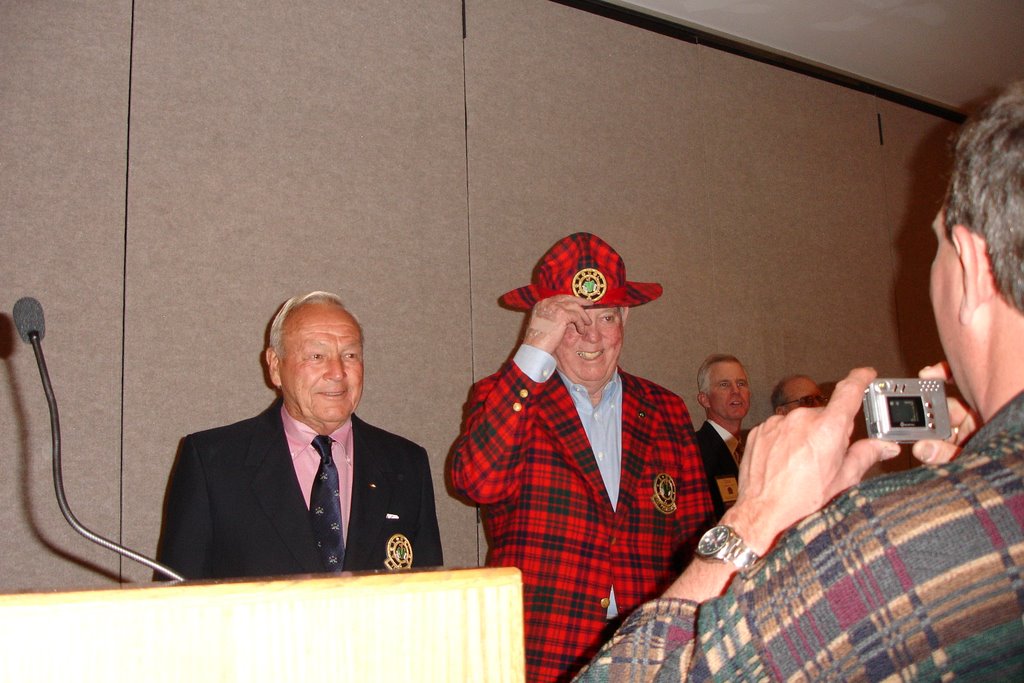
meeting Jack and Arnold, priceless


I enjoy the camaraderie and many close friendships that I have already picked up very quickly. The younger architects, in particular, are open and like to share ideas and enjoy constructive criticism to improve. The older members are always a highlight of each meeting, with their swapping of stories, I like being part of that history. The publications and initiatives to educate agencies are good for the future of golf development, and their benefit to me is obvious. I guess the question is more selfishly am I getting enough, when I’m spending so much money, which I really don’t have a lot of.

There are a few things that bother me about the society beyond cost. I find it hard to get involved, particularly since the committees don’t meet or report. I’m also at a loss in how the executive is appointed and how the membership has any role in the process. I’m fairly certain we do not, which is not very democratic. The society seems to be run by and for the larger firms at first blush. This will always sit poorly with me if I learn this is the reality.

I do want to get involved, Jeff Brauer tells me that is the way to get the most from it, but I’m not clearly sure how. I would also like more interaction between members so that I have more opportunity to share with them or learn from them. I want more clarity in how the society functions and have more input in its direction. I hope the new development of a Master Plan/Directive for the Society way help alleviate all these concerns. I’m certainly hopeful to this end.

So far it is certainly fun, the question is, is it beneficial?

Friday, March 31, 2006

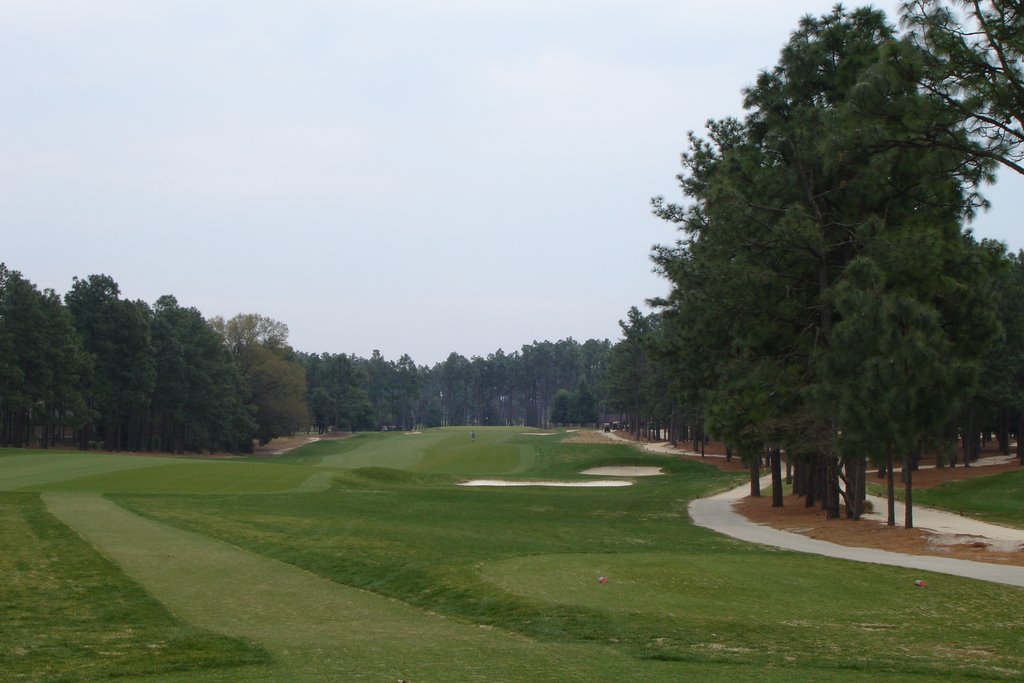
Pinehurst #2


the 8th, my favourite green site


Well, another course that I have played a couple of times and walked once backwards too.

The “deuce” is one of my favorite designs for its ability to get the weaker player around with the width between tree lines, light rough and limited amounts of bunkers in play. The higher handicap is unlikely to lose a ball and quite likely to find the occasional par to make a very memorable round.

The quality of the deuce is its ability to ratchet up the pressure and difficulty on a better player. The greens are the course and probably the only reason that the deuce is held in high esteem. Many people think the deuce is ugly and boring, since the crowned greens are supposedly repetitive. Well I certainly don’t agree. Each crown comes at different heights and many have to be engaged with different types of shots to remain on the surface. For example you must run it into #2, while you have to fly it into #9. A running draw (for me – the lefty) helps at #11, whereas a delicate pitch is required at #12. The course can not be broken down to domed greens that are hard to hit where a player has lots of chipping; that is selling the course far too short.

I went to see if the course was too hard and the greens were too fast for a reasonable game. I found out the course is kept at 9 feet for resort play, which means the greens would rarely be out of control. They are still very challenging even at 9 feet. Yes the crowns are severe, and yes I did putt into a bunker after hitting a green in regulation; but there is nothing there that can not be managed with smart play. My personal issue was a horrendous read of a putt combined with a frightening pin position.


the incredibly difficult 9th green


The things that I had forgotten from a previous trip were how incredibly difficult the par 3’s are. The 15th green has only about 2,500 sq.ft. of “real” green to pin. They were all exceptionally good holes. I also forgot how truly plain the deuce is, while brilliant in design, the course is fairly benign until you get close to the greens.

Still, the deuce is a great model for a public course. Hard to lose a ball, lots of room through out the round, very little difficult maintenance, lots of alternate options to hitting shots, encourages the ground game, rewards only a thinker, and test the putting skills. Great architecture - when put in that context. She ain’t pretty – but she is nearly perfect.

Thursday, March 30, 2006

My Thoughts on Tobacco Road


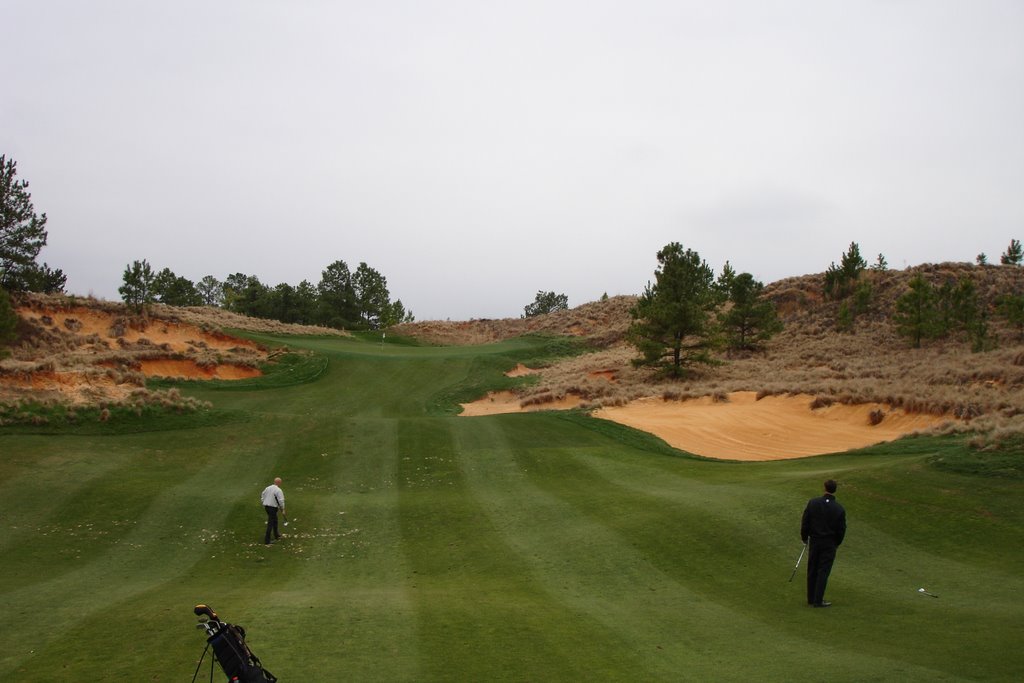
approach to #16

Round One

The first hole is a good example of what lies ahead. The tee shot is intimidating and the blind carry over the dune in the second landing area is enough to make the knuckles white. After watching my playing partner 4 putt the reverse redan green. I wondered what we were in for. The course is high on the intimidation scale, with a lot of similar character to Pine Valley. There is lots of room, but don’t you dare miss!

My general impression was that the course was far more playable than I expected, and that after the opening three the course really got going. There was far more room off the tee than expected, but often that was not clear because of his use of deception and intentional blindness. Yes Mike intentionally created many blind tee shots. When I say intentionally, it is because he shaped the entire site. The shaping at the course is some of the best in golf, there is no question that Mike Stranz is an artist.

The joy of the course is the optional routes. He often provides an overly aggressive route with huge reward, and a lay-up option for a much safer and well, boring option. He is certainly a master of enticement, because you can’t help but try the shot that is most daring. His architecture sucks you into his strategy - and into areas of greater punishment. This is excellent gamesmanship on his part.

The bunkering and detailing have few peers in golf, and really the greatest contention lies in the blindness and the greens. The blindness did not bother me, with all but a few shots being perfectly obvious, despite not being able to see the fairway. The greens were the most surprising feature. They are some of the boldest greens I have seen. Some are magnificent and others are too far over the top even for my taste for wild greens. There were situations where you had no possible way of getting from one tier to another.

Overall, I would say this is a must play for anyone who loves golf, and in particular for anyone involved in golf architecture. Mike Stranz swung for the fences all day and hit a home run in my books.

approach to the blind punchbowl at #13

Round Two

I intentionally arranged two rounds because I was worried about having a rash judgment about the course. The return visit had an interesting effect. Knowing where to go and what the risk was made playing a lot easier and a lot more enjoyable. I found the course manageable, fair and quite thrilling to play. Much of the intimidation was gone, and now the risk lay in over-reaching my abilities. He was still sucking me into taking way too many chances. I couldn’t see to help it, some routes draw you like a siren to the rocks.

The other effect it had was in helping me see a few things with out the initial “wow factor” blindness. The super wide greens (150 yards!) struck me as a feature that offered nothing but a chain of small greens and a horrible aesthetic. I did not get this idea. I did not like the idea. The second hole, 3rd tee and 11th tee is shoehorned in and creates one of the strangest and most dangerous situations I have seen. Some holes, like the 7th fairway. Were too over-shaped but in general it is damned good

I did decide on the second time through I liked most of the super wild greens and that different pins made a substantial difference to the enjoyment. I thoroughly enjoyed the whole round, taking big chances (swinging for the fences), playing aggressive when I could. I played a lot of Ross courses that I enjoyed over the week, but I still think that Mike’s course is the one I would want to play “next.”

Friday, March 24, 2006

My first game with my son

I was reluctant to encourage my oldest to play golf, since it is a huge part of the bond that my father and I share. I became a golfer, and then a golf architect, because I inherited my father’s love for the game. Once I realized that Cam really wanted to play and I got over my silly worries, I was excited about teaching him the game. A brilliant man, Gene Greco, advised me to just let him tee up and hit it. Pick up if you need him to, let him walk a few holes if he wants to, but make him hit every chip and putt. What great advice.

Dad and I took Cam out to a local Florida muni for a lesson. Cam was carrying his very first set of clubs that I had bought to fit to him properly. I must say that the equipment manufacturers have created lines of cheaply price junior clubs of real quality. I think this is one group that has done its part to help promote future golfers.

My father is a good teacher, who wanted to make sure that he had a good swing before we even considered taking him out. He struggled for a while, as he made subtle correction to his grip and posture, until he proceeded to hit the ball regularly in the air with a nice swing. Before you worry about me, I have no interest in creating a competitive golfer, I just want to him to enjoy what the game offers.

He hit the ball well enough and consistent enough that we decided to play. It was a nice quiet Tuesday afternoon at the muni, and there was nobody on the tee of one of the three nines. Perfect let’s go! We went into the pro shop and said we wanted to play nine holes. At the local municipal course we were told “he’s too young to play.” He was 9. My dad said “there’s nobody out there and he hits the ball fine, besides he’s with us and we’ll pick up to keep up.” They said NO, there are too many regulars (seniors) who play at this time. I paid for a twosome in silence.

Needless to say, I stuffed Cam’s clubs in the side of my bag, and Dad and I went out as a twosome “with a caddie.” We played the first hole as a twosome and the rest he played without picking up.I can not possibly describe the joy of watching both my father and son play. It was the first round where I can not remember a single stroke of my own, but I remember every chip, putt and duff in detail. My father began the day slightly worried about holding people up, but by the middle of the round realized this was not going to be a problem.

The lesson I learned from this was there is no “right” age for kids to begin. It’s a matter of when they are ready.

Wednesday, March 22, 2006

5 Modern Courses Worthy of Study

As a follow up to Dave's question, I offer my five modern courses.


The Golf Club is very understaed except the occasion wild bunker


The opener sums up th course well, understated and brilliant


The Golf Club – Pete Dye - variety
I distinctly remember my visit to The Golf Club, I was expecting the TPC at Sawgrass, and was very surprised at how understated the golf course was. Everything on the course, except a couple of very bold features, blended into the surrounding so much that it looked “found” rather than created. There were many great lessons beyond the look or the feel. Pete offered up the largest array of bunkering techniques I have ever recognized on one course. Hazards were central, non-existent, used for carry angles, used for deception, used to frame, and used for show. He did it all, and it worked well because he pulled it together with the overall feel of the site. Anyone visiting here will see where the new minimalists draw their inspiration from. For me it proved you don’t have to define or defends everything, variety is far more important.


The 4th, likely the toughest hole on the course


Pacific Dunes – Tom Doak – ignoring standards
There are many things to admire about Pacific Dunes. The setting and views down the coastline are obvious, but that’s just a start. Doak was smart enough to see this as a resort course and resisted the drive for length, instead he opted for a golf course that was beautiful and eminently playable. It took guts not to find 7000 yards or get constrained by standards. His unconventional placement of threes throughout the round is a testament to using what he found, and not forcing something in. He was also smart enough to recognize the golf course would be very exposed to the wind, and so he created lots of width in the course to keep it playable in tough conditions. The use of interior bunkering to place emphasis on driving the ball in a mild wind was a clever way of keeping width and challenge at the same time. This is proved to me that a great course could be built without length and still be very playable for the average player.


The 2nd hole is a transition from the wooded dunes to the potato fields, but you can't tell.


Friar’s Head – Coore and Crenshaw – the contours make the game great
It would be easy to talk about the magnificent routing that incorporates the Potato Farm with the Wooded Dunes, but Coore and Crenshaw bring something even greater to every site. They design in the fun. The main way they do this is with great contours. The ripples and rumples left in the fairway that add crazy stances or challenging lies for the approach. The humps bumps and hollows all left short around the green that ask your best imagination to solve their complex lines. Then finally at the green the use of humps, tiers and rolls to create greens that complicate an approach and are confounding to putt. This all adds up to a course that would change with each and every play. Isn’t that what we all want to achieve?

I’ve already recently profiled my other two choices


Rustic Canyon - Gil Hanse - ground contours


Monterey Peninsula (Shore) – Stranz - borrowed scenery


Two other courses that I concidered:
World Woods (Pine Barrens) – Tom Fazio
Bandon Dunes – David Kidd

The courses I wish I had seen that seem worthy of the list:
Sand Hills
Kingsbarns
Kingsley Club

The Travel and Leisure Golf Article that Came From These Lists: http://thecaddyshack.blogspot.com/2006/09/travel-leisure-golf-my-article-in.html