Tuesday, December 05, 2006

Cypress Point #16


The greatest setting in golf


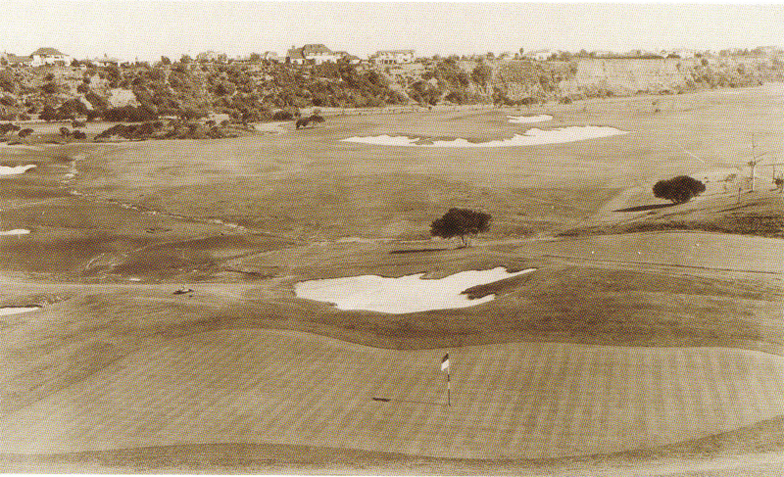
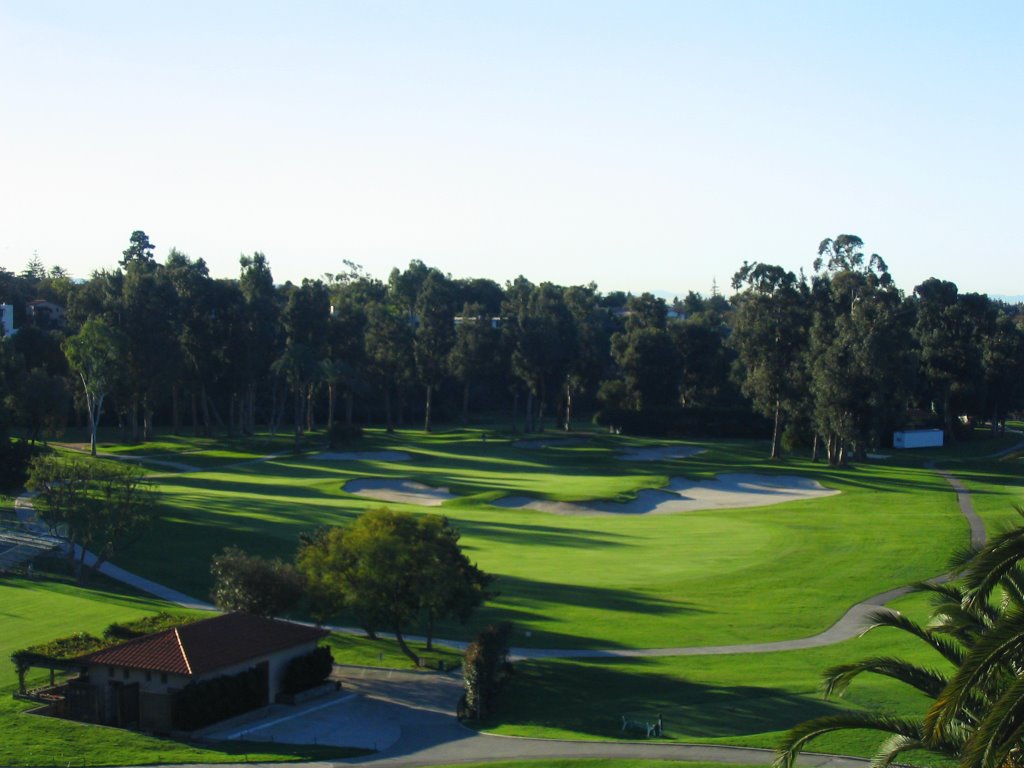
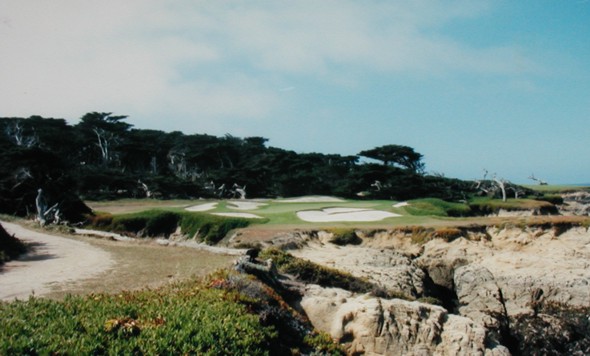
The tee shot on the 16th at Cypress Point may be the most thrilling single shot in golf. You stand on the tee with the waves breaking below you against the cliff. You can hear the seals below and the cry of the gulls and the sound of the wind in the trees behind. The wind is usually coming into your face. The green sits out on a gorgeous point on land with only the ocean between.

From the tee, all carry, the layup is the left edge of the photo


Your ego tells you to give it a go regardless of the weather or practicality of playing at the green. The tee shot at the green demands perfection. The ball must carry approximately 210 yards to clear the ocean, and any shot leaking to the right ids lost too. The back of the green is framed by bunkers and “ice plant” a nasty succulent that will not let a club get through the ball. Although I must say that the ice plant offers an exotic accent to the green adding color and beauty to the incredible backdrop. You can’t miss left since the cliffs cut in sending another near miss to the beach or ocean 20 feet below. Knowing all this from the tee you realize that you need to be perfect to have a memory of a lifetime. And that sums up the shot perfectly, whether you succeed or not, Alister Mackenzie and Marion Hollins have given you a memory of a lifetime.

The story goes that Mackenzie was worried that the carry was too long to be reasonable and was looking at a short par four for the same general area. Marion Hollins, an exceptional player, promptly teed one up and knocked it across and onto the green site and the hole was born. The artistry of Mackenzie added minor finishing touches to what was almost already all there.

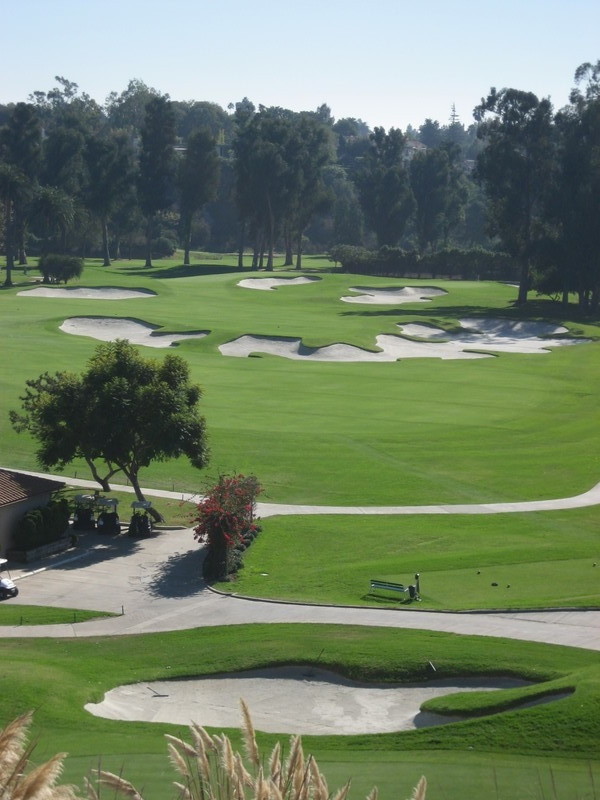
What makes the hole the hole memorable is the heroic carry and the opportunity to do something spectacular? What makes the hole even more brilliant is the option from the tee. There is more than one way to make a par on this hole. Most players will instinctively try to make the carry, even in really poor weather. As shown by the aerial, there is plenty of room left off the tee to lay-up and then pitch the ball into the bowl like green on the other side. The greatness of the hole is the heroic option is not the only choice, there is a route for all classes of player to enjoy the hole.

The pitch shot to the green from a lay-up


Footnote: The only time Dad and I played the hole was into a howling wind. We both lay up and Dad promptly made the putt for par. He said it that was more satisfying than making the carry would have been.

Monday, December 04, 2006

The Long Par Three


'Calamity' at Royal Portrush


This week I am going to concentrate on the value of a long par three.

My own personal belief is the architect must provide a full balance in the par threes to build a great golf course. One should be very short, one around mid length, one longer par three, and one very long par three. I have adopted this belief through my experience with Stanley Thompson and the strength of his par threes. I have always held the firm belief that the middle two are the easy ones to develop, but the shortest and longest are in reality the key to a great set of par threes. Eventually I will take on the short par three, because it is easily the most enjoyable single shot in golf, but it is the long par three that often makes the difference from a good set to a great set of threes. Many of the most memorable par threes in all of golf are from the very long variety.


15th at Catarqui, 1930


The long par three is usually presented as the dullest hole in golf because it is used as a brute test of strength over very unimaginative land. Too many architects use this as their connector hole between better land for a four or five. It is seen more as a chance to add length and yardage rather than an opportunity for a unique style of hole or a chance to create the most heroic of circumstance. This can be the most important hole on the course yet I think it typically gets the least amount of thought.

The problem is you can’t ignore this hole type. A great set of threes carry more weight in the quality of the golf course than a great set of fours or fives. Many such as #16 at Cypress Point and #5 at Pine Valley are the best single shots on their respective golf courses. Courses such as Thompson’s Jasper and Cataraqui feature more than one great long three. Architects such as William Flynn, George Thomas and CB MacDonald came up with unique versions of holes like the “redan” to make the long threes more interesting and strategic. There is lots of opportunity and a wealth of great ones to emulate, so why is this still typically the least interesting hole on most courses?


A great one at Hamilton, by William Diddle, not Colt


There are two keys to developing exceptional ones. The first is finding the appropriate terrain for a natural par three of over 200 yards. Often it involves the decision to consciously look for this hole in the routing rather than concentrating on natural par fives and par fours which is a common technique. Stanley Thompson was quite clear when he said he looked for the natural par threes first. The second is take the time to design a creative hole like the redan, a hole with options from the tee.

While I will show you a couple of great natural long par threes where the architect identified an exceptional opportunity, I will also show you a couple that have been "created" to show you there is no excuse for a long dull par three.

The 16th at Cypress Point: http://thecaddyshack.blogspot.com/2006/12/cypress-point-16.html

Saturday, December 02, 2006

Royal Portrush #5 – Drivable?


(photo courtesy of Aidan Bradley)

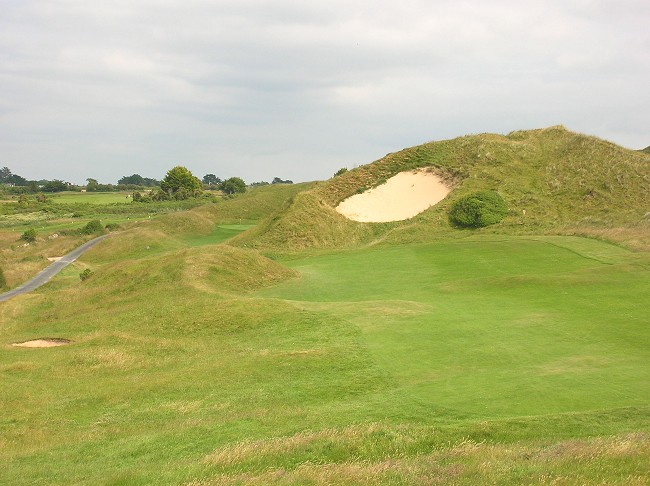
At 370 yards this would not be called a drivable par four in anyone’s books, but sometimes holes don’t play their yardage. The day I played there with Robert Thompson, my father and Steve Waxman we had a “real” four club wind at our backs on the 5th hole. I hit a driver, which was definitely pulled, and made the miracle carry over the valley. It bounded through the low whins and onto the front of the green. I admitted to pulling the tee shot right away, but I did hit it hard.

Now the interesting thing about this hole is it is hard downhill, with only a slight rise in front of the green. It is a cape style hole that can be shortened with a very heroic line. So under the right conditions this became a drive and pitch hole. This is one of the joys of golf in the United Kingdom, but also the crimp in my running series on short par fours. I played Baltray’s 14th into the wind and I can assure you it was more than a drive and wedge. I played the 5th at Portrush with a driver and a putter.


The 6th at pacific Dunes and the 16th at Bandon Dunes are great examples of drivable par fours where winter winds and summer winds make all the difference to our perception of what they really are. Both are driveable, or nearly drivable in no wind and that will be the definition I will stick with the list that I offer, which does not offer holes like the 5th at Portrush. Did I mention I drove that green?

The Best Short Par Fours that I can think of

Great Drivable Par Fours

#10 at Riviera 315
#9 Cypress Point 292
#12 at St. Andrew’s (Old) 316
#3 Sunningdale (Old) 298
#10 at Merion 312
#5 at Friar’s Head 330
#7 at Scarboro 290
#6 at Pacific Dunes 315
#8 at Cruden Bay 295
#14 at Gleneagles (Kings) 260
#3 Walton Heath (Old) 285
#17 Crystal Downs 311
#2 National 271

Great Drive and Pitch Holes
#8 at Pine Valley 327
#5 at Crystal Downs 355
#4 at Pebble Beach 327
#5 at Royal Dornock 359
#3 Pinehurst 335
#8 Merion 360
#4 Spyglass Hill 365
#5 Hamilton 321
#13 North Berick 347
#5 at Royal Portrush 392
#14 National GL 356

This ends my series on the short par fours

Friday, December 01, 2006

County Louth 14th


The two beautiful pictures are courtesy of Aidan Bradley his web site is:
http://www.golfcoursephotography.com/home.asp The gloomy one is mine.

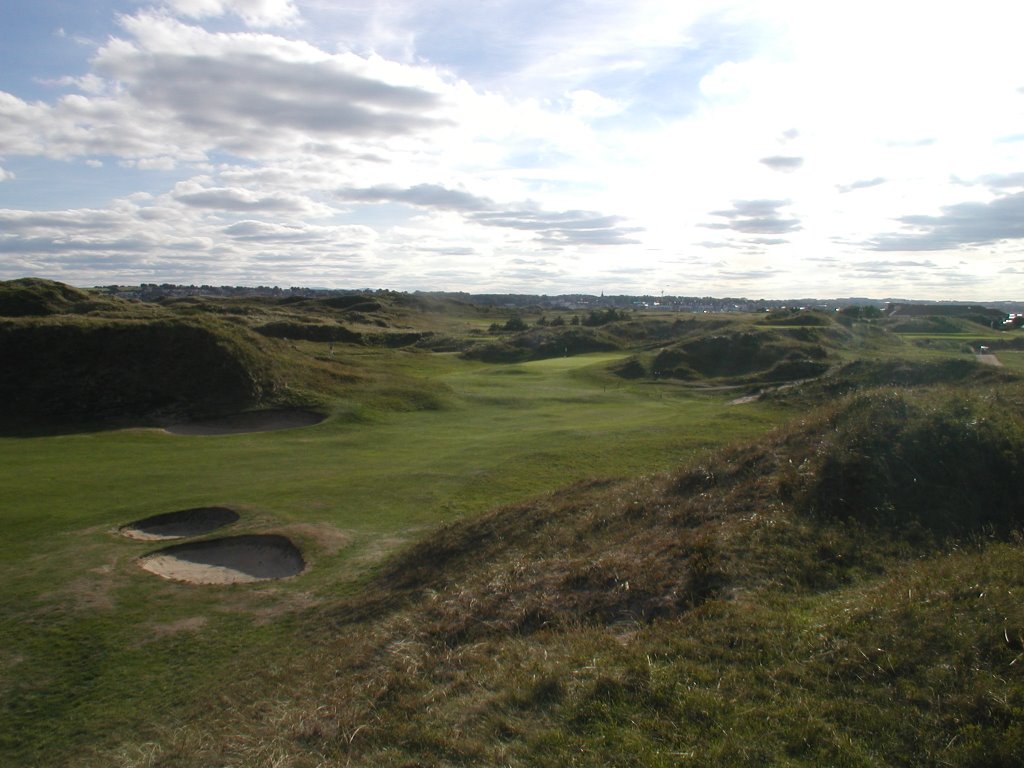
One hole that really caught my eye on my trip around Ireland was the short but demanding 14th at County Louth (or Baltray as some refer it) called “The Cup”. The hole is a mere 332 yards from back tee. While “possibly” reachable with a strong wind out of the north, most players come up short and find there is no recovery, after finishing the hole they realize that it is really a two shot hole.


The tee shot is from a high dune with the hole completely visible from the tee. While you have a clear option to lay the ball back for a full shot in, the dune that juts out at the corner of the dogleg invites a player to cut the dune leaving a short pitch shot into the green. The player certainly faces some inviting options, particularly when down wind. Most players can’t resist such an obvious carry angle, even though the reward other than distance from the hole is so questionable.

The real test of the player comes at the green where Tom Simpson found a natural plateau. This plateau falls away in all directions meaning any marginal shot will fall into, at best chipping hollow, and a worst into wild fescue rough. The green can be very comparable to the green sites found at Royal Dornock where Donald Ross found some of his inspiration. Where Simpson was so brilliant was his choice to leave the natural terrain around the green and grass only part of it. Leaving the unconventional front mound short of the green is the key. It completely throws off the depth perception making the green seem much closer and since it is covered in fescue, it also has a psychological impact on the player too.


Finally the green is one of the finest in the game. It has a series of roll-offs around the outside leading a marginal ball away, but also a clever roll in the middle that makes the player have to be precise in order to have a makeable birdie putt. The green site has all the presence of the 8th at Pine Valley, but without a single bunker. Tom Simpson at his finest.

The 5th at Royal Portrush and my list of favorite short fours: http://thecaddyshack.blogspot.com/2006/12/royal-portrush-5-drivable-at-370-yards.html

Thursday, November 30, 2006

Pine Valley’s 8th

The drive and pitch hole is the second variety of the short par four. This is defined as a hole that is not realistically drivable but where a player can get their tee shot inside of a full shot to the green. These holes can be further broken down into two distinct categories. The one where taking the tough line rewards the player with either an easy pitch or even a possible bump and run approach. This has become a common modern approach. The other can be summed up as a tee shot with no real account for accuracy, followed by a devilishly tricky approach shot. The approach shot dictates the position and placement of the tee shot by its very nature.


The 8th hole at Pine Valley Golf Club is the best illustration of the latter type of drive and pitch hole. The tee shot is blind but fairly simple compared to many at Pine Valley. As long as your somewhere in the fairway, you always have a chance at hitting the green. But because of the size and shape of the green, position off the tee is more essential than it initially appears.


The tee shot


The fairway slopes gently down towards the green side bunkers and about 100 yards begins to slope hard right away from the green which is tucked in the left corner of the clearing. What becomes very clear when you are over the ball is that you are left with an awkward downhill and side hill stance for your approach. If you’ve played the tee shot inside 100 yards you have also complicated this with having to hit a feel shot into a very tiny green surrounded by trouble.

The green is where this hole becomes frightening, breathtaking, confounding, maddening, and architecturally brilliant. The green is 2,900 sq.ft. in size with a fair amount of contour in the green. The green is surrounded on all sides with deep bunkers. The recovery from any of these is very tough since there are bunkers awaiting anything but a perfect bunker shot. The green is also angled to line up with the farthest left edge of the fairway, which only a true shot maker could find; therefore depending on how right you go, you must hit a cut shot or be absolutely perfect on your approach to hold the green surface. When you throw in the visual intimidation of the bunkers, you have one of the most unnerving shots in all of golf. And even if you find the green, Maxwell’s contours are very difficult too.


The approach shot


This is an outstanding example of design balance; a short pitch to a small green. This is every bit the equal of the 13th at Pine valley; an enormous carry to a massive green and feeding fairway approach.

[authors note: I’m 1 over on both the famous 455 yard 13th and the infamous 235 yard 5th but 9 over on the 8th through the 3 rounds I’ve played there]

Wednesday, November 29, 2006

The 4th at Highland Golf Links


click on photos to enlarge


The last of the driveable par fours: The 4th at Highlands once again illustrates the value of a great green site.

Yesterday I spoke of Tillinghast’s use of a small narrow target reinforced by the brilliant placement of flanking bunkers used to defend and define the green at Scarboro. Today’s hole is more about routing and the use of a natural feature to the greatest effect. The green at Highlands shows us the value and merit of using a hog’s back ridge as a landing and a hill top green site to make a sub 300 yard hole incredibly fun and difficult all at the same time.


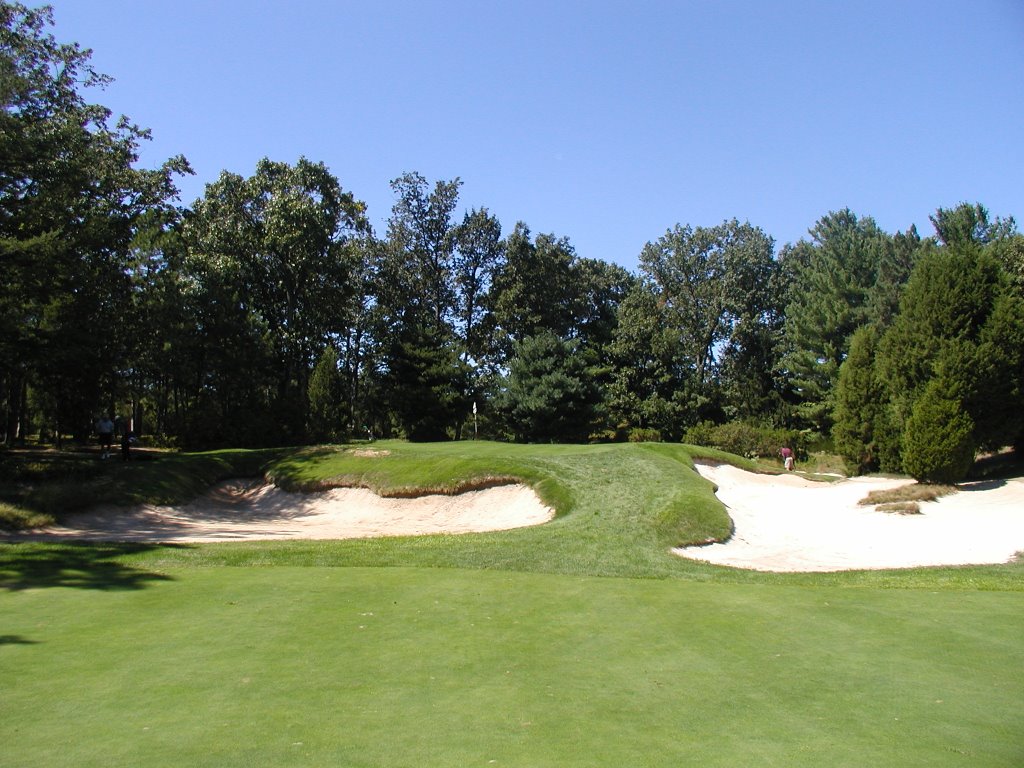
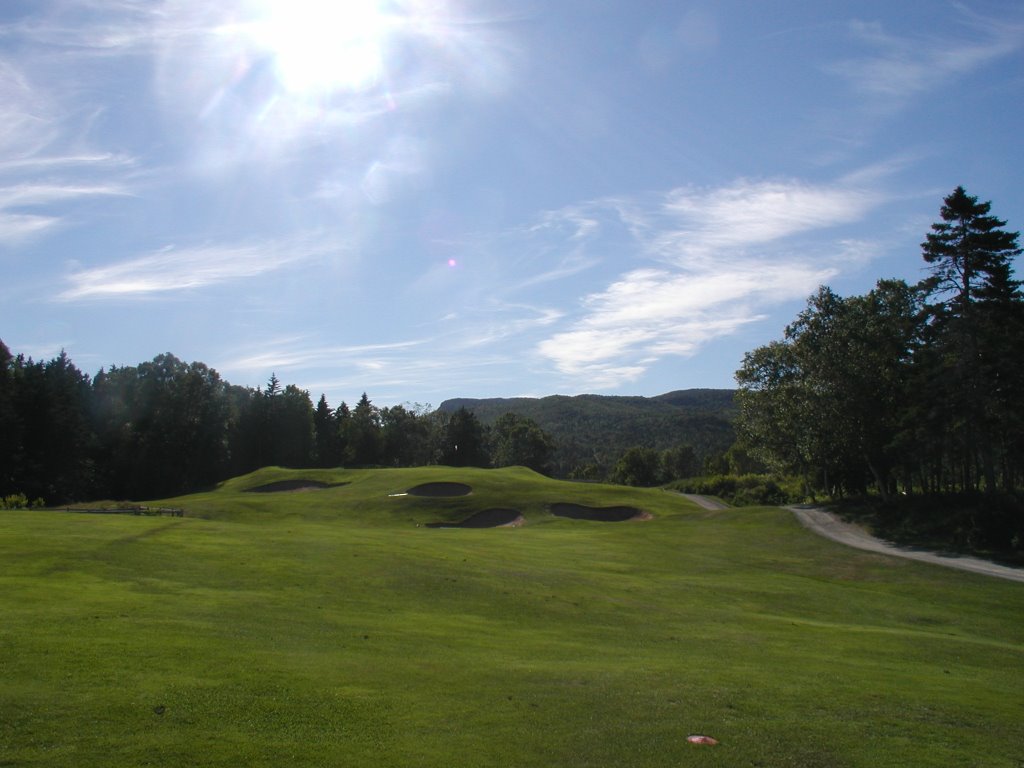
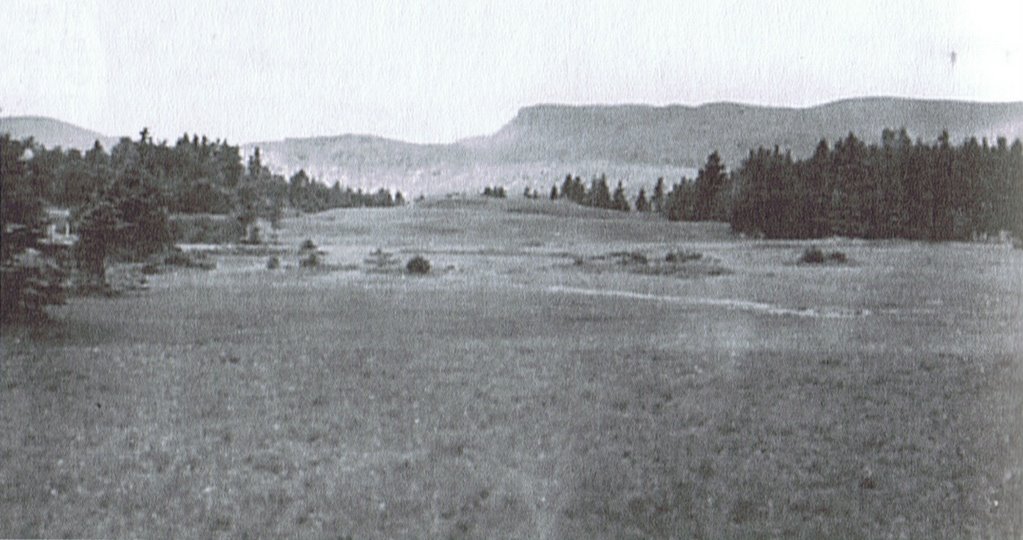
When you stand on Thompson’s tee the green sits on top of a knoll looking back at you from between two prominent rolls. One is the fairway and lay-up area on the left, where you will be left likely with the ball below your feet if you choose to play short. The right side is now treed (too bad) but was once an open hill full of limestone sink holes (like giant pot bunkers). The next section of landing area is blind, small and would leave a half shot approach. The rise up towards the green is fully visible and full of intermittent bunkers. There is also a small natural pond long and left that is blind from the tee (and the holes only really weak point).


From the original tee


The genius of the hole is the enticement. Thompson was smart enough to leave fairway around and between all the bunkers so that as long as you missed them (and you were accurate) the ball would continue onto the green. It provides a green light when a bank of rough would have caused you to concider the more prudent lay up option. Such a simple thing makes such a big difference and such a subtle and clever defense too. While you see fairway, the approach is actually a hog’s back and balls leaking slightly left and right find positions that a player doesn’t want to be in. Short left of the green is a difficult recovery from a deep bunker. Right can leak easily all the way into the long native rough.


The green is the final touch. Being a hill top green presents huge problems if you miss. Short is not awful since the turf is never short enough to really run the ball away. [That does make me wonder how much more fun this would be with better and tighter turf!] Left is in a deep bunker, but that’s not actually a bad place to be. It’s long and right where the ball is well below the green and likely lost in deep native rough. So thinking of that, you realize a lay-up short and left leaves a narrower angle of the green, with a deep bunker short and a lost ball long. All of a sudden this short little hole has serious pucker power when you have to hit the shots.

The drive and pitch variety starting with the 8th at Pine Valley: http://thecaddyshack.blogspot.com/2006/11/pine-valleys-8th.html

Tuesday, November 28, 2006

10th at Riviera Revisited


Original hole - no bunker


Original blog entry found in the 18 holes in 18 days section:


My favorite “designed” hole is undoubtedly the short par four 10th at Riviera. I love most short par fours since everybody has a chance on a short par four. For the average player, here lies the opportunity to make a par; and for the better player, a chance to make birdie.The 10th hole at Riviera may be the most deceiving hole in all of golf, after all a 311 yard par four should be a push-over right? The hole is easily reachable from the tee which naturally entices a bold player to play for the green. One of the joys of the Nissan is watching how many players try to hit the green, and make five. Even though they know missing right is certain peril and most strokes are lost from missing right, they continue to look directly at the green.


the hole a few years back


The true genius of the design lies in the green itself, it slopes sharply away unless you come in from well left. This is a very special hole, after all how many holes do you know where the longest way to the hole is the most efficient to make a score?But is doesn’t stop with just the green. When you see the hole, you are surprised to find out it is built over a huge flat wide-open expanse. Thomas and Bell have added a series of bunkers that further add to the feeling of width. The other thing the bunkers do is perfectly frame the line directly to the green. The funny part is the left edge of the fairway, where the smart lay-up is played, looks like the worst option from the tee. How many holes do you know where the smart play is the least obvious and the riskiest play is the most understandable?

The player is left on the tee just brimming with confidence that they can knock it on, and the architect has gone well out of his way to encourage this. "You may get lucky with your silly choice and make a birdie or a par through an excellent tee shot" (as I did). But as my host, a regular member said, "but you won’t pull that off two days in a row". Once you make six from the right, you take the route to the left all but a few times a year – if you want to score. The hole has many options, needs a great deal of learning to play it well, and allows all level of players a good chance at a score. This is a perfect hole at only 311 yards. So please explain to me why we need 7500 yard courses?So what did I learn from the 10th? I learnt that the tilt of the green can dictate position on the fairway. That deception still works in this day and age of yardage. That enticement done well, will usually win out of rationale thought because we just can help ourselves “from having a go” That 300 yards is still enough despite technology.

Fazio's irresponsible make over


The Hole Revisited:

I always knew the front bunker was not originally there at opening and was added shortly afterwards, what surprised me recently was the bunker on the left of the hole was not there either. I was stunned. I felt this bunker was the key to making the tee shot so dangerous, since this was the side you would want to favor by playing a cut at the green. Hitting it left is fine, but right of the green is a disaster. This bunker keeps the player honest off the tee and makes playing the driver more risky. The other thing this bunker does is further frame the green daring the player to give it a go. I thought this bunker was a key element to the greatness of the hole. It shows the value of making small modifications after opening day to perfect a hole!

Geoff said,
“Thomas and Bell added the far left bunker and greenside bunkers about a year after the course was built. They also tinkered with a few others on the course at the same time. Obviously, this turned out to be a brilliant move, though I would love to have played the shot to the bunkerless green, and often wonder why that hole isn't replicated more often (we tried an offshoot with 12 at Rustic Canyon, with a more exposed and crowned green than the original 10 at Riviera, which was gently crowned.”

Which brings up the point, why isn’t this hole replicated or borrowed from more often?

The 7th at Scarboro

This is probably my favorite short four in Canada. The fascinating part of Tillinghast's hole is that you stand on the tee and almost always think “I can hit that green from here.” It looks close, the bunkers frame the route into the green, and the green appears wide open in front just beckoning you to “give it a go.” It looks too easy to be a great hole, and therein lays its greatest secret, it lulls you into trouble.

There are series of subtleties in play that all add up to make this a very cunning and difficult hole to play well. The first is the hole is a slight dogleg left but appears straight from the tee. There is an ever so subtle angle with the green angling to the left, making the right side the best side to approach from. That was the location of the creek (that was relocated by flooding and creek repair) and is now defined by the out of bounds.

The second factor is the land. The fairway is part of a valley bottom and is full of lot of subtle rolls and pitches that provide for numerous uneven stances. The fairway also has a large roll in the centre (and the hole is so short) that it seems to leave almost all shots inside the 100 yard mark leaving a half or three quarter swing often from an uneven lie.


the great green site


The green is magic. The fact that the green is all of 3,000 sq.ft begins to make this a small target, but the fact that the green is all of 8 paces wide makes for an extremely difficult green to hit. The dimensions are remarkably similar to the postage stamp; size may make it tough, but width is the key since the green is fully flanked on both sides by two deep bunkers. The recovery shot from either bunker is extremely intimidating since it’s so easy to go back and forth.

The back of the green may be the widest point, but even that is a bad choice since the green pitches hard from back to front. No putts are made from above the hole or beside the hole for that matter either. That leaves the front of the green as the ideal spot to play to. Here’s the biggest obstacle of all. The green is 8 feet above the valley bottom with an aggressive false front leading down onto the fairway slope which runs anything short all the way back down the slope for one tough pitch shot.

Width and trouble on the side id the key


This hole is very short and players hit driver most of the time. They knock it in the rough on either side and try to hit into this narrow green from bad angles and wonder why they can’t make par. The green is a perfect template on how to defend par with a green site alone. This is a green site I will use in both my renovation work and my new projects.

My intent is to do a series of short four to illustrate some different ideas. Tomorrow is another reachable hole before I go on to the drive and pitch variety.

The greatest designed hole in golf: http://thecaddyshack.blogspot.com/2006/11/10th-at-riviera-revisited.html

Monday, November 27, 2006

The Joy of the Short Par Four


The 14th at Baltray, made by a great green site


This week I will cover the short par four, the most enjoyable and interesting hole in golf. For the average player, this represents the opportunity to make a par; and for the better player a chance to make a birdie (or better). When the hole is well thought out it should offer the greatest opportunity and a huge risk all in the same package.

The joy of the short four is the options a player has at the tee. They should always have the opportunity to play a conventional safe positional lay-up; but the great ones will also offer a risky aggressive line allowing the player to attack the hole. My favorites are usually the drivable holes where the possibility of reaching the hole begins to cloud the judgment of the player and introduce more risk taking into the game.


The 7th at the Island Club, unconventional greatness


The ideal short par four tempts us to “give it a go” even though there is such obvious and prudent option available. They are like a siren calling us to the rocks. What I love about these holes is the average player will almost always plan the best two shot strategy and try to make the standard par with two “good” shots. The strong player gets drawn in by his own ego (our inherent weakness) to thinking they can pull off the “perfect” shot. The 10th at Riviera is proof that even the Tour players pay lip service to the advantage of a good lay-up; almost all pros have a go at the green at least one day at the LA Open despite that being such a poor tactic.

The key to making a great short four is to have enough elements of risk to punish the aggressive play and make recovery a challenge. While the hole must reward a player who plays an exceptional shot with a clear advantage over any other line, the miss should be fraught with potential disaster. On a drivable four reward is reaching the green surface itself, on the remaining short fours the reward should be the ideal position to attack the pin. What is also important is the player must face a much more difficult approach from any other spot but the aggressive line to make that risk a worthwhile option. Anything less removes the balance of taking the risk and receiving the reward for doing so.

After players clearly understand the difficulty, they should still be enticed enough to take the risk. Starting tomorrow, I will offer a series of examples of exceptional ways to encourage aggressive play and still defend par.

Friday, November 10, 2006

John Low’s 10 Principles


The 3rd at Deal


The following principles come from the book called “Concerning Golf” by John Low. I thought it might be fun to look at each and see how well they hold up after so much time has passed and how much the game has changed.

1. A golf course should provide entertainment for the high and medium handicapper while at the same time present a searching and difficult test for the accomplished golfer.

I don’t think there is an architect alive who doesn’t wish there course to have the same impact, some courses have achieved this lofty goal like Pinehurst #2, but most miss the mark.

2. The one aim of inventors is to reduce the skill required for golf. Golf architects must wage a battle against inventors by designing courses that emphasize golfing skills over equipment.

This is one of the more interesting ones since the inventor has definitely overpowered the architect to a point where we can no longer battle; and some of our greatest courses are in jeopardy. The biggest change from his era to ours is the value of land and the economics of the game have changed; we simply can’t afford the additional land. Would he feel it is up to us [the architects] to battle still, or would he be frustrated with the wide gulf between good players and the average player.

3. The shortest, most direct line to the hole, even if it be the centre of the fairway, should be fraught with danger.

This reminds me of Max Behr’s idea of the line of charm and the line of instinct. Alister Mackenzie also echoed this exact premise by suggesting the best bunkers are often in the place we would like to play to. That it is up to the golf architect to break up the straight line with hazards that force a player to negotiate as close a they dare to gain an advantage. I wonder if this influenced Mackenzie

4. The architect must allow the ground to dictate play. The good architect sees that there is a special interest for the accomplished golfer in each stroke, just as the billiard player always has in mind the next stroke or strokes.

This can be taken many ways, but each is a principle close to my heart. The ground contains the best and most interesting contours and should dictate play including the green surfaces themselves. The ground [or land] also contains features that make for natural hazards that are best used to make the game interesting to play. Finally this could mean leaving all the unusual stances and lies that come with a natural course. This is similar to the principles echoed by people like Bill Coore.

5. The fairway must be orientated to both the tee and the green, thereby stressing the importance of placing the tee shot in a position from which the green can be approached with safety.

This simply brings up the idea of playing for position and being rewarded for getting a ball to a desired location. Whether this means the typical risk and reward strategy employed by most architects or the flirt and reward idea of a Mike Strantz; he clearly is a believer in the strategic school of design [as am I].


The 6th at St. Enodoc


6. Bunkers should be used sparingly by the architect. Except on one-shot holes, they should never be placed within 200 yards of the tee. Ridges and depressions are the best way of controlling an entrance to the green. The best hazard on a course is a fairway bunker 200 to 235 yards from the tee, placed five to ten yards off the accomplished player's most favourable line to the green.

This is where I begin to depart. I have never believe in a standardization of bunker placement since it tends to only add interest and challenge to the one class of player. Substitute 200 for 250 yards and you see what I mean about this being a one dimensional answer that does not even consider effect of the wind. I do like the idea of less bunkers and more use of natural ridges and rises though.

7. Wherever possible, putting greens should be of the low, narrow plateau type, with the plateau tilting away, not toward the player. No green should be higher at the back than it is in front, for that gives a player confidence. Only half the flagstick should be seen from where the approach shot should be played.

Again, I find this general rule to restrictive. I’m fascinated by what he say about a back to front green providing confidence. The idea of all greens falling away from play would be equally as boring as all greens sloped to play. The green he describes is also very difficult to hit and very demanding; I’m really not sure how a high handicap player would deal with this [see first rule].

8. A course should never pretend to be, nor is it intended to be, an infallible tribunal of skill alone. The element of chance is the very essence of the game, part of the fun of the game.

We once again agree; the idea of luck, a bad bounce, or the fortuitist break is essential in the true spirit of the game. That’s why I get so upset when it all gets removed by over grading and over-shaping.

9. All really great golf holes involve a contest of wits and risks. No one should attempt to copy a great hole because so much may depend on its surroundings as well as some features miles away in the background which influence and affect the play of the hole. If the terrain is suitable, some of the character of the original might be incorporated elsewhere.

I’m mixed on this idea, on one side I agree with good architects “find” the holes that nature provides to get the most out of a site; but I do believe that we should draw on the really great ideas for inspiration too. I have always believed that there are no really any new ideas, and that architects should be nimble with their own adaptations of proven principles to make the best holes. I think we should borrow from great holes, like the Redan, make our own allowances and adaptations for the land.

10. Inequalities of putting green surfaces should not be exaggerated. A tilt from front to back, or left to right or vice versa is sufficient. There should always be a special position for the flag on important days.

Completely disagree with this one. Greens offer so many options and so many unique strategies through contour, land form, or even architectural features. Walter Travis courses would not be near as interesting without the funky contours that force us to plan our approach or use our imagination to solve the putts. I certainly find courses with simple greens to be far less inspiring than ones that require additional thought once you reach a surface [or even before].

I think his ideas are very strong, but they certainly do not completely reflect mine; I left them in there entirety so you can judge them for yourself. I think it is important to review writers like John Low or Alister Mackenzie [who also wrote his own principles] to give us a base to find our own principles.

If I ever get enough nerve, I may try write my own principles and present them on the forum.

Thursday, November 09, 2006

Why Flanking of Bunkers should make a Comeback


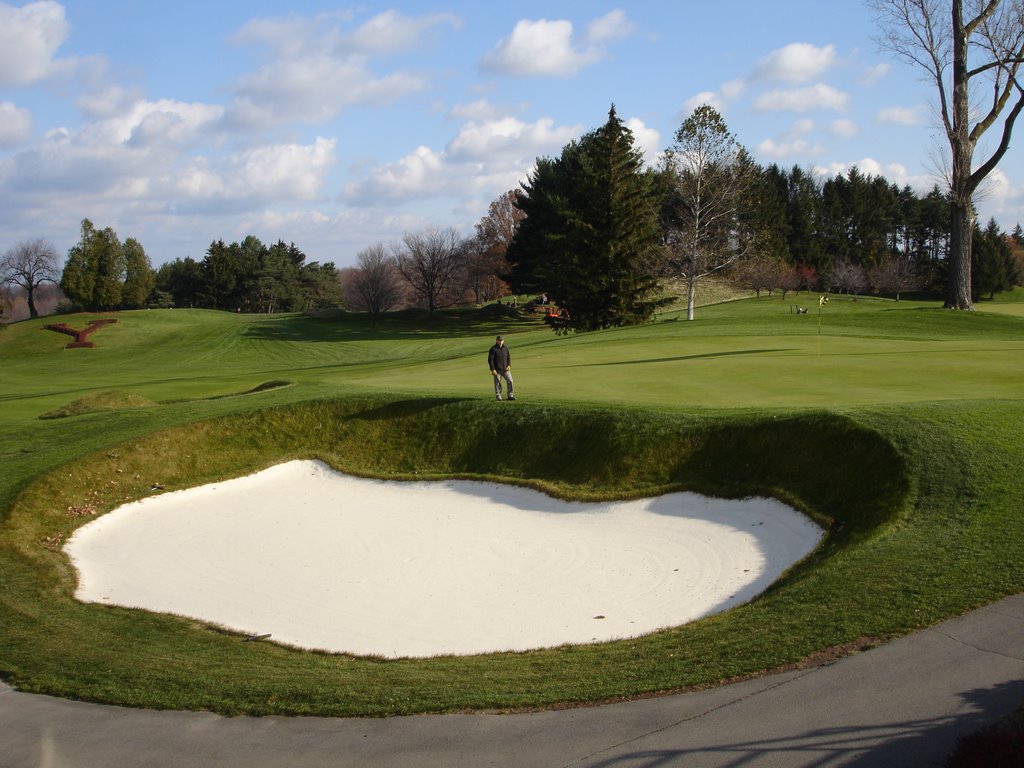
The side bunker at the ninth at Yahnundasis


Last week I made a trip out to Yahnundasis GC and to Onondaga G&CC both courses by Walter Travis. Both golf courses have had greens rebuilt by other architects. Yahnundasis had two greens rebuilt by the Gordon’s. At Onondaga there are five rebuilds, three by Skip Wogan and two by Hal Purdy. The interesting thing is these greens match each other quite well, but has no resemblance to the original work by Walter Travis. What we have ended up with is the Modern architectural philosophy placed up against the Golden Age architectural philosophy on the same course. This happened because of the timing of the renovation, more than a conscious decision of the architects to go in a new direction.

If we look at a lot of the work by the greatest architects working during the golden age of architecture, more often than not we find the trouble is set predominantly to the sides and the fronts are left open. There are exceptions with particular holes, but if we dare to generalize the work of Ross, Tillinghast, Thompson, Thomas, MacKenzie and Colt; we find that this pattern is reasonably consistent throughout. Now lets take the modern era where Trent Jones ushered in a new style that was widely embraced by almost all architects. His “new” view of the game was one which requires flying the ball over trouble to access protected pin positions. His greens got bigger to allow for more pin area, but also were protected with more trouble to balance out the change. Possibly his most fascinating change was the green shapes which were shallow and wide, rather than the tendency of the Golden Age architects to favor long and narrow. Imagine continually turning a rectangle 90 degrees and the concept is made simpler to understand.


The 15th green flanked by bunkers at Onondaga


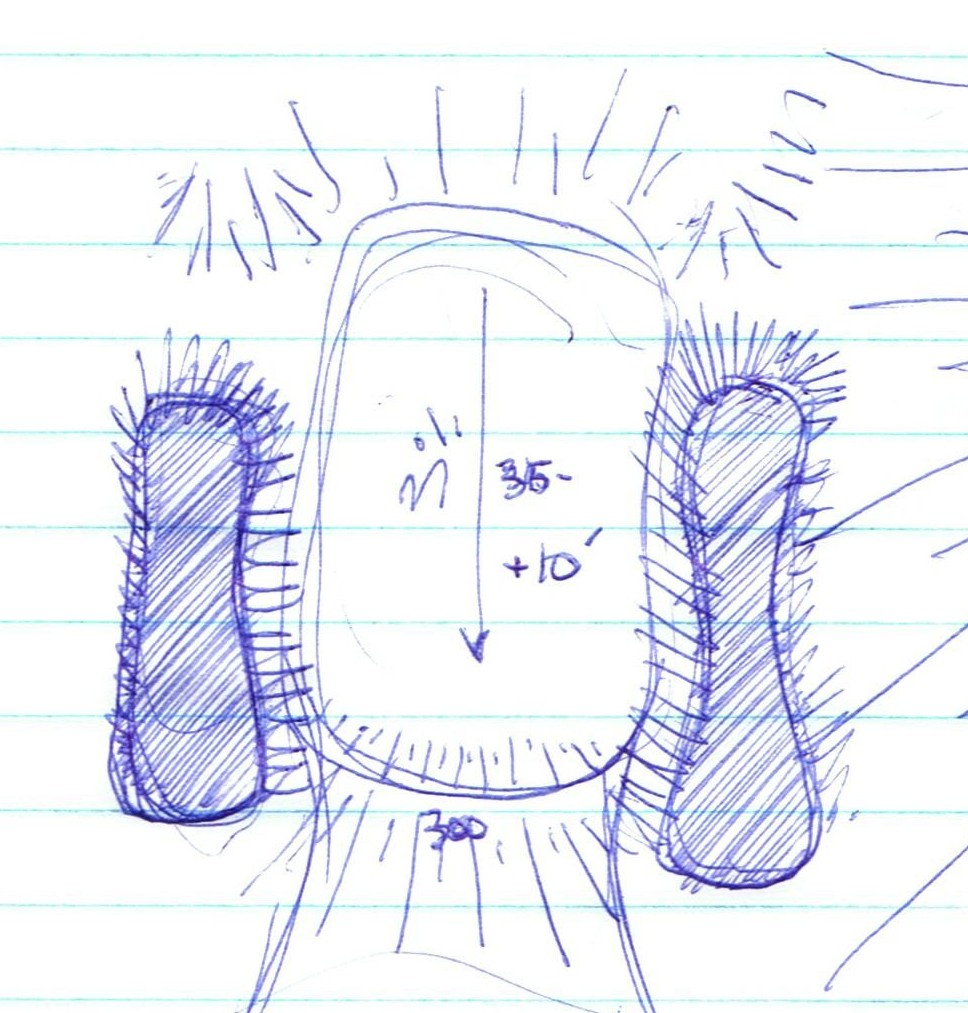
So at these two courses we have a majority of greens that are smaller, narrow, and deeper than they are wide. The fill pads are very square in appearance (in particular Onondaga) and the trouble is almost always wide and long. The new greens are wider than long, fronted with bunkers and the fill is placed in a near perfect circle on all the greens in stark contrast to the squareness of the other green sites.
So why does this matter beyond appearance?

Let’s look at the basic results of most misses. The high handicapper misses a majority of their shots short. The great player has greater distance control, but may still miss left and right. The high handicapper gets in lots of trouble and often has to play short before playing on to try save par. The strong player will take chances from the rough to try and reach the green in regulation. The high handicapper is quite likely to need to use a long club that can not carry and stop a ball, but will roll into the green given the chance. The strong player wants the ball in the air and will fly everything in for control.


The rear bunkers on the 6th at Yahnundasis


In simple terms, providing a wide open front is a strong benefit to the high handicap, but has much less benefit to a strong player. Since most high handicappers hit the ball short when they miss shots, the bunkers flanking the green are less likely to penalize them than player who will carry the ball back onto the green. The amazing thing about flanking a green with bunkers is that it raises and lowers its challenge to the level of the player playing the hole. On a modern green a player missing wide often had either and easy recovery or even a putt; now they are in trouble for their wayward approach. A weak player worried about missing left or right can simply play short and play for par. A strong player feels the need to find the green in regulation which is very hard from the left or right rough with their approaches to a narrow target. Throw in Walter’s love for hidden back bunkers and the concept goes after the player who is the most aggressive - which is a great philosophy isn't it.


This represents a fine balance of playability and challenge, and that's why this idea needs to make a stronger comeback.

Monday, October 30, 2006

Bunkers Week – Part 8 – Following the Current Trend?


Pronghorn by Faz


Imitation is the sincerest form of flattery…..in golf it’s also a great way to tell when a trend has become old.

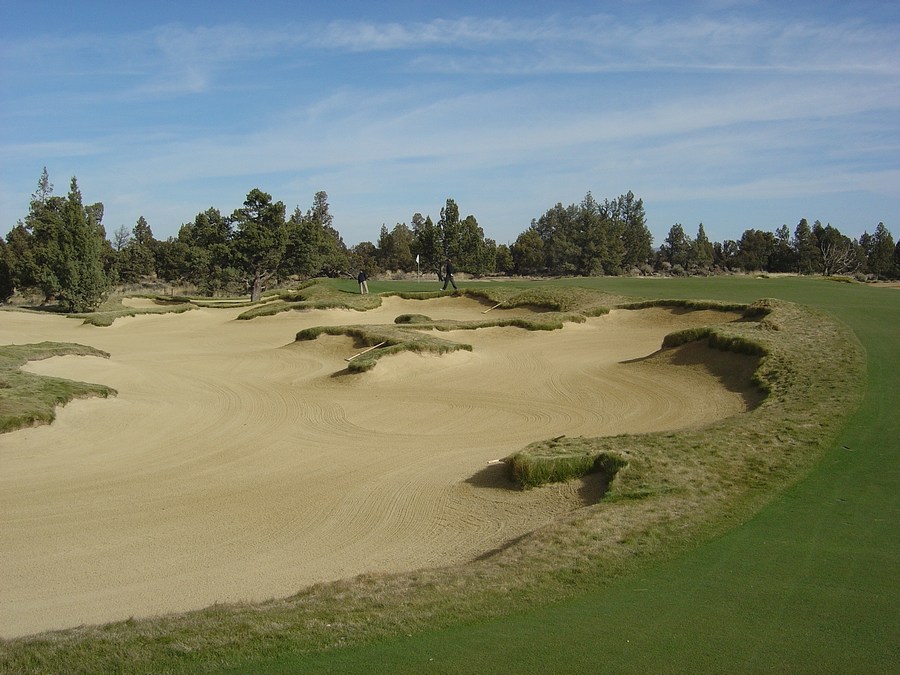
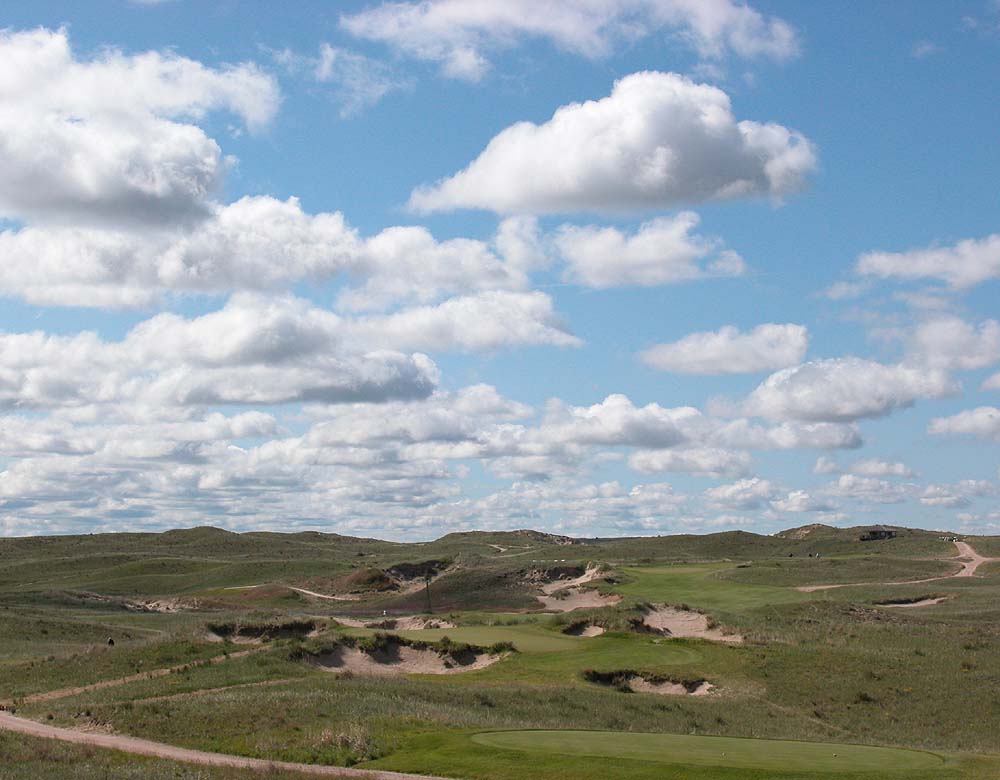
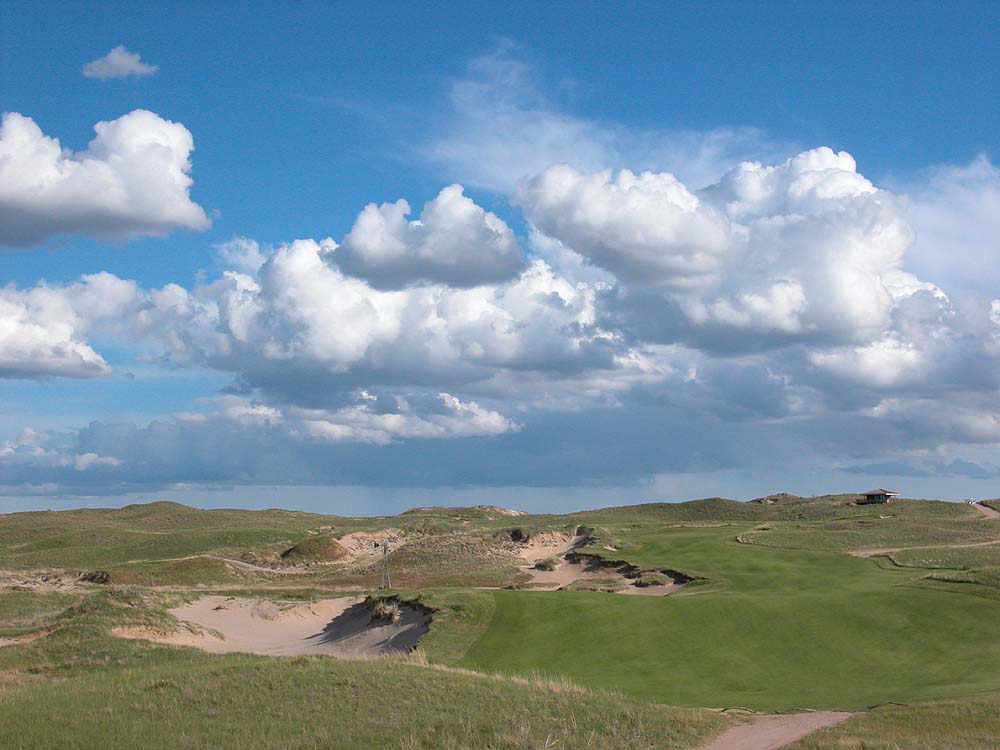
I really saw some interesting picture of a course called Pronghorn by Tom Fazio. It started off when a friend sent me a link to point out how much better the work is than the work done at Coppinwood. Visually the work is a feast for the eyes and impressive, but something struck me right away. I couldn’t get over how much they looked like the work of Bill Coore. We have all been impressed by the work of Coore and Crenshaw at Sand Hills and then Tom Doak at Pacific Dunes. I think everyone realized how popular these projects were and wanted to use the same technique to draw attention to their work.


Erin Hills by Hurdzan Fry


Just look at Erin Hills by Hurdzan/Fry/Whitten, they went as far as hiring Jeff Bradley who created Sand Hills and Rod Whitman who shaped much of Friars Head. The work again looks nice, but why didn’t the owner just go out and get Coore and Crenshaw to do the project?

The new #7 course by David Kidd has rough edged fescue faces although simpler in form still quite similar and obviously influenced by Doak’s work at Pacific Dunes. The pictures I saw advertised [when in Scotland] of the renovation by Tim Liddy to the Dukes course has bunkers very reminiscent of the work of Coore and Crenshaw too. They even had a former intern from Doak’s crew heading up the work. I even expect there will be a carry over of Sebonack to a new Nicklaus course. I think we’re now getting too much cross-pollination of one style. I’ve heard a dozen guys say this is where they want to go with their new course.

What I can’t get out of my head is the fact that this “look” is now appearing everywhere. I’m not questioning the use at any of the courses but think about how often this is now being built. It is only a matter of time for this look to appear in places where it doesn’t fit. I already question the look at one of Coore and Crenshaw’s projects where I personally think something else would have been appropriate.


The original, Sand Hills


I have even wondered if it might be time for Coore and Doak to show us something new in the way of a style [not the playing characteristics - just the look and feel]. You know what I love their bunkers, but for me enough is enough. Sand Hills, Pacific Dunes and Friar’s Head blew me away. Erin Hills, Sutten Bay and Pronghorn do not. Not that the work isn’t as good, but I’ve seen it done and it’s also too close to the original to have the same impact. I really thought at the time that the original work was innovative and creative and it pushed me [and other architects] to see more and try to be more creative in our detailing. But like the railroad ties of Pete Dye, once everyone starts to produce this look, the impact is gone. For me, [while I might have previously liked to have worked in this style] I know that I will build something completely different because of the popularity of this look.


Hidden Creek by Coore, do these bunkers work as well in this enviornment?


I think it’s too bad for Doak and Coore, since just like Dye, once they get so regularly copied it actually takes away from the impact their work currently has. It’s never been good for golf architecture when a certain style becomes fashionable. I still get a joy from the variety found in the Golden Age architects. I should get the same joy from the creativity of this generation of architects too.

We need more variety in our bunkers.

Friday, October 27, 2006

Scoregolf.com article on Ian Andrew Golf Design

Robert Thompson has written an article that captures where I am in my first year of business. He knows me very well and captured a lot of my personality including his comment about me being a glass half empty guy. I like to think I’m cautious but even my wife reminded me that I always assume the worst to avoid disappointment. Funny thing is when I go to interview I’m always feel so confident in getting across what I can do. Sometimes these articles make you realize something about yourself you don’t want to admit that’s true.

Here’s the article:

http://www.scoregolf.com/articles/xx-column-robert-thompson/Building-his-place-in-golf.cfm

Bunker Week - Part 8- Building a Travis Bunker


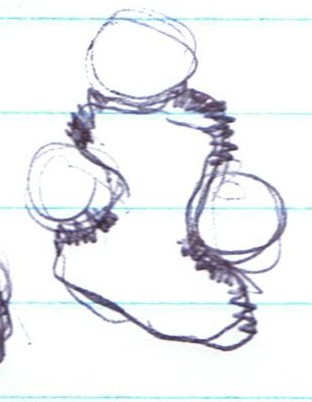
The plan and layout for the bunker


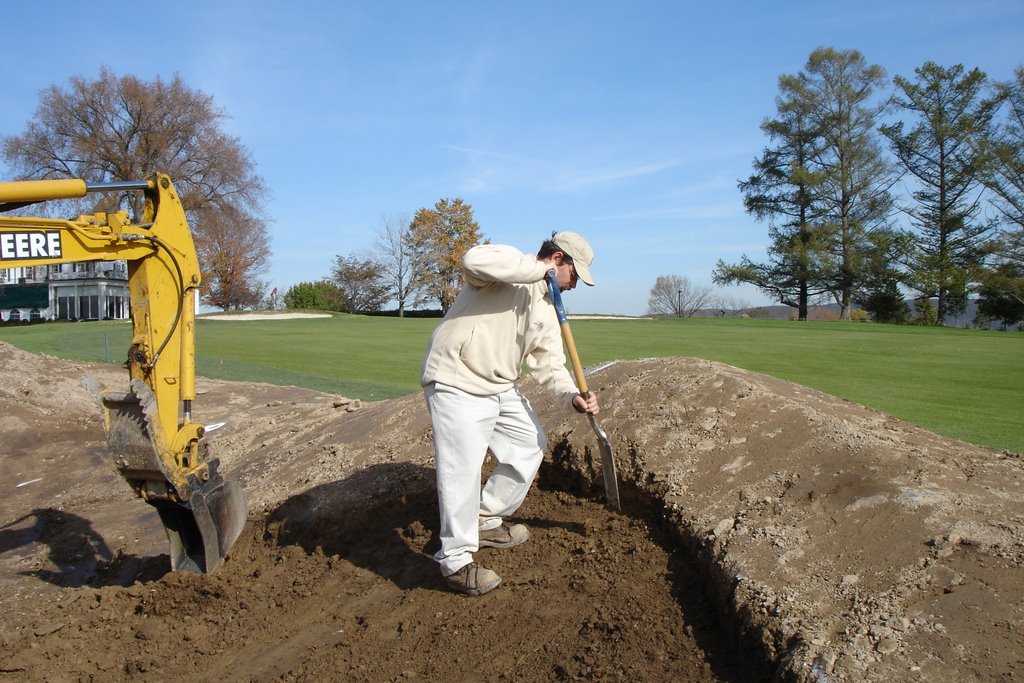
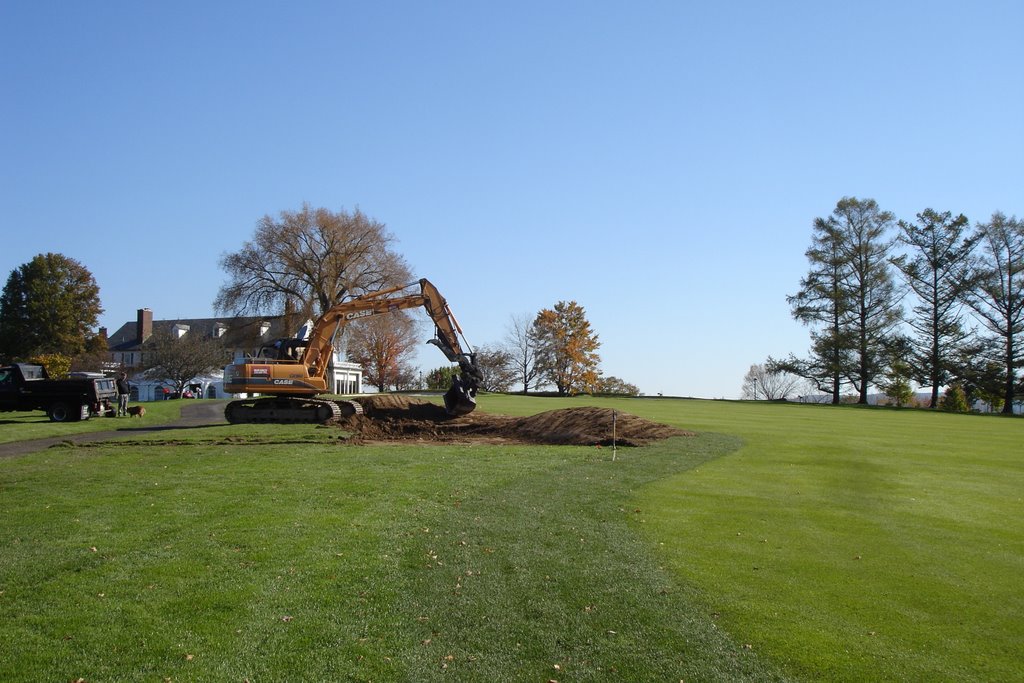
I thought it would be fun to watch a bunker get built one stage at a time.


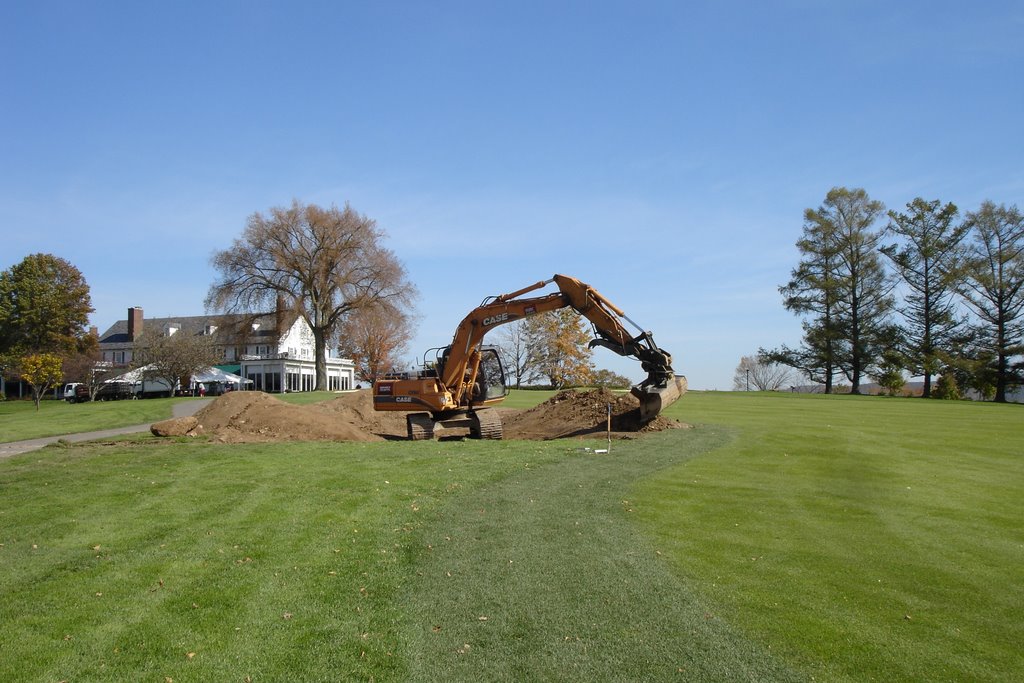
1 hour in.


Before building a bunker the sod is stripped. This is done so the bunker is built only with soil. The reason is that the sod will break down and the mounds will settle uneven if you don’t do this. Before construction the Travis mounds are laid out on the ground and all fill required comes from the interior.


2 hours in


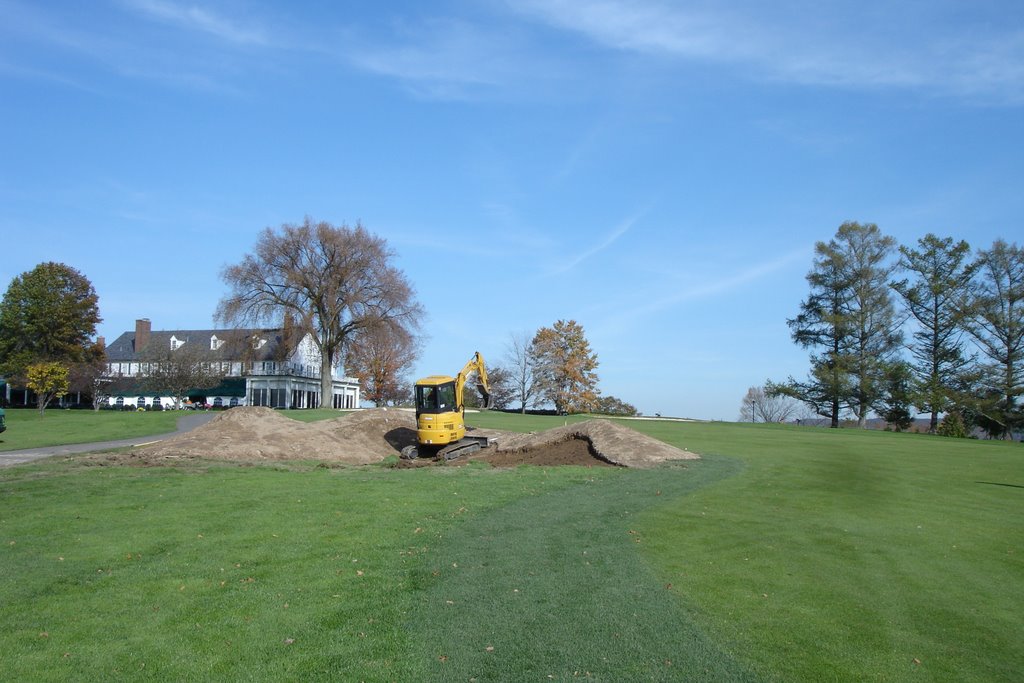
The excavator takes the place of horse and pans to stack up the fill about four feet high in each mound location. Each mound has its own unique “mountain range” like shape. The key is a top heavy mound that looks like dripping ice cream to get the Travis effect. The fill is placed in lifts and pounded with the bucket for compaction. A bulldozer will not get the right forms.


3 hours in


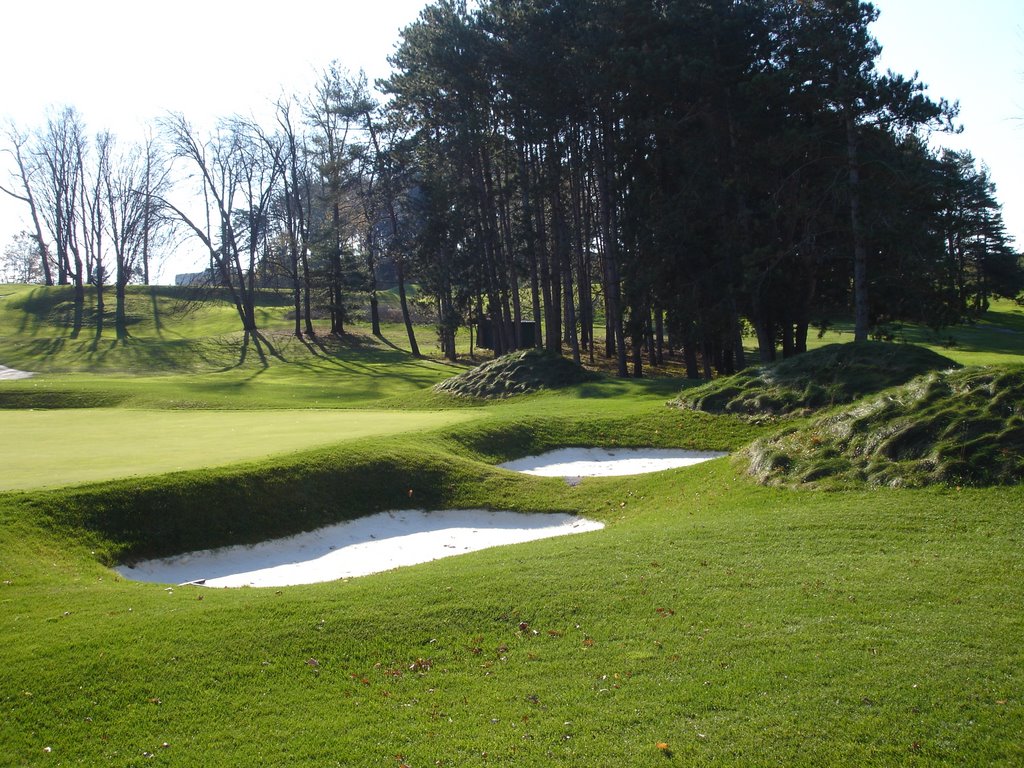
Once the three mounds are in place and packed. The next stage is to build the low transitions between the mounds to tie all the forms together. Once done, the cavity or bunker interior will be formed to create a smooth bowl shaped interior. A real Travis bunker was flatter, but this bowl shape is done for quicker drainage and to help keep the ball to the interior.


5 hours in


The bunker lines are cut into the interior by hand (by me) to create a 6”- 12” lip that will create the bull nose edge which is desired for the shadows it creates and the old fashioned look it provides. One additional note is that most Travis bunkers were grassed to the bottom, but like most clubs, this club needed to be able to see the sand from the tee. This project would not have proceeded without this concession on my part.


6 hours in


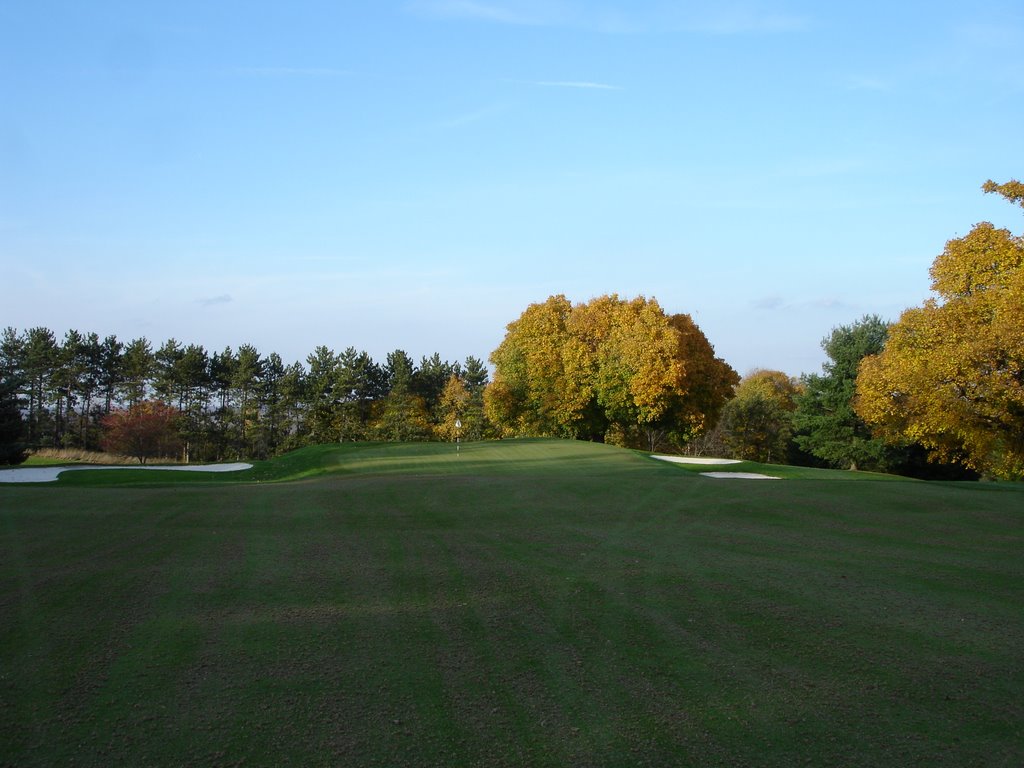
The final picture shows the mini-excavator cleaning out the interior ready for packing and tamping to get a perfectly smooth finish. If you don’t get a smooth bottom the raking will begin to destroy the interior and contaminate the sand right from the beginning. If the interior is bad enough, the bunker will hold ater too. The drain line will be excavated out from the bottom and the drain will be backfilled with the bunker sand. This can be choker sand or pea stone depending on the situation too. The white plastic was added to show the top of the sand faces and was used to check the bunker lines from the tee which is about 20 feet lower than the bunker.


8 hours from start


The bunker exterior is then raked and sod with a fescue/bluegrass blend so that the mounds can be grown long in the future when all the bunkers are done. The sod is not trimmed and allowed to extend into the bunker where it will be left till it knits in. Finally the sod is trimmed back to the bottom of the bullnose and the interior is prepared and tamped back to the new drain line and bunker sand is placed in the bottom and packed ready for play. (There are no pictures because of the rain that came when this was to begin)


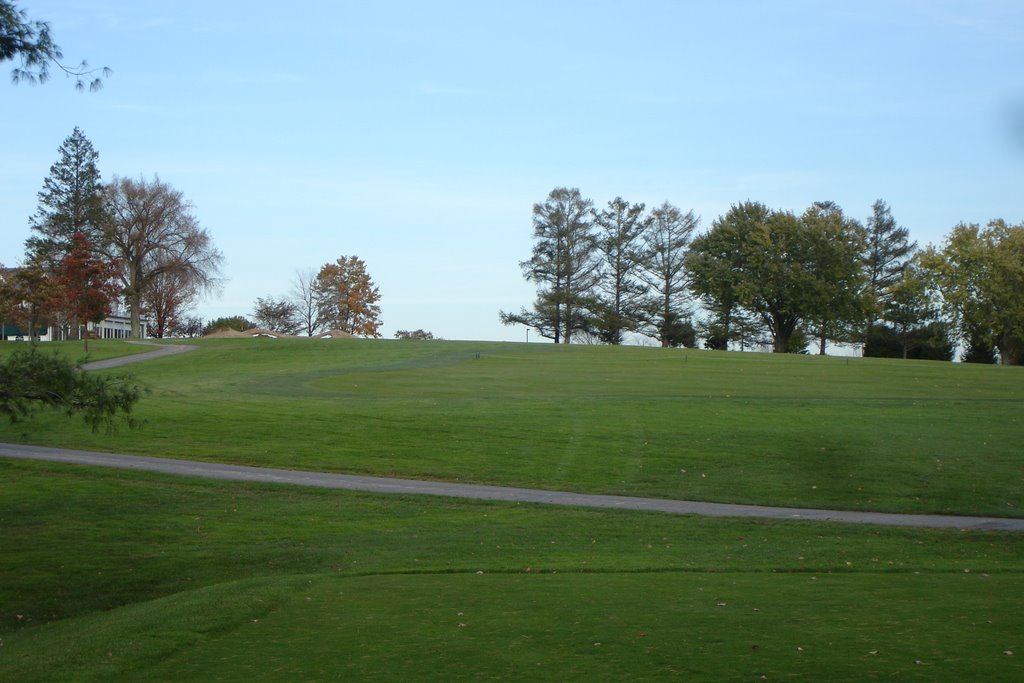
From the tee (click onto the photo to enlarge)


That is the basics to building a Travis bunker - or at least one style of his bunkering.

Architects note:This was a test bunker for the club. To be accurate the sand should not be flashed up - but the club was insistant that the sand faces be raised on this bunker for visibility - the club is now realizing the location of the bunker is clear from the mounding and is reviewing whether the sand should go to the bottom as intended when the full bunker program is begun next year.

Thursday, October 26, 2006

Bunker Week – Part 7 – Visual


The movement and drama of Thompson


Bunkers are the most visual and memorable of all the elements found on a course. So much so that some including myself would argue that too much attention is spent on the aesthetics of the bunkers. This may be funny considering most feel that one of my greatest strengths is the quality of my bunkering. Almost all golfers and critiques revolve around the look and playing characteristics of the bunkers and often fail to notice the quality of all the other elements that make up a golf course. A great set of greens are far more important than great bunkers, but everyone is drawn to evaluating a course by the bunkers since they are far easier to judge and far more obvious to the eye. Since bunkers are so obsessed over, particularly the aesthetics, let’s take a look at that aspect.


Elegant simplicity of Travis


The one wonderful impact of bunkers is there are so many possibilities. We have the rugged look of Coore and Doak, sod walls of the links, the wild fingers and bays of Thompson, Tillinghast and MacKenzie, the rugged faces and depth of a Colt bunker, the engineered steep walled bunkers of Raynor and Banks, right through to the dull maintenance and player friendly bunkers of modern architecture. Again, there are ven more from the raw scars to sand blowouts to the inverted bunkers of Travis and Emmet; I really only touch the surface with this list too. So we have established that the actual options are limitless. So why do some projects like Pacific Dunes and Sand Hill work so much better that Atlantic or other modern projects. Or a better question may be, why do architects only make one type of bunker when we have all this limitless option to choose from (that answer is comfort). The answer is that most great bunkering has more to do with reflecting the nature of the site than it does with even with placement.


The movement and artistry of macKenzie


Alister MacKenzie said, “All the artificial features should have so natural an appearance that a stranger is unable to distinguish them from nature itself.” When adding a bunker to a site, you have two options, you can have it blend in which will always work, or you can have it offer a contrast which when done well is spectacular. When done poorly it is a disaster! The work of Raynor and Banks offers an example of contrast that works well by contrast. Why does there work fit? Because they tie everything back into original grade despite the severity of the hazard form. The remainder of the hazard is a s natural as can be. Where it gets more interesting is the chocolate drops of Travis and Leeds that still are spectacular despite their obvious complete contrast. That is a harder thing to explain other than to point out that each feature is hand-made and none look quite like any other. The reason modern features look lousy is they are repeated endlessly because a machine has that ability. Robert Hunter describes this well when he said “All artificial hazards should be made to fit the ground as if placed there by nature. To accomplish this is a great art. Indeed, when it is really done well it is, I think it may truly be said a fine art, worthy of the hand of a gifted sculptor.”
In my experience only a handful of architects have been able to create bunkers that blur the line between strategy and art. The greatest of all was Alister MacKenzie. He was able to comine artistry, with scale, a little intimidation, a tremendous amount of strategy and the greatest blending an architect has ever done. He to this very day remains the standard to what any architect must hold his bunker work, since he is the only architect to manage to have it all work perfectly.


The blowouts of Sand Hills


There is one alternative to all of this to achieve really great bunkering. Go out and find a natural one that you won’t have to create. After all Donald Ross pointed out to us, “The fascination of the most famous hazards in the world lies in the fact that they were not and could not have been constructed.”


Building a Bunker: http://thecaddyshack.blogspot.com/2006/10/bunker-week-part-7-building-travis.html

Wednesday, October 25, 2006

Bunker Week – Part 6 – Strategies


The 6th at Cypress Point


Alister MacKenzie said it best with, “It is much too large a subject to go into the placing of hazards, but I would like to emphasis a fundamental principle. It is that no hazard is unfair wherever it is placed.” St. Andrew’s has bunkers at an infinite variety of distances in some of the more unusual locations. What works well there is they affect all classes of players and all lines of play. All bunkers punish the misadventure yet all offer another route around them to the hole. What begins to make many strategies is when the player can play safely to the left but face a tough approach, or they can play among more bunkers on the right to receive a much more open approach to the green. Therein lies a strategy that is often missed but very much part of the course.

I thought I would provide a series of architect’s comments that sum up their beliefs on the use of bunkering to make strategy. Jack Nicklaus said, “What I like to do is make [the golfer] decide between the glory of the long ball and the practicality of another alternative route.” I find Jack bunkers often on both sides saying if you want to hit driver, than you better hit is straight. I’m fonder of the carry angle that is described by Mike Stranz when he says, “The more you flirt with a hazard – the closer you stay to hazards or successfully carry hazards – the shorter the distance you should have to a hole with a better angle of approach” If you choose to play wide, you avoid the hazard, but face a longer approach in. You take on the hazard and succeed, you have the best and shortest shot in.

Gil Hanse said, “that perhaps centerline bunkers should be the rule rather than the exception when it comes to fairway hazards” Now this is a far more interesting idea when you consider how effective this idea is on the 16th hole at St. Andrew’s (the Principal’s Nose). The player now has to either; skirt the bunker, try fly it, or play short. Where this works best is with keeping strategy when using wide fairways. Alister Mackenzie said, “A hazard placed in the exact position where a player would naturally go is frequently the most interesting situation, as then special effort is needed to get over or avoid it” If you think about bunkers like the 6th at Carnoustie, the Principal’s Nose or Braid’s bunker at Nairn each one makes you realize how valuable they are “in” the landing area rather than lost on the sides. This technique represents an important reintroduction of width and options to the game, all while keeping strategy and challenge.

William Langford said, “That hazards should not be built solely with the idea of penalizing bad play, but with the object of encouraging thoughtful play and rewarding a player who possesses the ability to play a variety of strokes with each club” When we set up a hole with bunkers we have many intentions. We want the player to flirt with most in game of cat and mouse. We want them to challenge a few for the reward of accomplishment. We also suggest that at least one or two should be avoided at all costs. All bunkers should make the player think.

Robert Hunter has a quote that best approaches my own personally philosophy, “The best architects seek, in placing their hazards, to call forth for great shots. Some of their best holes reward handsomely fine golf, but have no obvious penalties for bad golf. Such holes are so cunningly laid out that those playing bad shots lose strokes by the position in which they find themselves” CB MacDonald’s interpretation of the way to use The Road Hole bunker accomplishes this best of all.

I haven’t taught you hardly anything yet, so now you understand why nobody can teach placement and strategy, it is a long slow learning process through observation and understanding.

Next up Visual: http://thecaddyshack.blogspot.com/2006/10/bunker-week-part-6-visual.html

Tuesday, October 24, 2006

Bunker Week – Part 5 – Psychology


No course gets into your head like Pine Valley does......despite the width and playability that is there


If a bunker is easy to get out of you will give it little thought during the round, but if a bunker requires you play backwards you will always be aware of its location and what you need to do to avoid it. Pete Dye made the comment, “Strategic placement of bunkers subconsciously forces the golfer to head away from the bunkers, when the better route is to hug them….when you get those dudes thinking they’re in trouble.” I think the comment is missing a reference to depth and how it affects the thoughts and mind of the player. There still must be repercussions that force those dudes to think. What gets a player thinking is the difficulty of the recovery. If a player faces a bunker where any club is an option then they will hug the bunker looking for an ideal line since they have no fear of missing the shot. They will also swing without fear since there is nothing to loose and nothing to get nervous about. Tell me how that hazard offers any strategy other than to high handicappers who fear sand in general?

If the bunker is nasty and recovery may not be possible, now the player is aiming away out of fear. He will also make a tentative swing at the ball trying to steer by the trouble rather than hitting a confident stroke. This is when a bunker has enough presence to get into the players head. Donald Ross said, “Hazards and bunkers are placed so as to force a man to use judgment and to exercise mental control in making the correct shot.” If there is no risk, why should a player exercise either judgment or control? The usual complaint is about recovery from such a bunker, but if the player has tried an aggressive line and failed you must ask them why not choose a line further from the bunker? I’ve never understood why a deep bunker in a key location is unfair when an architect provides either width or an alternative route around. As Donald Ross points out, “Often the highest recommendation of a bunker is when it is criticized. There is no such thing as a misplaced bunker. Regardless of where a bunker may be, it is the business of the player to avoid it”

I must admit I love Mike DeVries blunt comment of, “it’s a hazard, deal with it.” It always strikes me as absurd that many a member will tolerate or enjoy the most penal of hazards on the links courses and yet be so critical of a feature at their own club. It is the great hazards at our own courses, and how we handle them that define us as a player. Maybe the issue is ego, since I often deal with players who continue to attack a hole or pin where better judgment will yield better results. The fault is not with the depth or difficulty of the hazard; it is with the player’s decision making. Charles Blair MacDonald said, “The object of a bunker or trap is not only to punish a physical mistake, to punish a lack of control, but also to punish pride and ego” The game is about management and execution, shallow bunkers do not identify either skill.


Mike Stranz uses pressure to make a short course seem impossible at Tobacco Road.....but really it's quite playable


Pine Valley remains the ultimate psychological test for a player. You are immediately intimidated by the amount of sand and the perception that every miss will be punished. The brilliance of Pine Valley’s waste areas is that players begin to visualize disaster rather than concentrating on execution. When you look beyond the trouble, you find the course has plenty of width between trees, wide fairways and large greens; but all you see is trouble! Mike Stranz borrowed from this psychological ploy to develop his courses, including the use of depth and punishment to keep the players attention. He pointed out that we get a bigger sense of accomplishment in overcoming these holes than we would a course without any penalty. I agree.

Tomorrow I take on strategy…………..or try at least

Next up Strategy: http://thecaddyshack.blogspot.com/2006/10/bunker-week-part-6-strategies.html

Monday, October 23, 2006

Bunker Week – Part 4 – The F-word…. Fairness


A bunker you can hit any club out of is concidered "fair" by some, a waste by other.


The origins of golf only had two rules that applied to hazards, play it as it lies and the rub of the green. Now there is too much money and too much ego wrapped up in the game to accept a bad break. We insist that bunkers be uniformly maintained, consistent in condition from course to course and fairly easy to get out of. We have gone from a bad lie being a bad break, to questioning the golf superintendent’s ability and the design of the bunker. The game has changed….for the worse.

We began with the uncertainty and unpredictability of links golf where bad lies were expected and simply played. We learned the lessons of humility and perseverance through the game, but all that has gone out the window for certainty and fairness. The whole modern concept of players aiming at bunkers because they can reach the green from the fairway bunker or get up and down easily from a green side bunker shows us how much the game has changed from the origins of golf.

George Thomas says, “Hazards should be arranged to tempt and challenge, but laid out so all classes of players have optional routes to the hole. Hazards should not unduly penalize from which there is no chance of recovery.” What he is saying is that the bunkers should encourage good players to flirt. The weaker player should have options to play around and away from trouble, and all golfers should have an option to recover based upon their ability.


These bunkers are spectacular and very deep, are they fair?


Others are harsher in their thoughts on the fairness of bunkers. Willie Park Jr. said, “If a bunker is visible to the player, and there is sufficient room to avoid it, it is the player’s responsibility to steer clear of it.” Once again there is the mention of options to play away from or around the bunker, and this is another form of fairness. Fairness has nothing to do with removing the hazards, but instead has everything with providing enough room beside the bunker to avoid it even with extra shots.

Bill Coore has always been one to advocate a mixture of bunkers from the simple to the fearsome thinking all have a place on the course. His philosophy comes across well through the open-mindedness of his opinion on hazards and bunkers, “No element that creates interest can ever be seen as unfair” The player must simply deal with what’s put in front of them with the most efficient use of strokes that they are capable of using. It is up to them on what they are going to contend with and how they are going to avoid the potential pitfalls. Everything is up to them and everything is fair.

The most unfortunate part of this is for nearly 50 years our architecture was dumbed down for fairness. When the difficulty was eased or the maintenance made more “player friendly” it all had a detrimental effect on architecture. Tom Doak has long been advocating the return to a more natural rugged bunker with a less clearly defined outcome. His bunkers bring back a much more natural appearance closer to the origins of bunkers. There is also more risk in getting a difficult lie; and most importantly it places more emphasis on the hazard being where you will likely drop a stroke.

The last word on this should go to Mike DeVries who simply says, “It’s a hazard, deal with it.”

Next up Psychology: http://thecaddyshack.blogspot.com/2006/10/bunker-week-part-5-psychology.html